1. Introduction
This manual provides essential information for the installation, operation, and maintenance of your Sapphire Nitro+ AMD Radeon RX 6800 XT graphics card. Please read this manual thoroughly before installing and using the product to ensure proper functionality and to prevent damage.

Figure 1.1: The Sapphire Nitro+ AMD Radeon RX 6800 XT graphics card and its retail packaging. This image displays the overall design of the card with its triple-fan cooling solution and the product box.
2. Safety Information
Observe the following safety precautions to prevent injury or damage to the graphics card and other components:
- Always disconnect the power supply from your computer before installing or removing any components.
- Wear an anti-static wrist strap or frequently touch a grounded metal object to discharge static electricity before handling the graphics card.
- Handle the graphics card by its edges to avoid touching sensitive components.
- Ensure adequate ventilation within your computer case to prevent overheating.
- Do not expose the graphics card to moisture or extreme temperatures.
3. Setup and Installation
3.1 System Requirements
Before installation, ensure your system meets the following minimum requirements:
- PCI Express-enabled motherboard with one x16 graphics slot.
- Sufficient power supply unit (PSU) with appropriate PCIe power connectors. Consult your PSU manufacturer for compatibility.
- Minimum 16GB system memory (RAM) recommended for optimal performance.
- Compatible operating system (e.g., Windows 10 64-bit or later).
- Sufficient space within the PC case for the graphics card dimensions (approximately 17 x 9.5 x 3.5 inches).
3.2 Physical Installation
- Prepare Your System: Power off your computer and disconnect all cables. Open the computer case.
- Locate PCIe Slot: Identify an available PCI Express x16 slot on your motherboard. Remove any expansion slot covers that obstruct the installation.

Figure 3.1: Top view of the graphics card, showing the triple-fan cooling system. This perspective highlights the length and width of the card, which is important for case compatibility.
- Insert Graphics Card: Carefully align the graphics card with the PCIe slot and press down firmly until it is securely seated. Ensure the retention clip on the motherboard's PCIe slot locks into place.

Figure 3.2: Angled view of the graphics card, showcasing its robust cooling design and the PCIe connector. This view helps in understanding the card's physical dimensions and how it would sit in a motherboard slot.
- Secure the Card: Fasten the graphics card to the computer case using the screws from the expansion slot covers.
- Connect Power: Connect the required PCIe power cables from your power supply unit to the graphics card. The Sapphire Nitro+ RX 6800 XT typically requires two 8-pin PCIe power connectors. Ensure all connections are firm.

Figure 3.3: Side view of the graphics card, highlighting the power connectors and the illuminated Sapphire logo. This image is useful for identifying where power cables connect and observing the card's aesthetic features.
- Close Case and Reconnect: Close your computer case and reconnect all external cables (monitor, keyboard, mouse, power).
3.3 Driver Installation
- Power On: Turn on your computer. It may boot into a basic display mode.
- Download Drivers: Visit the official AMD website (www.amd.com/en/support) or the Sapphire support page (www.sapphiretech.com/en/consumer/nitro-radeon-rx-6800-xt-16g-gddr6) to download the latest AMD Radeon Software Adrenalin Edition drivers for your RX 6800 XT.
- Install Drivers: Run the downloaded installer and follow the on-screen instructions. It is recommended to perform a clean installation to avoid conflicts with previous drivers.
- Restart System: Restart your computer after the driver installation is complete.
4. Operating the Graphics Card
4.1 Display Output
Connect your monitor(s) to the display outputs on the graphics card. The Sapphire Nitro+ RX 6800 XT typically features DisplayPort and HDMI outputs. Ensure your monitor is set to the correct input source.
4.2 AMD Radeon Software
The AMD Radeon Software Adrenalin Edition provides a comprehensive interface for managing your graphics card. Through this software, you can:
- Adjust display settings and resolutions.
- Optimize game settings for performance and visual quality.
- Monitor GPU performance, temperature, and fan speeds.
- Access features like Radeon Anti-Lag, Radeon Boost, and FidelityFX.
- Update graphics drivers.
4.3 Sapphire TriXX Software
For advanced control and customization, Sapphire offers the TriXX software. This utility allows you to:
- Monitor hardware status in real-time.
- Adjust fan curves for optimal cooling and noise levels.
- Control and synchronize the external RGB LED lighting on the card.
- Utilize features like Fan Check and Nitro Glow.
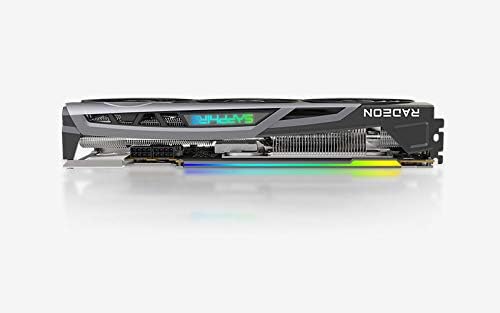
Figure 4.1: The Sapphire Nitro+ graphics card showcasing its customizable RGB LED lighting. This feature can be controlled via the Sapphire TriXX software for personalized aesthetics.
5. Maintenance
Regular maintenance helps ensure the longevity and optimal performance of your graphics card.
- Dust Removal: Periodically clean dust from the heatsink fins and fan blades using compressed air. Ensure the fans are held stationary during cleaning to prevent damage to the bearings.
- Software Updates: Keep your graphics drivers and Sapphire TriXX software updated to benefit from performance improvements and bug fixes.
- Temperature Monitoring: Use AMD Radeon Software or Sapphire TriXX to monitor GPU temperatures, especially during heavy loads, to ensure it operates within safe limits.
6. Troubleshooting
If you encounter issues with your graphics card, refer to the following troubleshooting steps:
- No Display Output:
- Ensure the monitor cable is securely connected to both the graphics card and the monitor.
- Verify the monitor is powered on and set to the correct input source.
- Check that the graphics card is fully seated in the PCIe slot and all power cables are connected.
- Test with a different display cable or monitor if possible.
- System Instability or Crashes:
- Ensure your power supply unit (PSU) meets the recommended wattage for your system, including the graphics card.
- Update your graphics drivers to the latest version.
- Monitor GPU temperatures. Overheating can cause instability.
- Check for conflicts with other installed drivers or software.
- Poor Performance in Games/Applications:
- Verify that the latest graphics drivers are installed.
- Check in-game settings; reduce resolution or graphics quality if necessary.
- Ensure your CPU and RAM are not bottlenecking the GPU.
- Monitor GPU utilization and clock speeds using AMD Radeon Software.
- Fan Noise or Malfunction:
- Clean dust from the fan blades and heatsink.
- Use Sapphire TriXX software to adjust fan curves or check fan health.
- Ensure no cables are obstructing fan rotation.
7. Specifications
| Feature | Detail |
|---|---|
| Graphics Processor | AMD Radeon RX 6800 XT |
| Memory | 16GB GDDR6 |
| Memory Speed | 16 GHz |
| Game Clock | Up to 2110 MHz |
| Boost Clock | Up to 2360 MHz |
| Interface | PCIe 4.0 x16 |
| Video Output Interface | DisplayPort, HDMI |
| Max Screen Resolution | 3840x2160 (4K) |
| Dimensions (LxWxH) | 17 x 9.5 x 3.5 inches (approx.) |
| Item Weight | 4.53 pounds |
| Model Number | 11304-02-20G |

Figure 7.1: Rear view of the graphics card, showing the backplate and the overall robust construction. This view emphasizes the structural integrity and cooling design from the back.
8. Warranty and Support
Sapphire products are manufactured to the highest quality standards. For information regarding the warranty period and terms for your Sapphire Nitro+ AMD Radeon RX 6800 XT graphics card, please refer to the warranty card included with your product or visit the official Sapphire website.
For technical support, driver downloads, and frequently asked questions, please visit the Sapphire support portal: www.sapphiretech.com/en/support.


