1. Introduction
Thank you for choosing the ROTHENBERGER Industrial Pipe Bender Bending Pliers. This tool is designed for precise bending of aluminum and soft steel pipes with a diameter of 14 mm. Please read this manual carefully before use to ensure safe and efficient operation.
2. Safety Instructions
Always follow these safety guidelines to prevent injury and damage to the tool or workpiece.
- Wear appropriate personal protective equipment (PPE), including safety glasses and gloves, to protect against potential hazards.
- Inspect the tool before each use for any signs of damage or wear. Do not use a damaged tool.
- Ensure the workpiece is securely clamped or held to prevent movement during bending.
- Do not exceed the specified pipe diameter (14 mm) or material type (aluminum, soft steel) to avoid damaging the tool or pipe.
- Keep hands and fingers clear of moving parts during operation.
- Store the tool safely when not in use, away from children and unauthorized personnel.
3. Product Overview
The ROTHENBERGER Industrial Pipe Bender is a manual tool designed for creating precise bends up to 180 degrees. It features a clear graduation scale for accurate angle measurement.
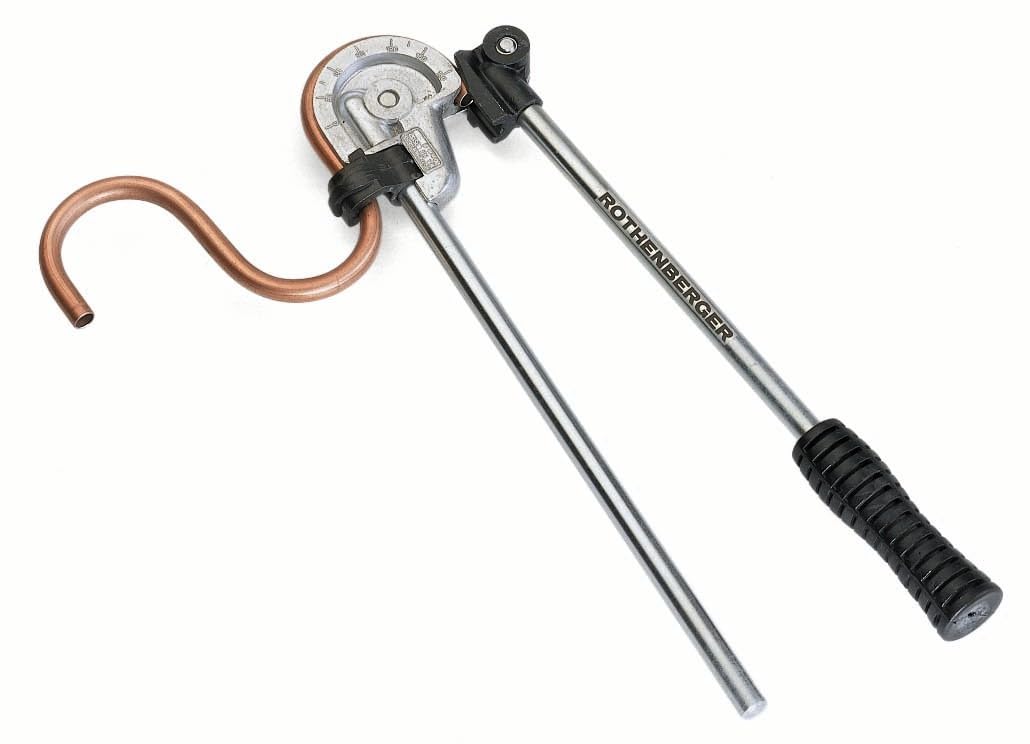
Figure 1: ROTHENBERGER Industrial Pipe Bender, 14 mm diameter. This image shows the overall design of the pipe bender, highlighting its handles and bending mechanism.

Figure 2: Close-up of the ROTHENBERGER Industrial Pipe Bender, showing the bending head and the integrated graduation scale for angle measurement.
Key Features:
- Precise bending of aluminum and soft steel pipes up to 180°.
- Graduation scale from 0 to 180° in divisions of 30° for accurate bends.
- Ergonomic design for use in various sanitary and heating applications.
- Compact and robust construction for use in tight environments.
4. Setup
The ROTHENBERGER Industrial Pipe Bender is ready for use out of the box. No assembly is required.
- Unpack the tool: Carefully remove the pipe bender from its packaging.
- Inspect for damage: Before first use, check the tool for any visible damage that may have occurred during shipping.
- Familiarize yourself with the components: Identify the handles, bending former, and the angle graduation scale.
5. Operating Instructions
Follow these steps for effective and safe pipe bending:
- Prepare the pipe: Ensure the pipe is clean, free of burrs, and cut to the desired length. Mark the exact point where the bend is to begin.
- Insert the pipe: Open the handles of the pipe bender and carefully insert the pipe into the bending former, aligning your mark with the start of the bending radius. Ensure the pipe sits firmly in the groove.
- Position for bending: Hold the pipe bender firmly with both hands. The pipe should be positioned so that the bending force is applied evenly.
- Perform the bend: Slowly and steadily bring the handles together, applying consistent pressure. Observe the graduation scale to achieve the desired bending angle (e.g., 90° or 180°). Avoid sudden, jerky movements.
- Check the bend: Once the desired angle is reached, release the handles and carefully remove the bent pipe. Inspect the bend for accuracy and any signs of kinking or flattening.
- Repeat if necessary: For multiple bends, repeat the process, ensuring each bend is accurately measured and executed.
Note: For optimal results, especially with softer materials, apply steady, continuous pressure. Practice on scrap pieces of pipe if you are new to pipe bending.
6. Maintenance
Proper maintenance ensures the longevity and performance of your pipe bender.
- Cleaning: After each use, wipe down the pipe bender with a clean, dry cloth to remove any dirt, dust, or metal shavings.
- Lubrication: Periodically apply a light coat of machine oil to the pivot points and moving parts to ensure smooth operation.
- Storage: Store the tool in a dry, clean environment to prevent rust and corrosion. Keep it in its original packaging or a tool bag to protect it from damage.
- Inspection: Regularly check for loose screws, worn parts, or any damage. Replace damaged components immediately or contact customer support for assistance.
7. Troubleshooting
| Problem | Possible Cause | Solution |
|---|---|---|
| Pipe kinks or flattens during bend. |
|
|
| Difficulty achieving desired angle. |
|
|
| Tool feels stiff or difficult to operate. |
|
|
8. Specifications
| Feature | Detail |
|---|---|
| Brand | Rothenberger |
| Model Number | 025134F |
| Pipe Diameter | 14 mm |
| Max Bending Angle | 180° |
| Material Compatibility | Aluminum pipes, Soft steels |
| Tool Material | Aluminum |
| Handle Material | Aluminum |
| Product Dimensions | 15.75 x 5.51 x 1.57 inches (400 x 140 x 40 mm) |
| Item Weight | 3.67 pounds (1.66 kg) |
| Specific Uses | Sanitary and heating applications |
9. Warranty and Support
ROTHENBERGER Industrial products are manufactured to high-quality standards. For information regarding warranty coverage, please refer to the warranty card included with your purchase or visit the official ROTHENBERGER website.
For technical support, spare parts, or service inquiries, please contact ROTHENBERGER customer service. Contact details can typically be found on the product packaging or the official brand website:
- ROTHENBERGER Official Website: www.rothenberger.com
- Amazon Store: Visit the Rothenberger Store on Amazon
Please have your model number (025134F) and purchase date ready when contacting support.


