1. Introduction
The Walfront HT107D Digital LCD Socket Tester is an advanced electrical testing device designed for quick and accurate detection of correct wiring connections in electrical sockets. It features a clear LCD display for voltage and frequency readings, and multiple LED indicators to identify various wiring faults. This manual provides essential information for safe and effective use of the device.
2. Safety Information
Please read and understand all safety warnings and operating instructions before using this device. Failure to do so may result in electric shock, fire, or serious injury.
- Always ensure the device is in good working condition before use.
- Do not use the tester if it appears damaged or if the casing is open.
- Do not use the tester in wet conditions or with wet hands.
- This device is designed for testing standard electrical sockets within its specified voltage range (90-250V). Do not use it for voltages outside this range.
- The RCD test function should only be performed on circuits protected by a Residual Current Device (RCD) or Ground Fault Circuit Interrupter (GFCI). This test will trip the RCD/GFCI, cutting power to the circuit.
- Always consult a qualified electrician if you detect any wiring faults or are unsure about electrical safety.
- Keep out of reach of children.
3. Product Overview
The Walfront HT107D Socket Tester is a compact and portable tool for electrical safety.
Key Features:
- Advanced socket tester for quick detection of correct wiring.
- Integrated RCD/GFCI test button for safety system verification.
- 7 LED indicator modes to clearly display wiring status.
- LCD display with backlight for frequency, phase voltage (L-N), and leakage voltage (N-E) readings.
- Compact, lightweight, and easy-to-use design.
Components:
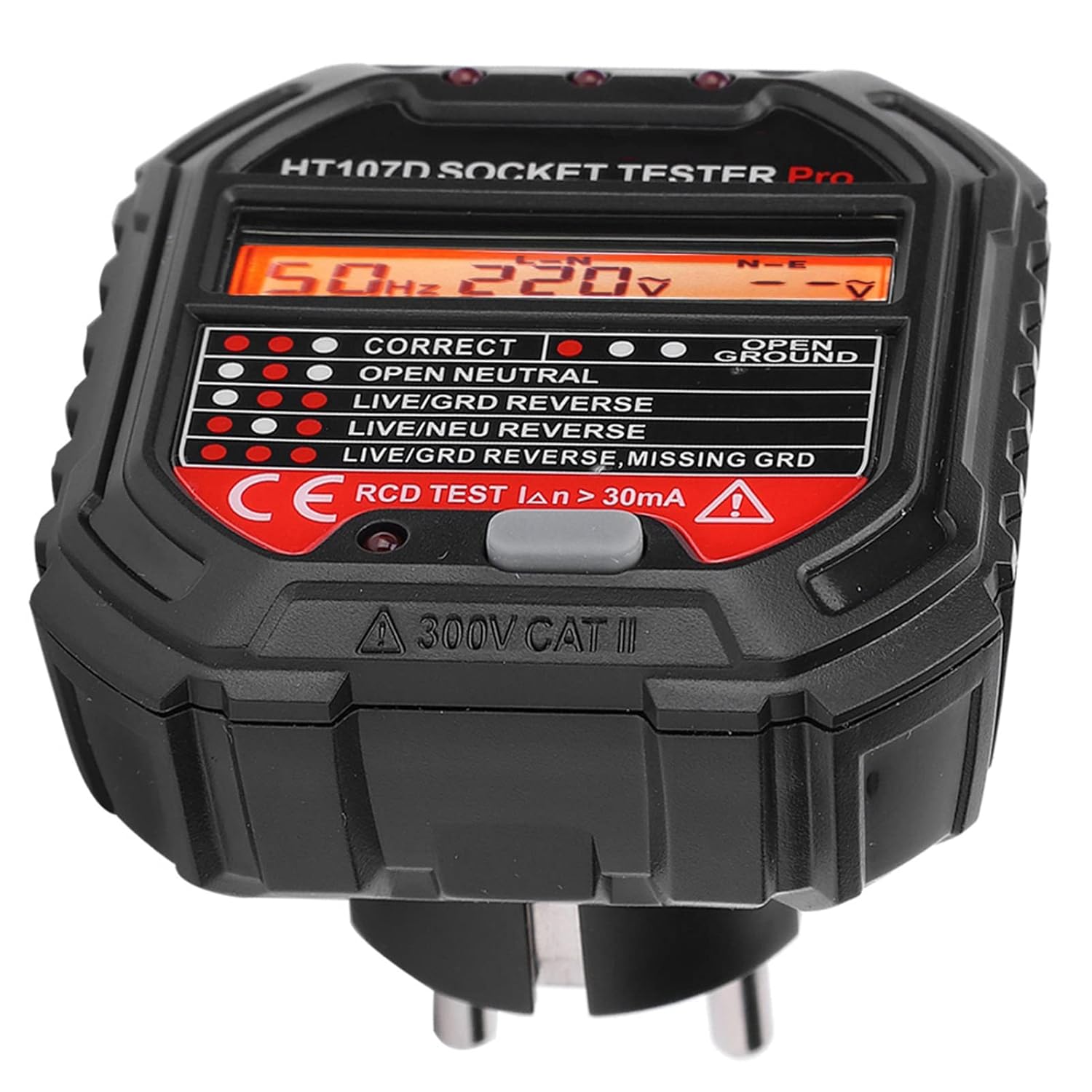
- LCD Display: Shows voltage (L-N, N-E) and frequency.
- LED Indicators: Three lights at the top that illuminate in various patterns to indicate wiring status.
- RCD Test Button: Red button used to test Residual Current Devices.
- EU Plug: For insertion into standard European sockets.
4. Setup
The Walfront HT107D Socket Tester requires no complex setup. It is ready for use directly out of the packaging.
- Ensure the socket tester is clean and free from any visible damage.
- Locate the electrical socket you wish to test.
- Carefully insert the Walfront HT107D Socket Tester into the socket.

5. Operating Instructions
Once the Walfront HT107D Socket Tester is plugged into a live socket, it will automatically begin testing and display the results.
- Initial Test: Plug the tester into the socket. The LCD screen will light up, displaying the frequency (Hz), phase voltage (L-N), and leakage voltage (N-E). The LED indicators will also illuminate according to the detected wiring status.
- Reading the LCD Display:
- Hz: Indicates the frequency of the AC power supply.
- L-N: Displays the voltage between the Live and Neutral wires.
- N-E: Displays the voltage between the Neutral and Earth (Ground) wires.
- Interpreting LED Indicators: Refer to Section 6, "Understanding the Indicators," for a detailed explanation of the LED patterns and their corresponding wiring conditions.

6. Understanding the Indicators
The Walfront HT107D Socket Tester uses three LED indicator lights to quickly communicate the wiring status of the socket. Observe the pattern of the lights and compare it to the table below.

| Indicator Pattern | Wiring Condition |
|---|---|
| ● ● ● (Left, Middle, Right ON) | Correct Connection |
| ● ● ○ (Left, Middle ON, Right OFF) | Open Ground (Unconnected ground wire) |
| ● ○ ● (Left, Right ON, Middle OFF) | Open Neutral (Unconnected neutral wire) |
| ○ ● ● (Middle, Right ON, Left OFF) | Open Live (Unconnected live wire) |
| ● ○ ○ (Left ON, Middle, Right OFF) | Live/Ground Reverse (Live wire and ground wire reversed) |
| ○ ● ○ (Middle ON, Left, Right OFF) | Live/Neutral Reverse (Live wire and neutral wire reversed) |
| ○ ○ ● (Right ON, Left, Middle OFF) | Live/Ground Reverse, Missing Ground (Live wire and ground wire reversed, and ground wire is missing) |
Important: If any fault condition is indicated, do not use the socket and consult a qualified electrician immediately.
7. RCD Test Function
The RCD (Residual Current Device) test function is designed to verify the proper operation of RCDs or GFCIs in the electrical circuit. This test simulates a fault condition to ensure the RCD trips and cuts power, preventing electric shock.
- Ensure the socket tester is plugged into a socket that is part of an RCD/GFCI protected circuit.
- After the initial wiring test shows a "Correct Connection" (all three LEDs ON), press the red "RCD TEST" button on the tester.
- Observe the RCD/GFCI. A properly functioning RCD/GFCI should trip, cutting power to the circuit and turning off the tester's display and lights.
- If the RCD/GFCI does not trip, it indicates a potential fault with the RCD/GFCI itself or the wiring. Do not use the circuit and consult a qualified electrician.
- To restore power, reset the RCD/GFCI at your consumer unit/fuse box.
Caution: Performing the RCD test will temporarily cut power to the tested circuit. Ensure all sensitive equipment is safely shut down or disconnected before performing this test.
8. Maintenance
The Walfront HT107D Socket Tester requires minimal maintenance.
- Cleaning: Wipe the device with a soft, dry cloth. Do not use abrasive cleaners or solvents. Ensure no liquids enter the device.
- Storage: Store the tester in a cool, dry place, away from direct sunlight and extreme temperatures. Keep it in its original packaging or a protective case when not in use.
- Inspection: Periodically inspect the device for any signs of damage, such as cracks in the casing or bent pins. If damage is found, discontinue use and replace the device.
9. Troubleshooting
If you encounter issues with your Walfront HT107D Socket Tester, refer to the following common problems and solutions:
| Problem | Possible Cause | Solution |
|---|---|---|
| Tester does not light up or display anything. | No power to the socket, or the socket is faulty. | Test another known working socket. Check the circuit breaker or fuse for the circuit. If other sockets work, the original socket may be dead or faulty. |
| LED indicators show a fault, but the socket appears to work. | Hidden wiring fault. | The tester is designed to detect faults that may not be immediately obvious. Do not ignore fault indications. Consult a qualified electrician. |
| RCD test button does not trip the RCD/GFCI. | Faulty RCD/GFCI, or the circuit is not protected by an RCD/GFCI. | Ensure the circuit is indeed RCD/GFCI protected. If it is, the RCD/GFCI may be faulty and requires inspection by a qualified electrician. Do not use the circuit until it is verified safe. |
| Inconsistent readings or flickering display. | Loose connection, unstable power supply, or device malfunction. | Ensure the tester is firmly plugged into the socket. Test in another socket. If the problem persists, the device may be faulty and should be replaced. |
For issues not covered here, please contact Walfront customer support or a qualified electrician.
10. Specifications
| Parameter | Value |
|---|---|
| Product Name | Socket Tester |
| Model | HT107D |
| Brand | Walfront |
| Operating Voltage | 90-250V AC |
| Frequency Range | 45-65Hz |
| RCD Test Current | > 30mA |
| Material | Flame Retardant ABS |
| Color | Black |
| Style | Voltage Tester |
| Compliance | CE |
| Max Operating Temperature | 40 Degrees Celsius |
| Country of Origin | China |
11. Warranty and Support
For warranty information, please refer to the documentation provided at the time of purchase or contact your retailer. Walfront products typically come with a standard manufacturer's warranty against defects in materials and workmanship.
For technical support, product inquiries, or assistance with troubleshooting, please visit the official Walfront website or contact their customer service department. Contact details can usually be found on the product packaging or the manufacturer's website.
Note: Always retain your proof of purchase for warranty claims.


