
1. Introduction
This manual provides essential instructions for the safe and efficient operation, setup, and maintenance of your Juki MO-1200QVP Differential Feed Serger. Please read this manual thoroughly before using the machine to ensure proper function and to prevent damage or injury. Keep this manual in a safe place for future reference.
2. Safety Instructions
- Always disconnect the machine from the power supply before cleaning, oiling, or performing any maintenance.
- Keep fingers away from all moving parts, especially the needles and cutting blades, during operation.
- Use only the specified power supply voltage.
- Do not operate the machine if the power cord is damaged or if the machine is not functioning correctly.
- Keep the machine out of reach of children.
- Ensure adequate lighting in your work area.
3. Product Overview
Familiarize yourself with the main components and controls of your Juki MO-1200QVP serger.

Figure 3.1: Front view of the Juki MO-1200QVP Differential Feed Serger, showing the main body, tension dials, and needle area.
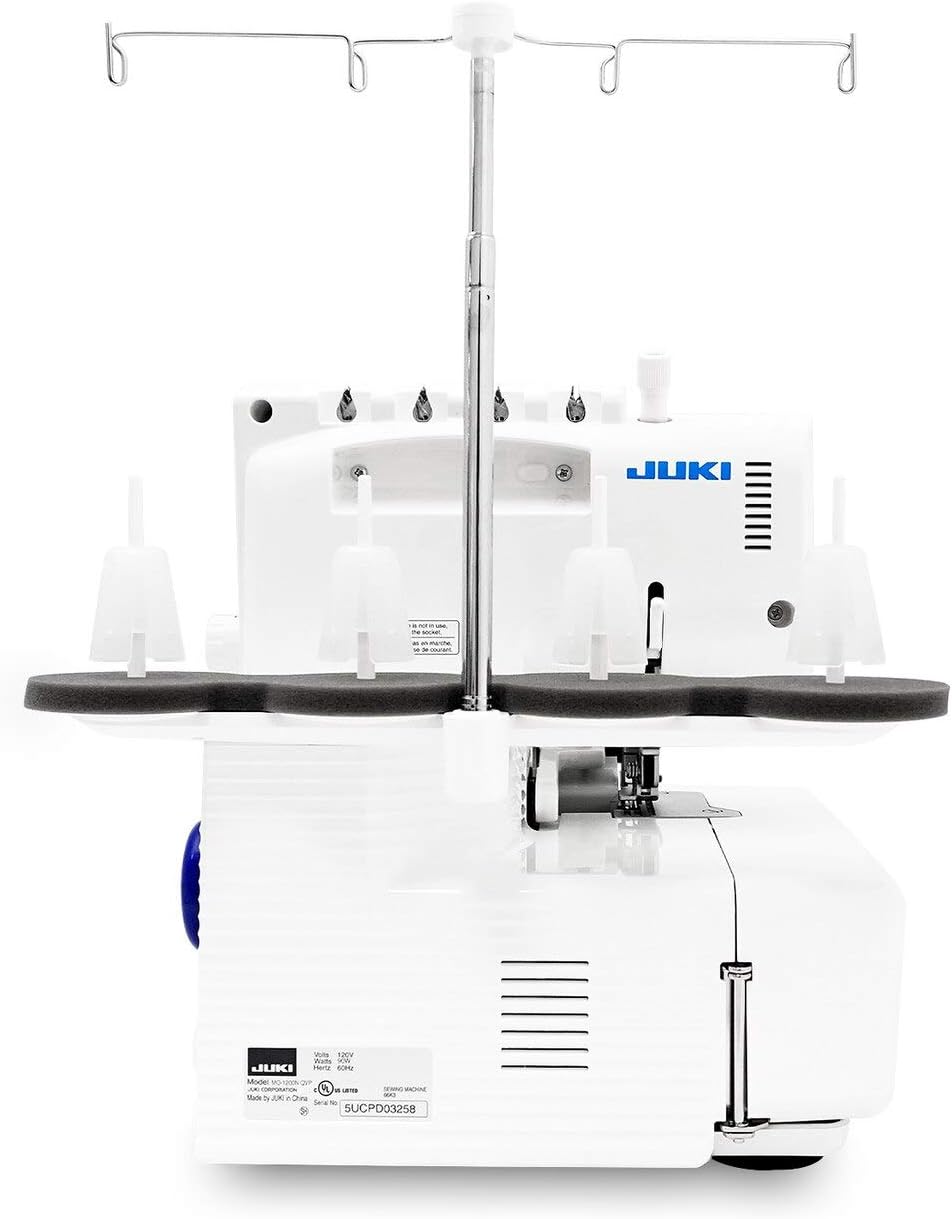
Figure 3.2: Rear view of the serger, illustrating the thread spool holder and power input port.

Figure 3.3: Detailed view of the color-coded tension dials, crucial for stitch formation.
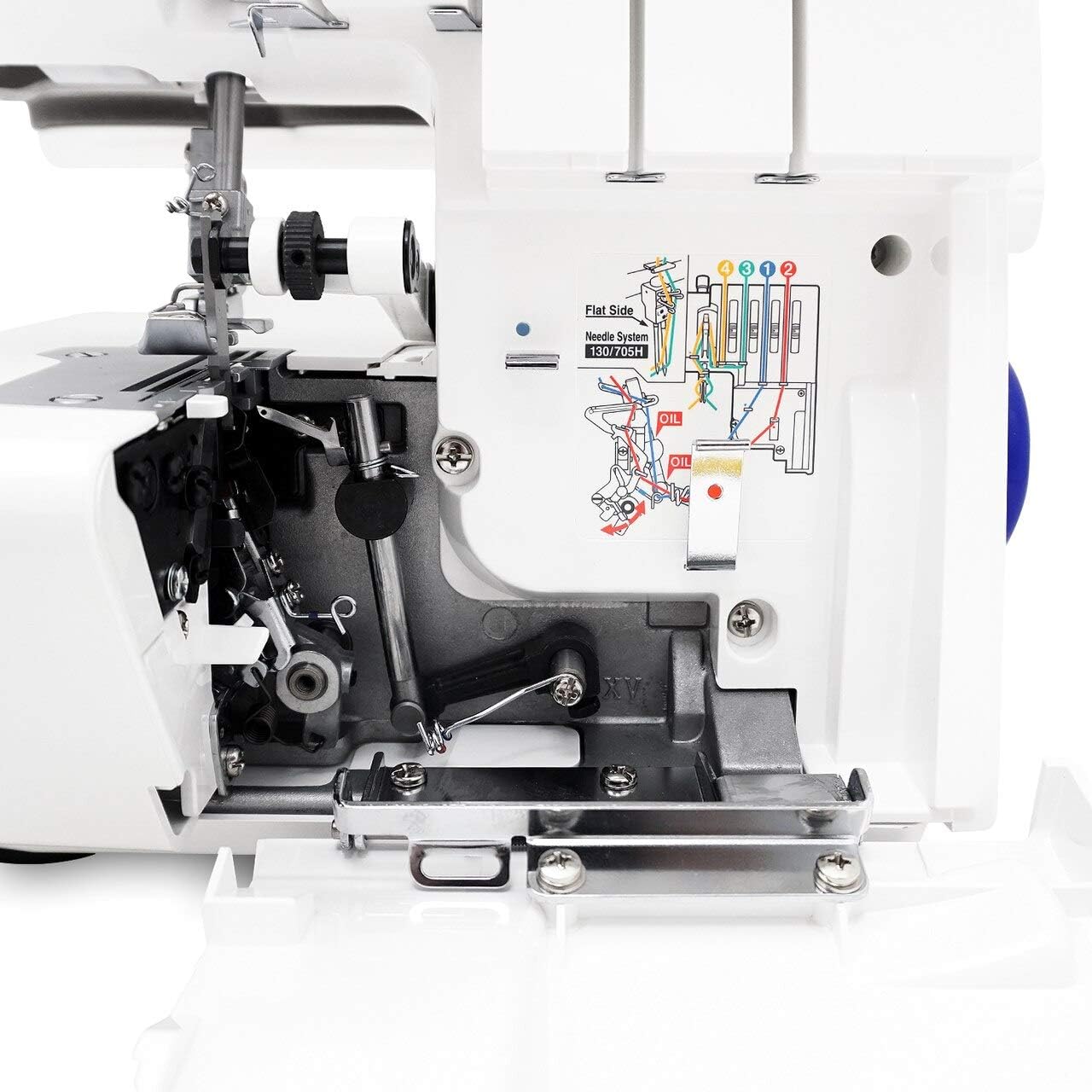
Figure 3.4: The looper area with the front cover open, revealing the internal threading paths and a helpful diagram.

Figure 3.5: Close-up of the needle bar, presser foot, and cutting blades.

Figure 3.6: Side view displaying the differential feed adjustment dial and stitch length control.
4. Setup
4.1 Unpacking
Carefully remove the serger from its packaging. Retain all packing materials for future transport or storage. Ensure all accessories listed in the packing list are present.
4.2 Power Connection
- Place the machine on a stable, level surface.
- Connect the foot controller plug to the machine's foot controller jack.
- Insert the power cord into the machine's power input port (refer to Figure 3.2).
- Plug the power cord into a suitable electrical outlet.
4.3 Thread Spool Installation
Place the thread spools onto the spool pins on the thread stand (refer to Figure 3.2). Ensure the thread unwinds smoothly from each spool.
4.4 Threading the Machine
Accurate threading is critical for proper serger function. Follow the color-coded threading paths indicated on the machine and in Figure 3.4. It is recommended to thread the loopers first, then the needles.
- Raise the presser foot and turn the handwheel to raise the needles to their highest position.
- Open the front and side covers of the machine.
- Follow the color-coded guides for each thread, starting with the upper looper, then the lower looper, and finally the right and left needles.
- Ensure each thread passes through all tension discs and guides correctly.
- Close the covers securely after threading.
5. Operating Instructions
5.1 Basic Serging
- Turn on the power switch.
- Place the fabric under the presser foot, aligning the edge with the cutting blade.
- Lower the presser foot.
- Gently press the foot controller to begin serging. Guide the fabric smoothly.
5.2 Adjusting Thread Tension
The Juki MO-1200QVP features individual tension dials for each thread (refer to Figure 3.3). Adjust these dials to achieve a balanced stitch. A balanced stitch will have the needle threads meeting at the edge of the fabric and the looper threads interlocking smoothly.
- Increasing Tension: Turn the dial to a higher number.
- Decreasing Tension: Turn the dial to a lower number.
5.3 Differential Feed Adjustment
The differential feed mechanism (refer to Figure 3.6) allows you to adjust the feeding ratio of the front and rear feed dogs. This is essential for preventing stretching on knit fabrics or gathering on fine fabrics.
- Normal Feed (N): For most woven fabrics.
- Gathering (1.5 - 2): For intentionally gathering fabric.
- Stretching Prevention (0.7 - 0.9): For preventing stretching on knit fabrics.
5.4 Stitch Length and Width
Adjust the stitch length and cutting width using the dedicated dials on the machine (refer to Figure 3.6 for stitch length). Refer to the machine's markings for recommended settings for various stitch types.
6. Maintenance
6.1 Cleaning
Regular cleaning is vital for optimal performance. Use a small brush and vacuum cleaner to remove lint and thread scraps from the looper area, under the needle plate, and around the feed dogs. Always disconnect power before cleaning.
6.2 Oiling
Apply a small drop of high-quality sewing machine oil to the designated oiling points as indicated in the detailed diagram within your machine's internal cover or the full printed manual. Oiling should be done periodically based on usage.
6.3 Needle Replacement
Use only 130/705H type needles. Replace needles regularly, especially if they become bent, dull, or if you experience skipped stitches. Ensure the flat side of the needle faces the back of the machine when inserting (refer to Figure 3.5).
7. Troubleshooting
- Skipped Stitches: Check needle insertion, ensure it's not bent or dull. Re-thread the machine carefully.
- Thread Breakage: Verify correct threading, check tension settings, ensure thread quality, and inspect for burrs on thread guides.
- Uneven Seams: Adjust differential feed settings according to fabric type. Check tension balance.
- Machine Not Starting: Ensure power cord is securely plugged in, power switch is on, and foot controller is connected.
For persistent issues, consult a qualified service technician.
8. Specifications
| Product Dimensions | 13.8 x 15.7 x 14.7 inches |
| Item Weight | 21 pounds |
| Item Model Number | MO-1200 |
| Brand | JUKI |
| Is Electric | Yes |
9. Warranty and Support
For information regarding warranty coverage, service, or technical support, please refer to the warranty card included with your product or visit the official Juki website. Keep your purchase receipt as proof of purchase.