1. Introduction
This manual provides essential information for the proper installation, operation, and maintenance of your UAYESOK TWAYRDIO UHF 3-Element Yagi Antenna. This high-gain directional antenna is designed for the 400-470MHz frequency band, making it suitable for various applications including Ham Radio, GMRS Repeater Systems, 433MHz devices, and FM scanners.
The Yagi antenna is composed of an active vibrator, a reflector, and a number of directors. The reflector, which is longer than the active vibrator, reflects energy. The directors, which are shorter than the active vibrator, direct the energy. This configuration changes the original bidirectional radiation into unidirectional radiation, significantly improving the antenna's gain and directionality.
2. Product Features
- Frequency Range: UHF 400-470MHz
- Gain: 7dBi (at 430MHz)
- Elements: 3 Elements
- Maximum Power Input: 100W
- Connector: SL16/UHF Female
- Impedance: 50Ω
- VSWR: Less than 1.5
- Bandwidth: 20MHz
- Front To Back Ratio: >15 dB
- Dimensions: 430mm x 380mm (approx. 16.93 x 14.96 inches)
- Weight: 0.3Kg (approx. 10.8 ounces)
- Polarization: Horizontal 3dB Beam Width: 53°, Vertical 3dB Beam Width: 45°
- Construction: Aluminum alloy, antioxidant, lightweight, high strength, waterproof, corrosion resistant.
- Wind Resistance: Rated wind velocity 60 m/s.
- Applications: Suitable for Baofeng, Motorola, Yaesu, Kenwood amateur 2-way radios, GMRS Repeater Systems, police scanners, 433MHz radio systems, data radio, satellite work, and digital radio.
3. Package Contents
Upon opening the package, verify that all components are present and undamaged. The typical package includes:
- TWAYRDIO UHF 3-Element Yagi Antenna (main boom with elements)
- U-Bracket for mounting
- Mounting hardware (nuts, bolts, washers, rectangular plate)
- Hex key (Allen wrench) for assembly

Figure 3.1: Package Contents. This image displays the folded antenna, a U-shaped mounting bracket, various nuts, bolts, and washers for installation, and a small hex key, all laid out on a flat surface.
4. Setup and Installation
Proper installation is crucial for optimal performance and longevity of your Yagi antenna. Follow these steps carefully.
4.1 Assembly
- Carefully unfold the antenna elements from the main boom.
- Ensure all elements are securely in place. The antenna is designed for simple assembly.
- Connect your coaxial cable (not included) to the SL16/UHF Female connector on the antenna. Ensure a tight and secure connection.

Figure 4.1: Antenna Connection Point. This image shows a close-up of the antenna's feed point, where a hand is using a hex key to secure a component near the UHF female connector.
4.2 Mounting
The antenna is designed for outdoor use and can be mounted on a pole or mast using the provided U-bracket.
- Select a mounting location that is as high as possible and clear of obstructions to ensure optimal signal reception and transmission.
- The U-bracket is suitable for columns with a diameter of approximately 4cm (see Figure 4.2).
- Securely attach the antenna to the mounting surface using the U-bracket and supplied hardware. Ensure all nuts and bolts are tightened to prevent movement in strong winds.

Figure 4.2: U-Bracket Dimensions. This image highlights the U-bracket and indicates it is suitable for mounting on columns with a diameter of approximately 4cm.
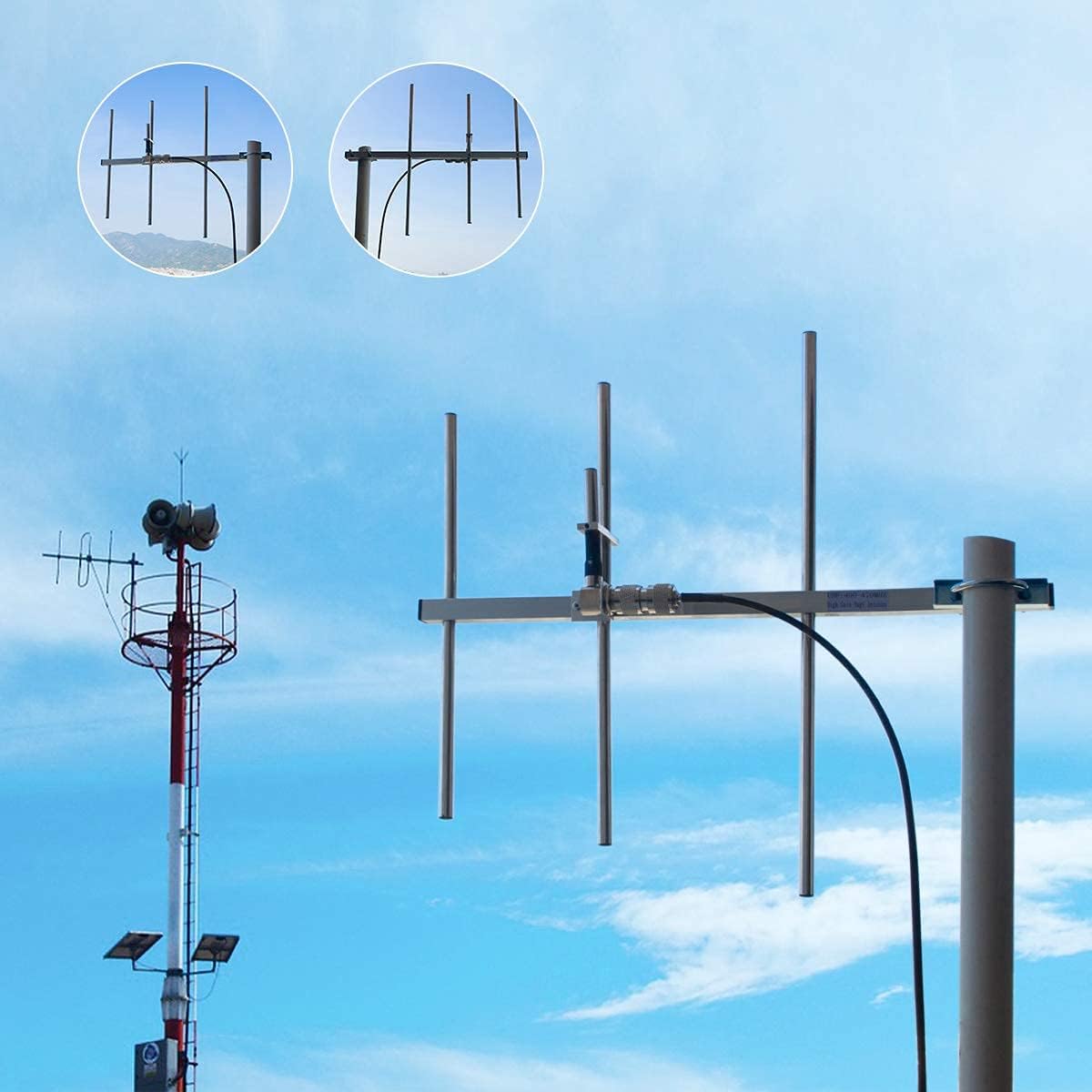
Figure 4.3: Outdoor Installation Example. This image shows the Yagi antenna mounted horizontally on a pole in an outdoor setting, with a communication tower visible in the background.
4.3 Polarization and Orientation
- When receiving, if the vibrator (elements) is perpendicular to the ground (vertical polarization), it is conducive to long-distance communication.
- If the vibrator is parallel to the ground (horizontal polarization), it will affect the gain and form an angle with the ground, which is generally not conducive to long-distance communication for typical terrestrial applications.
- Never mount a vertically polarized Yagi in the middle of the boom on a metal mast, as this can interfere with performance.

Figure 4.4: Correct vs. Wrong Installation. This image illustrates the difference between a correct (vertically oriented) and incorrect (horizontally oriented) antenna installation for optimal long-distance communication.
4.4 Grounding and Lightning Protection
In most cases, the Yagi antenna does not require a direct grounding connection for operation. However, for safety and protection against lightning strikes, it is highly recommended to:
- Ground the antenna via the outer conductor of the connector and the coaxial cable.
- Alternatively, ground through the mounting hardware if it is connected to a grounded mast.
- Install a lightning surge protector between the antenna and your radio equipment. This will help prevent damage to your devices in the event of a lightning strike near the antenna.
5. Operation
Once installed, the TWAYRDIO Yagi antenna is ready for use with compatible UHF radio equipment.
- Connect the antenna to your radio (e.g., handheld, mobile, or repeater system) using a suitable coaxial cable with a UHF male connector.
- Due to its directional nature, point the antenna towards the desired signal source or repeater for optimal performance.
- The high gain and strong directionality of this antenna will significantly increase your radio's signal strength and improve long-distance communication capabilities.

Figure 5.1: Antenna Connected to Handheld Radio. This image shows the Yagi antenna connected to a handheld two-way radio via a coaxial cable, demonstrating a typical operational setup.
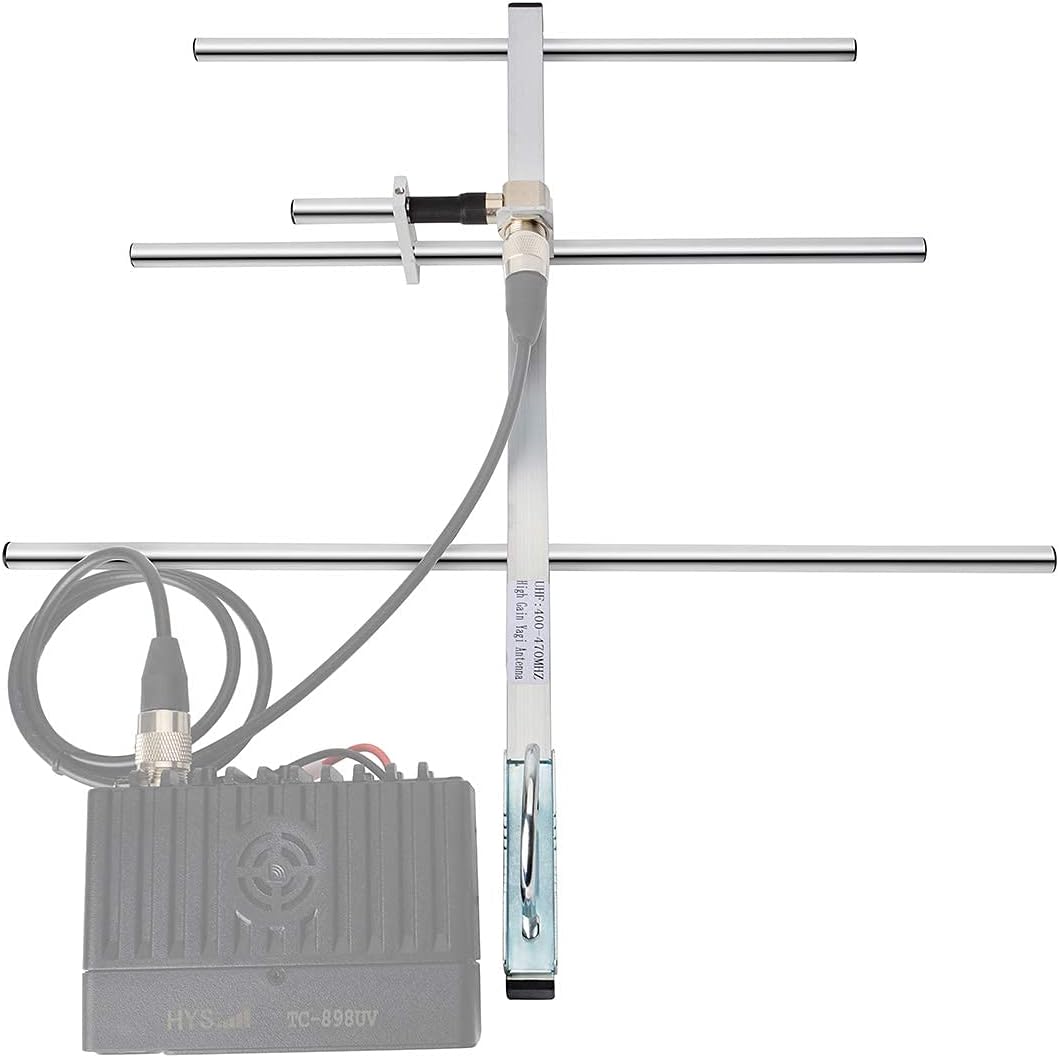
Figure 5.2: Antenna Connected to Mobile Radio. This image displays the Yagi antenna connected to a mobile radio unit, illustrating another common operational configuration.
6. Maintenance
The TWAYRDIO Yagi antenna is constructed from durable aluminum alloy, designed to withstand outdoor conditions. Minimal maintenance is required.
- Regular Inspection: Periodically inspect the antenna and its mounting hardware for any signs of wear, corrosion, or loosening.
- Cleaning: If necessary, gently clean the antenna elements and boom with a soft cloth and mild detergent to remove dirt, dust, or debris. Avoid abrasive cleaners.
- Connection Check: Ensure the coaxial cable connection remains tight and free from moisture. Consider using weatherproofing tape around the connector for added protection.
- Wind Resistance: While designed for strong winds, extreme weather conditions may require additional inspection after the event.
7. Troubleshooting
This section addresses common questions and issues you might encounter.
7.1 SWR (Standing Wave Ratio) Issues
Question: Is the SWR of the antenna required to be less than 1.5?
Answer: Antennas are rigorously tested by a comprehensive measuring instrument before delivery, and the SWR conforms to the technical parameters provided by the manufacturer (less than 1.5) within the antenna's frequency range. However, SWR test results are affected by many factors, such as test frequency, antenna installation mode and position, feeder line, and test instrument. Generally speaking, antennas can be used normally when SWR is under 2.0. If your antenna's SWR is too high, please contact customer support for analysis and resolution.
7.2 Indoor or Outdoor Use
Question: Is the antenna suitable for indoor or outdoor use?
Answer: It can be used both indoors and outdoors. The suitability depends on your specific application and environmental conditions.
8. Specifications
| Attribute | Value |
|---|---|
| Frequency Range | UHF 400-470MHz |
| Gain | 7dBi (430MHz) |
| Elements | 3 |
| Maximum Power Input | 100W |
| Connector Type | SL16/UHF Female |
| Impedance | 50 Ohm |
| VSWR | Less than 1.5 |
| Bandwidth | 20MHz |
| Front To Back Ratio | >15 dB |
| Product Dimensions | 14.96 x 1.89 x 16.93 inches (430mm x 380mm) |
| Item Weight | 10.8 ounces (0.3Kg) |
| Rated Wind Velocity | 60 m/s |
| Mounting Hardware Diameter | Ø30~Ø40 mm |
| Model Number | TWAYRDIO-YG03 |
| UPC | 717186296607 |
9. Warranty and Support
Specific warranty details for the UAYESOK TWAYRDIO Yagi Antenna are not provided in this manual. For information regarding warranty coverage, technical support, or any product-related inquiries, please contact the manufacturer or the seller directly through their official channels.
You can often find contact information on the product packaging, the seller's website, or through the platform where the product was purchased.