
WilTec 61813
WilTec 2X Canoe and Kayak Roof Racks Instruction Manual
Model: 61813
1. Introduction
Thank you for choosing the WilTec 2X Canoe and Kayak Roof Racks. This manual provides essential information for the safe and effective installation, operation, and maintenance of your new roof racks. Please read these instructions carefully before use and retain them for future reference.
Safety Information
- Always ensure all components are securely fastened before driving.
- Do not exceed the maximum load capacity of 34 kg (75 lbs) for the racks or your vehicle's roof load limit.
- Regularly check the tightness of all bolts and straps, especially during long journeys.
- Drive at reduced speeds, especially in windy conditions or on uneven terrain, when carrying a load.
- Distribute the weight evenly on the roof racks.
- Be aware of increased vehicle height and width when loaded.
2. Product Components
The WilTec 2X Canoe and Kayak Roof Racks package includes the following components:
- 2x J-Bar Roof Rack Units
- Mounting Hardware (bolts, nuts, washers)
- 2x Fastening Straps
- Soft Foam Padding (pre-installed on J-bars)

Figure 2.1: Overview of the WilTec 2X Canoe and Kayak Roof Racks, including the J-bar units and accompanying fastening straps.
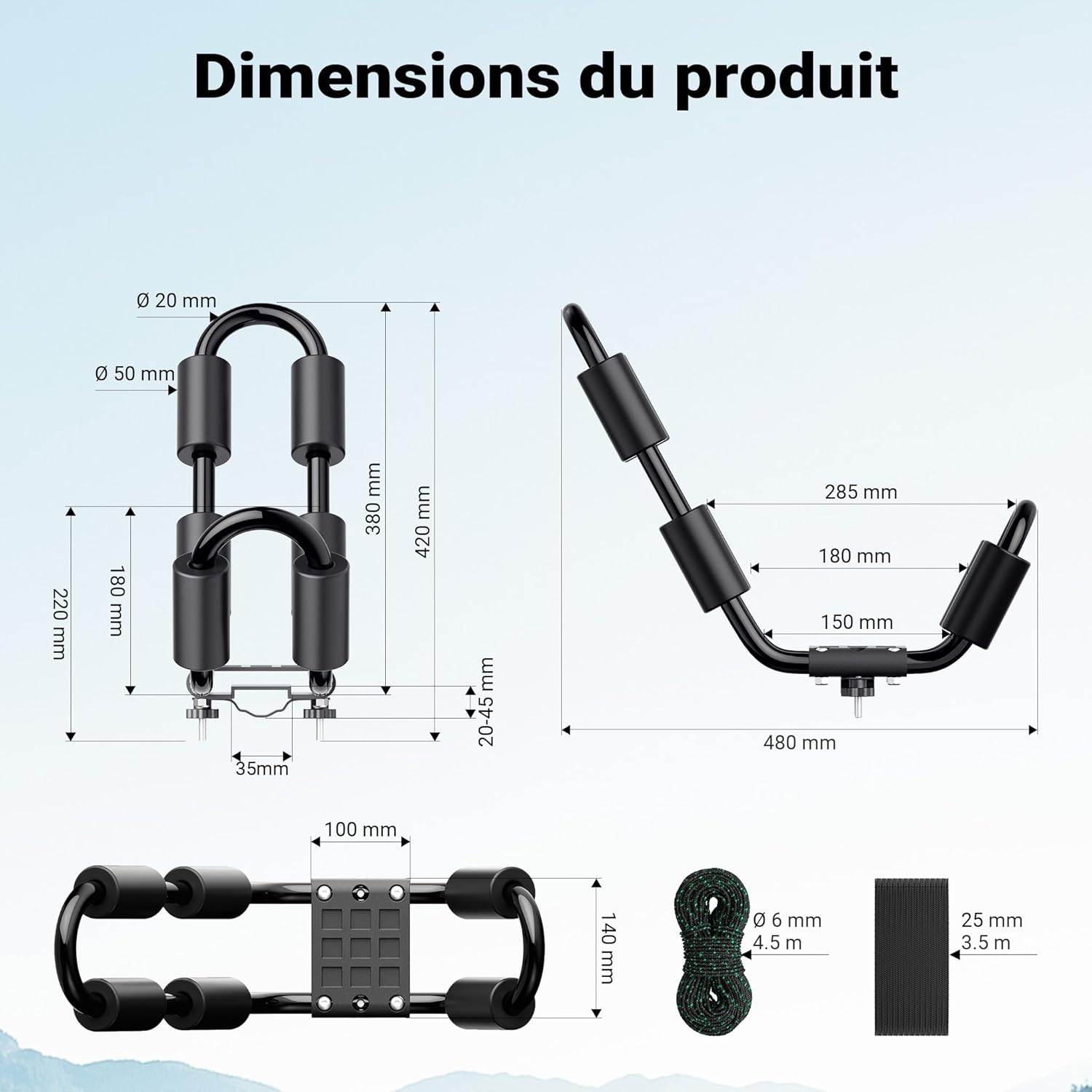
Figure 2.2: Detailed technical drawing showing the dimensions of the J-bar roof rack components, including height, width, and tube diameters.
3. Setup and Installation
The WilTec J-Bar roof racks are designed for easy installation on most universal roof bars. No additional tools are required beyond what is provided.
- Prepare Your Vehicle: Ensure your vehicle's roof bars are clean and securely mounted according to their manufacturer's instructions.
- Position the J-Bars: Place one J-bar unit on each of your vehicle's roof bars. Ensure they are spaced appropriately to support your canoe or kayak. The J-bars should be positioned to allow for even weight distribution.
- Attach Mounting Hardware: Use the provided bolts, nuts, and washers to secure the J-bar units to your roof bars. The design allows for quick and straightforward attachment. Tighten all fasteners firmly by hand.
- Verify Stability: After installation, gently shake each J-bar unit to ensure it is stable and does not wobble. Re-tighten any loose fasteners.

Figure 3.1: An illustration of a kayak securely mounted on the WilTec J-Bar roof racks, demonstrating proper positioning and support.

Figure 3.2: The WilTec roof racks enable quick installation (approx. 60 seconds) and support a load capacity of up to 34 kg, as shown with a kayak on a vehicle.
4. Operating Instructions
Once the J-bar roof racks are securely installed, you can proceed to load your watercraft.
- Loading the Watercraft: Carefully lift your canoe or kayak and place it into the J-shaped cradles of the roof racks. The soft foam padding will protect your watercraft from scratches and provide a stable base.
- Securing with Straps: Use the provided fastening straps to secure the watercraft to the J-bars and your vehicle's roof bars. Thread the straps over the watercraft and through the J-bar structure, ensuring a tight and secure fit.
- Double-Check Security: Before driving, always double-check that the watercraft is firmly secured and cannot shift during transit. Tug on the watercraft and straps to confirm tightness.

Figure 4.1: A kayak is shown securely fastened to the roof racks using the included tie-down straps, highlighting the fixed tightening mechanism for maximum security.

Figure 4.2: The WilTec roof racks offer versatile use, capable of transporting various sports equipment such as kayaks, canoes, SUP boards, and skis.
5. Maintenance
To ensure the longevity and continued performance of your WilTec roof racks, follow these maintenance guidelines:
- Regular Inspection: Periodically inspect all components for signs of wear, damage, or corrosion. Pay close attention to the foam padding, straps, and mounting hardware.
- Cleaning: Clean the roof racks with mild soap and water after use, especially if exposed to saltwater or dirt. Rinse thoroughly and dry completely to prevent rust.
- Storage: When not in use, store the roof racks in a dry, protected area to prevent exposure to extreme weather conditions.
- Hardware Check: Before each use, check the tightness of all bolts and nuts. Over time, vibrations can cause fasteners to loosen.

Figure 5.1: An illustration highlighting the robust construction and excellent design of the WilTec roof racks, featuring rubber-covered pads, stable and durable iron tubing, thick padding, and stable supports.
6. Troubleshooting
| Problem | Possible Cause | Solution |
|---|---|---|
| Racks feel loose after installation. | Mounting hardware not tightened sufficiently. | Re-tighten all bolts and nuts firmly. Ensure they are snug against the roof bars. |
| Watercraft shifts during transit. | Straps are not tight enough or improperly routed. | Ensure straps are pulled taut and secured properly. Consider adding additional tie-down points if necessary. |
| Scratches on watercraft. | Foam padding is worn or damaged; improper loading. | Inspect foam padding for damage. Replace if necessary. Ensure watercraft is placed gently into the cradles. |
| Unusual noise from roof racks while driving. | Loose components or improper aerodynamic positioning. | Check all fasteners for tightness. Adjust the position of the racks or watercraft if possible to reduce wind noise. |
7. Specifications
| Model Number | 61813 |
| Brand | WilTec |
| Main Material | Iron |
| Color | Black |
| Dimensions (Package) | 46.6 x 22.6 x 16 cm (18.3 x 8.9 x 6.3 inches) |
| Weight (Package) | 3.76 kg (8.29 lbs) |
| Max Load Capacity | 34 kg (75 lbs) |
8. Warranty and Support
For warranty information or technical support regarding your WilTec 2X Canoe and Kayak Roof Racks, please refer to the official WilTec website or contact their customer service directly. Keep your purchase receipt as proof of purchase.
For further assistance, you may visit the WilTec Brand Store on Amazon.
Ask a question about this manual
Ask about setup, troubleshooting, compatibility, parts, safety, or missing instructions. Manuals+ will review the question and use this page’s manual context to help answer it.