1. Introduction
This user manual provides essential information for the safe and efficient operation, installation, and maintenance of your Beko HS210530N chest freezer. Please read these instructions thoroughly before using your appliance and keep them for future reference. Following these guidelines will ensure optimal performance and extend the lifespan of your freezer.
2. Safety Information
General Safety:
- Ensure the appliance is unplugged before cleaning or maintenance.
- Do not damage the refrigerant circuit.
- Do not use electrical appliances inside the food storage compartments unless they are of the type recommended by the manufacturer.
- Keep ventilation openings clear of obstruction.
- This appliance is not intended for use by persons (including children) with reduced physical, sensory or mental capabilities, or lack of experience and knowledge, unless they have been given supervision or instruction concerning use of the appliance by a person responsible for their safety.
- Children should be supervised to ensure that they do not play with the appliance.
Electrical Safety:
- The appliance must be connected to a grounded power outlet.
- Do not use extension cords or multiple adapters.
- Do not pull the power cord to disconnect the appliance. Always grasp the plug firmly.
- If the supply cord is damaged, it must be replaced by the manufacturer, its service agent, or similarly qualified persons to avoid a hazard.
3. Product Overview
The Beko HS210530N is a compact and efficient chest freezer designed for reliable food storage. It features a generous 104-liter capacity and incorporates advanced technologies to enhance performance and user convenience.
Key Features:
- 104 Liter Capacity: Ample space for freezing large items and quantities of food.
- MinFrost Technology: Significantly reduces ice build-up, leading to less frequent defrosting and improved energy efficiency.
- SuperFrost Function: Rapidly freezes fresh food to preserve nutrients and flavor.
- Low Noise Operation: Operates quietly at 39 dBA, suitable for various placements.
- Removable Basket: A practical basket is included for organizing smaller items.
- Lockable Lid: Provides security for stored contents.
- Suitable for Unheated Environments: Designed to operate effectively in ambient temperatures up to 43°C.
What's in the Box:
- Beko HS210530N Chest Freezer
- Food Storage Basket
- User Manual (this document)
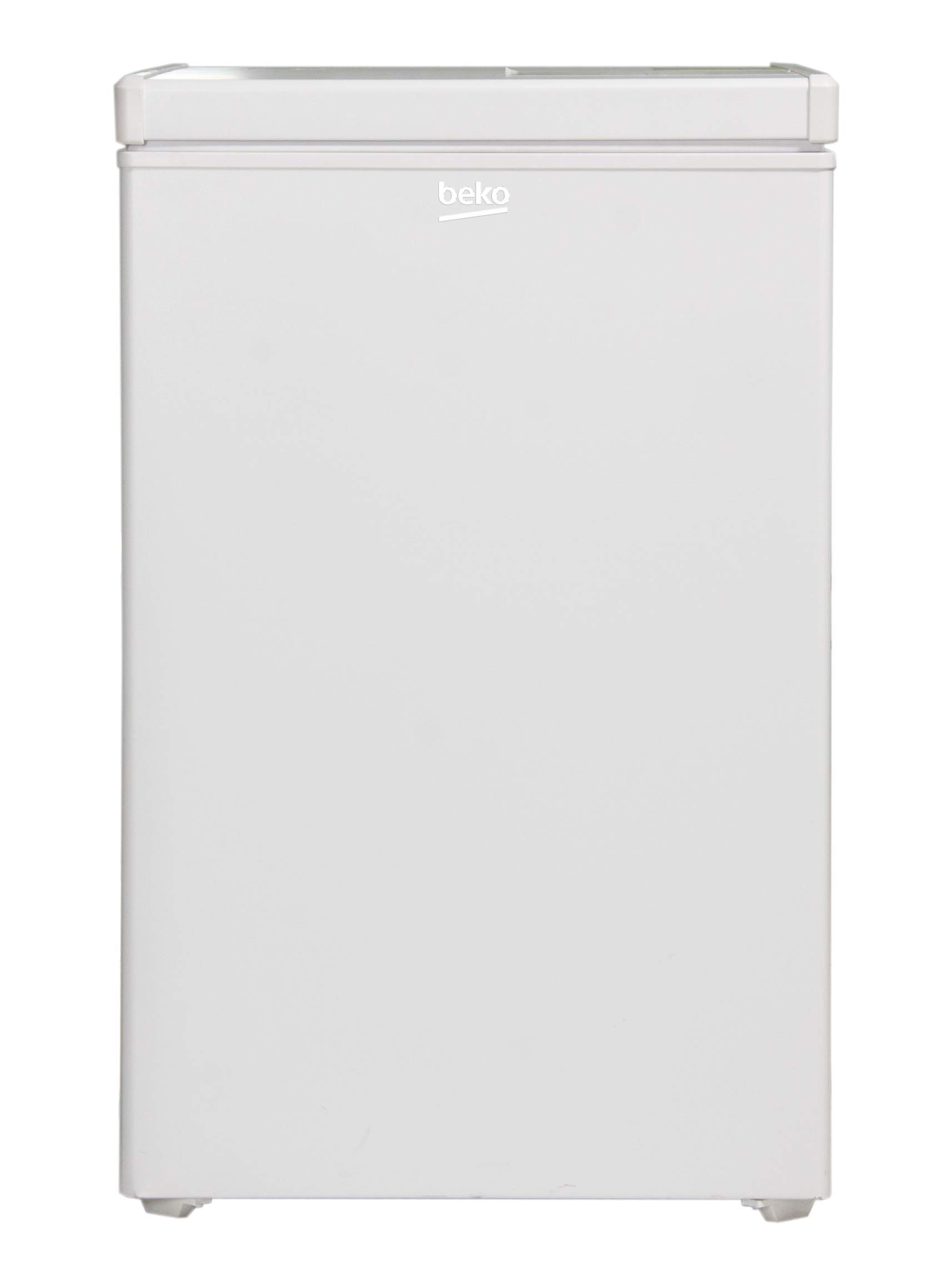
Image: The Beko HS210530N chest freezer with its lid open, revealing the interior and the included storage basket. This view highlights the accessible design for loading and retrieving frozen items.
4. Setup
Proper setup is crucial for the performance and longevity of your freezer.
4.1 Unpacking
- Carefully remove all packaging materials.
- Inspect the freezer for any damage incurred during transit. Report any damage to your retailer immediately.
- Keep packaging materials out of reach of children.
4.2 Placement
- Location: Choose a dry, well-ventilated area. Avoid direct sunlight and heat sources (e.g., ovens, radiators).
- Clearance: Ensure adequate space around the freezer for proper air circulation. Leave at least 10 cm (4 inches) of space at the back and sides.
- Leveling: Place the freezer on a firm, level surface. Adjust the leveling feet if necessary to ensure stability and prevent vibrations.
- Ambient Temperature: This appliance is designed for climate class SN-T, meaning it can operate in ambient temperatures ranging from 10°C to 43°C.
4.3 First Use
- Cleaning: Before first use, clean the interior of the freezer with a mild detergent and warm water. Wipe dry thoroughly.
- Waiting Period: After positioning the freezer, wait at least 4 hours before plugging it into the power outlet. This allows the refrigerant fluids to settle.
- Power Connection: Plug the freezer into a dedicated, grounded electrical outlet.
- Initial Cooling: Allow the freezer to run empty for 2-4 hours to reach its operating temperature before loading food.
5. Operating Instructions
Understanding how to operate your freezer will help maintain food quality and energy efficiency.
5.1 Temperature Control
- The temperature control dial is typically located on the front or side of the freezer.
- Adjust the dial to set the desired freezing temperature. Lower numbers usually indicate warmer temperatures, while higher numbers indicate colder temperatures.
- The recommended operating temperature for frozen food storage is -18°C (0°F) or colder.
- Allow 24 hours for the temperature to stabilize after making adjustments.
5.2 SuperFrost Function
- The SuperFrost function is designed for rapid freezing of fresh food.
- Activate SuperFrost approximately 24 hours before placing a large quantity of fresh food into the freezer.
- Place fresh food in the freezer. The SuperFrost function will rapidly lower the temperature to quickly freeze the items, preserving their quality.
- The function will automatically switch off after a certain period (e.g., 24-48 hours) or can be manually deactivated. Refer to the specific control panel instructions on your appliance for details.
5.3 Loading Food
- Do not overload the freezer. Leave some space between items for air circulation.
- Use the provided basket for smaller, frequently accessed items.
- Ensure food is properly packaged in airtight containers or freezer bags to prevent freezer burn and odor transfer.
- Avoid placing hot food directly into the freezer; allow it to cool down first.
5.4 Locking Mechanism
- If your freezer is equipped with a lock, use the provided key to secure the lid.
- Keep the key in a safe place, out of reach of children.
6. Maintenance
Regular maintenance ensures your freezer operates efficiently and hygienically.
6.1 Defrosting
- Although MinFrost technology reduces ice build-up, manual defrosting will still be required periodically.
- Defrost when the ice layer reaches approximately 0.5 cm (0.2 inches) thickness.
- Procedure:
- Unplug the freezer from the power outlet.
- Remove all frozen food and store it in a cool place or another freezer.
- Open the lid and place towels or a shallow pan at the bottom to collect melting ice.
- To speed up defrosting, place bowls of hot water inside the freezer (do not use sharp objects to scrape ice).
- Once defrosted, clean and dry the interior thoroughly.
- Plug the freezer back in and allow it to cool before returning food.
6.2 Cleaning
- Interior: Clean regularly with a solution of baking soda and warm water (1 tablespoon baking soda to 1 liter water). Rinse with clean water and dry thoroughly.
- Exterior: Wipe with a soft cloth dampened with mild detergent.
- Door Seal: Clean the door gasket regularly to ensure a tight seal.
- Condenser Coils: Periodically vacuum the condenser coils at the back of the freezer (if accessible) to improve efficiency.
- Always ensure the freezer is unplugged before cleaning.
6.3 Care During Power Outages
- In case of a power outage, keep the freezer lid closed to maintain the internal temperature for as long as possible.
- The freezer can maintain food temperature for up to 23 hours without power, provided the lid remains closed.
- Do not open the lid unnecessarily.
7. Troubleshooting
Before contacting service, check the following common issues and solutions:
| Problem | Possible Cause | Solution |
|---|---|---|
| Freezer does not operate. | No power supply. Plug not inserted correctly. Fuse blown. |
Check power outlet. Ensure plug is fully inserted. Check household fuse/circuit breaker. |
| Freezer is not cold enough. | Temperature setting too high. Lid not closed properly. Too much warm food added. Poor ventilation. |
Adjust temperature to a colder setting. Check lid seal and ensure it's closed. Allow time for freezer to recover. Ensure adequate clearance around the unit. |
| Excessive ice build-up. | Lid opened too frequently. High humidity. Lid seal damaged. |
Minimize lid openings. Ensure food is properly sealed. Inspect and clean/replace lid seal. |
| Unusual noise. | Appliance not level. Objects touching the back of the freezer. |
Adjust leveling feet. Move freezer away from walls or other objects. |
If the problem persists after checking these points, please contact Beko customer service.
8. Specifications
Detailed technical specifications for the Beko HS210530N chest freezer.
| Specification | Value |
|---|---|
| Model Number | HS210530N |
| Brand | Beko |
| Type | Chest Freezer (Freestanding) |
| Total Net Volume | 104 Liters |
| Dimensions (H x W x D) | 86 cm x 53.7 cm x 58.5 cm |
| Weight | 24.5 kg |
| Energy Efficiency Class | F |
| Annual Energy Consumption | 213 kWh/year |
| Noise Level | 39 dBA |
| Climate Class | SN-T (10°C to 43°C) |
| Freezing Capacity | 4.8 kg/24h |
| Temperature Rise Time | 23 hours |
| Voltage / Frequency | 220 - 240 V / 50 Hz |
| Door Material | Stainless Steel |
| Color | White |

Image: The energy label for the Beko HS210530N chest freezer, indicating its F energy efficiency class, annual energy consumption of 213 kWh, 104-liter capacity, and 39 dB noise emission.
For more detailed product information, refer to the EPREL database (Product Information Sheet).
9. Warranty and Support
For warranty information, product registration, or technical support, please contact Beko customer service or visit the official Beko website. Keep your purchase receipt as proof of purchase for warranty claims.
Online Support: For further assistance and detailed product information, you may visit the Beko support page or refer to the general support link provided in some documentation: http://supportarctic.ro (Note: This link may be generic; please refer to your regional Beko support website for the most accurate information).


