
1. Introduction
This manual provides comprehensive instructions for the operation and maintenance of your Fujitsu Air Conditioner Remote Control, compatible with models AR-BB1, AR-BB2, and AR-DB5. Please read this manual carefully before using the remote control to ensure proper function and longevity.
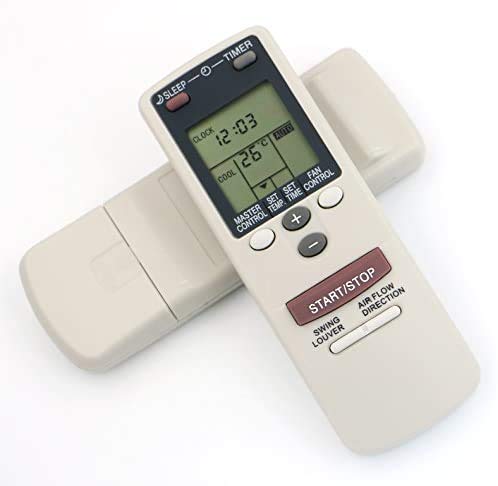
Image 1.1: Front view of the Fujitsu Air Conditioner Remote Control. The remote is silver-colored with a display screen at the top and an array of buttons below it.
2. Setup
2.1 Battery Installation
Your remote control requires two AAA alkaline batteries. These batteries are included with your purchase.
- Locate the battery compartment cover on the back of the remote control.
- Slide the cover downwards or press the latch to open it.
- Insert two AAA alkaline batteries, ensuring the positive (+) and negative (-) terminals align correctly with the markings inside the compartment.
- Replace the battery compartment cover, sliding it back into place until it clicks securely.
Note: Always replace both batteries at the same time. Do not mix old and new batteries or different types of batteries. Remove batteries if the remote control will not be used for an extended period.
3. Operating Instructions
The remote control uses infrared technology to communicate with your Fujitsu air conditioner. Ensure there is a clear line of sight between the remote control and the air conditioner's receiver for optimal performance.
3.1 Basic Functions
- Power Button: Press to turn the air conditioner ON or OFF.
- Mode Button: Cycles through operating modes such as Cool, Heat, Fan, Dry, and Auto.
- Temperature Adjustment Buttons (▲/▼): Increases or decreases the desired temperature setting.
- Fan Speed Button: Adjusts the fan speed (e.g., Low, Medium, High, Auto).
- Swing Button: Controls the louver movement for air direction.
- Timer Button: Sets the ON/OFF timer for the air conditioner. Refer to your air conditioner's main manual for detailed timer settings.
4. Maintenance
4.1 Cleaning the Remote Control
To maintain the appearance and functionality of your remote control:
- Wipe the surface with a soft, dry cloth.
- For stubborn dirt, lightly dampen the cloth with water and a mild detergent, then wipe dry immediately.
- Do not use abrasive cleaners, alcohol, or chemical solvents, as these can damage the remote control's surface or internal components.
4.2 Battery Replacement
When the remote control's display dims or its response becomes sluggish, it is time to replace the batteries. Follow the battery installation steps outlined in Section 2.1.
5. Troubleshooting
If you experience issues with your remote control, refer to the following common troubleshooting steps:
- Remote control not responding:
- Check if the batteries are inserted correctly with the correct polarity.
- Replace the batteries with new AAA alkaline batteries.
- Ensure there are no obstructions between the remote control and the air conditioner's receiver.
- Confirm you are within the effective operating range (typically up to 8 meters).
- Air conditioner not responding to specific commands:
- Verify that the remote control's display shows the desired settings.
- Point the remote directly at the air conditioner's receiver.
- If the issue persists, consult your air conditioner's main user manual for specific troubleshooting related to the unit itself.
6. Specifications
| Feature | Description |
|---|---|
| Model Names | AR-BB1, AR-BB2, AR-DB5 |
| Compatible Devices | Fujitsu Air Conditioners |
| Connectivity Technology | Infrared (IR) |
| Power Source | 2 x AAA Alkaline Batteries (included) |
| Weight | 110 Grams |
| Color | Metallic Silver |
| Maximum Supported Devices | 1 |
7. Warranty and Support
Warranty information for this remote control is typically provided by the seller at the time of purchase or included with the product packaging. Please retain your proof of purchase for any warranty claims.
For technical support or further assistance, please contact the retailer or the manufacturer of your Fujitsu air conditioner. Specific contact details may be found in your air conditioner's main user manual or on the manufacturer's official website.


