Introduction
This manual provides essential information for the safe and efficient operation, maintenance, and care of your 2019 Ford F-150 Pickup Truck. Please read it thoroughly to familiarize yourself with your vehicle's features and capabilities. Keep this manual in your vehicle for quick reference.
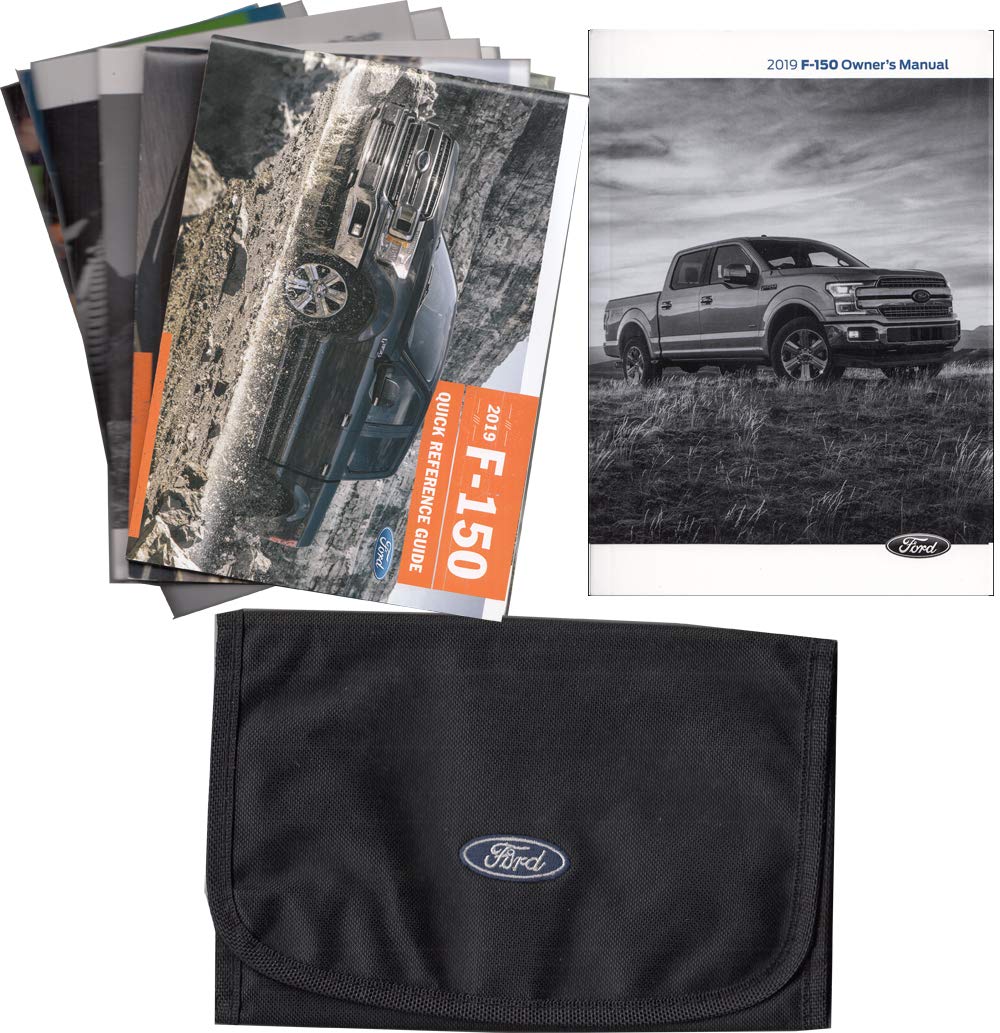
Image: The complete 2019 Ford F-150 Owner's Manual package, including the main manual and supplementary guides, presented in its original case.
Setup and Initial Familiarization
Before driving your F-150, it is important to adjust the vehicle to your preferences and understand its basic controls.
Key Features and Remote Entry
- Unlocking/Locking: Use the remote key fob to lock or unlock doors. Press the unlock button once for the driver's door, twice for all doors.
- Remote Start: If equipped, press the lock button once, then press the remote start button twice within three seconds to start the engine remotely.
- Keyless Entry Keypad: Enter your factory-set or personal code on the door-mounted keypad to unlock the vehicle without the key fob.
Seating and Mirror Adjustments
- Seat Adjustment: Locate the levers or power controls on the side of the seat to adjust seat position, recline, and lumbar support for optimal driving comfort and safety.
- Steering Wheel Adjustment: Use the lever located under the steering column to adjust the steering wheel's tilt and telescope position. Lock it in place before driving.
- Mirror Adjustment: Use the control on the driver's door panel to select and adjust the side mirrors. Adjust the rearview mirror manually for clear visibility.
Dashboard Overview
Familiarize yourself with the instrument cluster, warning lights, and primary controls before driving. Consult the full manual for detailed explanations of each indicator and control.
Operating Your Vehicle
Understanding the operational aspects of your F-150 ensures a safe and enjoyable driving experience.
Starting and Stopping the Engine
- Key Start: Insert the key into the ignition and turn it to the START position. Release the key once the engine starts.
- Push-Button Start (if equipped): With the key fob inside the vehicle, press the brake pedal and then press the ENGINE START/STOP button.
- Stopping: Turn the key to the OFF position or press the ENGINE START/STOP button once (with the vehicle in Park).
Transmission Operation
Your F-150 is equipped with an automatic transmission. Use the gear selector to choose your desired driving mode:
- P (Park): Locks the transmission and prevents the wheels from turning. Always engage Park when leaving the vehicle.
- R (Reverse): For backing up.
- N (Neutral): Allows the wheels to turn freely. Use for towing or in automatic car washes.
- D (Drive): For normal forward driving.
- M (Manual/Sport Mode): Allows manual gear selection using paddle shifters or +/- buttons (if equipped).
Driving Modes (if equipped)
Your F-150 may offer various driving modes to optimize performance for different conditions. These typically include Normal, Tow/Haul, Sport, Snow/Wet, and Eco. Refer to your full manual for details on selecting and utilizing these modes.
Infotainment System Basics
The SYNC infotainment system provides access to audio, navigation, phone connectivity, and vehicle settings. Use the touchscreen, steering wheel controls, or voice commands to interact with the system. Pair your mobile device via Bluetooth for hands-free calling and audio streaming.
Lighting and Wipers
- Headlights: The headlight control knob is typically located on the dashboard to the left of the steering wheel. Settings include Off, Parking Lamps, Headlamps On, and Auto.
- Wipers: The wiper stalk on the right side of the steering column controls wiper speed and washer fluid.
Towing and Hauling
The F-150 is designed for robust towing and hauling. Always adhere to the maximum towing and payload capacities specified in your manual and on the vehicle's safety compliance certification label. Ensure proper trailer connection, weight distribution, and lighting before towing.
Maintenance
Regular maintenance is crucial for the longevity and performance of your 2019 Ford F-150.
Fluid Checks
- Engine Oil: Check the oil level regularly using the dipstick when the engine is warm and turned off. Add recommended oil type if needed.
- Coolant: Verify coolant level in the reservoir when the engine is cool. Do not open the radiator cap when hot.
- Washer Fluid: Keep the windshield washer fluid reservoir filled for clear visibility.
- Brake Fluid: Check the brake fluid level in the reservoir. If low, consult a qualified technician.
Tire Pressure Monitoring System (TPMS)
Maintain correct tire pressure as indicated on the tire placard located on the driver's side door jamb. The TPMS will alert you if a tire's pressure is significantly low. Check tire pressure monthly, including the spare.
Light Bulb Replacement
Refer to the detailed instructions in your full owner's manual for specific procedures on replacing exterior and interior light bulbs. Always use the correct bulb type.
Scheduled Service Intervals
Follow the recommended maintenance schedule outlined in your owner's manual. This typically includes oil changes, tire rotations, filter replacements, and inspections at specific mileage or time intervals to ensure optimal vehicle health and warranty compliance.
Troubleshooting Common Issues
This section addresses common issues you might encounter with your F-150.
Warning Lights
The instrument cluster displays various warning and indicator lights. Consult your manual immediately if a warning light illuminates. Some common lights include:
- Check Engine Light: Indicates an emission control system malfunction. Seek service promptly.
- Oil Pressure Warning: Indicates low engine oil pressure. Stop the vehicle safely and check oil level.
- Battery Light: Indicates a charging system issue.
- Brake System Warning: May indicate low brake fluid or a brake system malfunction.
Flat Tire Procedure
If you experience a flat tire, safely pull over to a level area away from traffic. Refer to your manual for instructions on locating the spare tire, jack, and tools, and for the step-by-step process of changing a tire. Always use caution and follow safety guidelines.
Jump Starting Your Vehicle
If your vehicle's battery is discharged, it can be jump-started using jumper cables and another vehicle with a 12-volt battery. Follow the specific instructions in your manual carefully to avoid damage to electrical systems or personal injury.
Specifications
Key specifications for the 2019 Ford F-150 Pickup Truck.
| Feature | Detail |
|---|---|
| Model Year | 2019 |
| Engine Options | Various EcoBoost V6, V8, and Diesel options (specifics vary by trim) |
| Fuel Type | Gasoline (specific octane may vary by engine), Diesel (for Power Stroke) |
| Transmission | 10-speed automatic |
| Towing Capacity | Up to 13,200 lbs (varies by configuration) |
| Payload Capacity | Up to 3,270 lbs (varies by configuration) |
| Overall Length | Varies by cab and bed configuration |
| Item Weight (Manual Package) | 1.34 pounds |
| Manual Dimensions | 7.25 x 5.25 x 0.7 inches |
| Language | English |
| Print Length | 641 pages |
Note: Vehicle specifications are general and can vary based on trim level, engine, and optional equipment. Always refer to your specific vehicle's documentation for precise figures.
Warranty and Support
Your 2019 Ford F-150 comes with a comprehensive warranty. Details regarding coverage, duration, and limitations are provided in the separate Warranty Guide included with your owner's manual package.
Customer Support
For further assistance, questions, or to locate an authorized Ford service center, please contact Ford Customer Service or visit the official Ford website.
- Ford Official Website: www.ford.com
- Customer Service: Refer to your warranty guide or the Ford website for current contact information.
Always ensure any service or repairs are performed by qualified technicians using genuine Ford parts to maintain vehicle integrity and warranty validity.


