1. Introduction
This manual provides essential information for the safe and efficient operation, setup, and maintenance of your Briggs & Stratton S5000 5000W Portable Generator, Model 30737. This generator is designed to provide reliable power during outages, featuring a Briggs & Stratton OHV engine and CO Guard technology for enhanced safety.
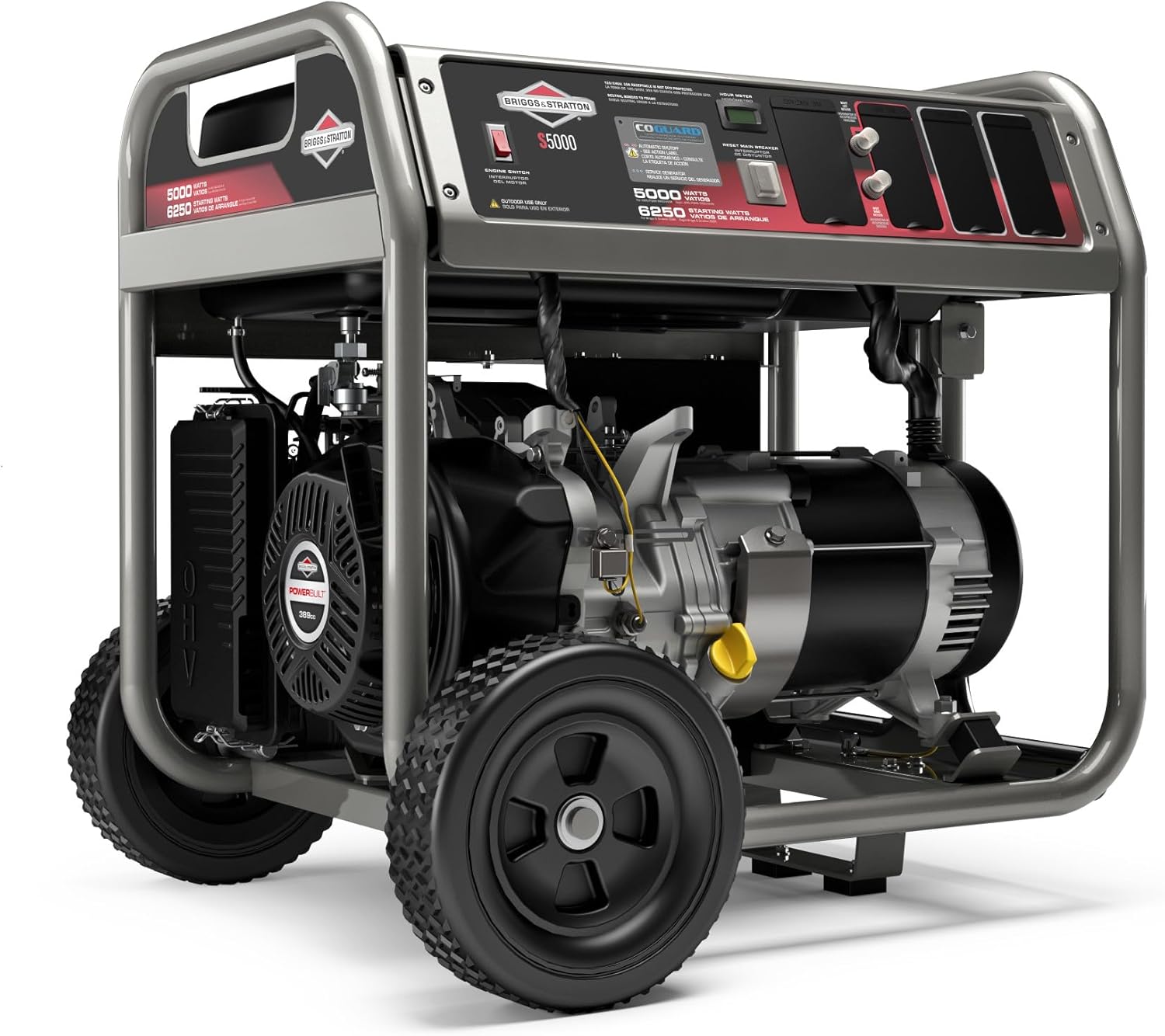
Image 1.1: Briggs & Stratton S5000 5000W Portable Generator. This image displays the generator from a front-side angle, highlighting its robust frame, control panel, and wheels.
2. Safety Information
Operating a generator safely is paramount. Read and understand all safety warnings before use.
2.1 Carbon Monoxide (CO) Hazard
- Generators produce carbon monoxide, a colorless, odorless, poisonous gas.
- NEVER operate the generator indoors, in a garage, or in any partially enclosed area.
- Always operate the generator outdoors in a well-ventilated area, far away from windows, doors, and vents.
- Install battery-operated carbon monoxide alarms in your home.
2.2 CO Guard Technology
Your Briggs & Stratton S5000 generator is equipped with CO Guard Carbon Monoxide Shutdown Technology. This patent-pending system automatically shuts down the generator if harmful levels of carbon monoxide are detected in the operating area. While this technology enhances safety, it is not a substitute for proper ventilation and safe operating practices.
2.3 Fuel Safety
- Gasoline is highly flammable and its vapors are explosive.
- Store fuel in approved containers in a well-ventilated area, away from ignition sources.
- Do not refuel a hot or running engine. Allow the generator to cool before adding fuel.
2.4 Electrical Safety
- Never operate the generator in wet conditions.
- Ensure all electrical connections are secure and properly grounded.
- Do not overload the generator. Refer to the wattage specifications.
3. Setup
Follow these steps for initial setup before operating your generator.
3.1 Unpacking and Assembly
- Carefully remove the generator and all components from the packaging.
- Attach the 10-inch 'Never Go Flat' wheels and the fold-up handle for easy maneuverability. Refer to the assembly diagrams in the separate assembly guide for detailed instructions.
3.2 Adding Engine Oil
- The generator is shipped without engine oil. Add the recommended type and amount of oil before first use.
- Consult the engine manual for specific oil type and capacity.
- Place the generator on a level surface. Remove the oil fill cap/dipstick.
- Slowly pour oil into the engine until it reaches the 'FULL' mark on the dipstick. Do not overfill.
- Securely replace the oil fill cap/dipstick.
3.3 Adding Fuel
- Use fresh, unleaded gasoline with an octane rating of 87 or higher.
- Ensure the generator is turned off and cooled down before adding fuel.
- Open the fuel cap on the 7.5-gallon metal fuel tank.
- Fill the tank, leaving a small air gap at the top to allow for fuel expansion. Do not overfill.
- Securely replace the fuel cap.
4. Operating Instructions
Follow these steps to safely start and operate your generator.
4.1 Starting the Engine
- Ensure the generator is on a level surface, outdoors, and away from any structures.
- Turn the fuel valve to the 'ON' position.
- Move the choke lever to the 'CHOKE' position (if the engine is cold).
- Turn the engine switch to the 'ON' position.
- Pull the recoil starter handle firmly and smoothly until the engine starts.
- Once the engine starts, gradually move the choke lever to the 'RUN' position.
4.2 Connecting Appliances
- Allow the generator to run for a few minutes to stabilize before connecting appliances.
- Connect appliances to the appropriate outlets on the multi-featured control panel. The generator features four 120V household outlets and one 120/240V, 30A locking outlet.
- Do not exceed the generator's rated wattage. The Power Surge Alternator provides a short surge of power for starting large motor-driven appliances, but continuous operation should remain within the rated wattage.
- The control panel is angled for easy visibility during operation.
4.3 Run Time
The 7.5-gallon metal fuel tank allows for up to 12 hours of run time at 50% load, providing extended operation without frequent refueling.
4.4 Shutting Down the Generator
- Disconnect all electrical loads from the generator.
- Allow the generator to run for a few minutes without load to cool down.
- Turn the engine switch to the 'OFF' position.
- Turn the fuel valve to the 'OFF' position.
5. Maintenance
Regular maintenance ensures optimal performance and extends the life of your generator. Always refer to the engine manual for detailed maintenance schedules.
5.1 Hour Meter
The control panel includes an hour meter to help you track operating hours and plan scheduled maintenance, such as oil changes and air filter cleaning.
5.2 Engine Oil
- Check oil level before each use.
- Change engine oil after the first 5 hours of operation, then every 50 hours or annually, whichever comes first.
5.3 Air Filter
- Inspect the air filter regularly.
- Clean or replace the air filter as needed, especially when operating in dusty conditions.
5.4 Spark Plug
- Inspect the spark plug annually or every 100 hours.
- Clean or replace if necessary to ensure proper ignition.
5.5 Storage
- For extended storage, drain the fuel tank or add a fuel stabilizer.
- Change the engine oil.
- Clean the exterior of the generator.
- Store in a clean, dry area.
6. Troubleshooting
This section provides solutions to common operational issues. For problems not listed here, contact customer support.
6.1 Engine Will Not Start
- Check Fuel Level: Ensure there is sufficient fresh gasoline in the tank.
- Check Oil Level: Low oil will prevent the engine from starting due to the low-oil shutdown feature.
- Choke Position: Ensure the choke is in the 'CHOKE' position for a cold engine, or 'RUN' for a warm engine.
- Engine Switch: Verify the engine switch is in the 'ON' position.
- Spark Plug: Inspect the spark plug for fouling or damage.
6.2 No Power Output
- Circuit Breakers: Check if any circuit breakers on the control panel have tripped. Reset if necessary.
- Overload: Reduce the total wattage of connected appliances.
- Connections: Ensure all power cords are securely connected to the generator outlets and appliances.
6.3 CO Guard Shutdown
- If the generator shuts down unexpectedly, the CO Guard system may have detected high levels of carbon monoxide.
- Move the generator to a more open, well-ventilated outdoor area.
- Allow the generator to cool down for at least 5 minutes before attempting to restart.
7. Specifications
| Feature | Specification |
|---|---|
| Model Number | 30737 |
| Brand | Briggs & Stratton |
| Engine Type | Briggs & Stratton OHV Engine, 389cc |
| Wattage | 5000 Watts |
| Fuel Type | Gasoline |
| Fuel Tank Capacity | 7.5 Gallons (Metal) |
| Run Time (at 50% load) | Up to 12 Hours |
| Outlets | (4) 120V Household, (1) 120/240V 30A Locking |
| Special Features | CO Guard Carbon Monoxide Shutdown Technology, Power Surge Alternator, Hour Meter, Rubber Outlet Covers |
| Wheels | 10-inch 'Never Go Flat' |
| Product Dimensions (L x W x H) | 73.66 x 54.61 x 64.77 cm |
| Product Weight | 89.81 kg |
8. Warranty and Support
Your Briggs & Stratton S5000 Portable Generator is backed by a manufacturer's warranty. For specific warranty terms and conditions, please refer to the warranty documentation included with your product or visit the official Briggs & Stratton website.
For technical assistance, parts, or service, please contact Briggs & Stratton customer support. Have your model number (30737) and serial number ready when contacting support.
Briggs & Stratton Official Website: www.briggsandstratton.com


