
Othmro A-1854
Contents
Othmro A-1854 Drive V Belt Instruction Manual
Industrial Power Rubber Transmission Belt
1. Introduction
This manual provides essential information for the proper installation, operation, and maintenance of your Othmro A-1854 Drive V Belt. Adhering to these guidelines will ensure optimal performance and extend the service life of the product.
The Othmro A-1854 Drive V Belt is an industrial power rubber transmission belt designed for various applications. It features high strength and resistance to stretching, ensuring a long service life. The body is constructed from a highly engineered synthetic rubber compound, and the outer fabric wrap is treated for high oil and heat resistance.

Image 1.1: The Othmro A-1854 Drive V Belt, a black industrial power transmission belt.

Image 1.2: Visual representation of the key features of Othmro Drive V-Belts, highlighting high strength, resistance to stretching, various specifications, and long service life.
2. Specifications
The following are the technical specifications for the Othmro A-1854 Drive V Belt:
- Model: A-1854
- Manufacturer Part Number: OTH191031S-0035
- Inside Girth: 1854 mm (72.31 inches)
- Top Width: 13 mm (0.51 inches)
- Height: 8 mm (0.31 inches)
- Material: Highly engineered synthetic rubber compound with oil and heat resistant outer fabric wrap
- Belt Style: V Belt
- Item Weight: 213 Grams (7.5 ounces)
- Product Dimensions (laid flat): 72.31 x 0.51 x 0.04 inches
- Compatible Devices: Lathes, table saws, band saws, other woodworking tools, lawn mowers, and various industrial machinery.
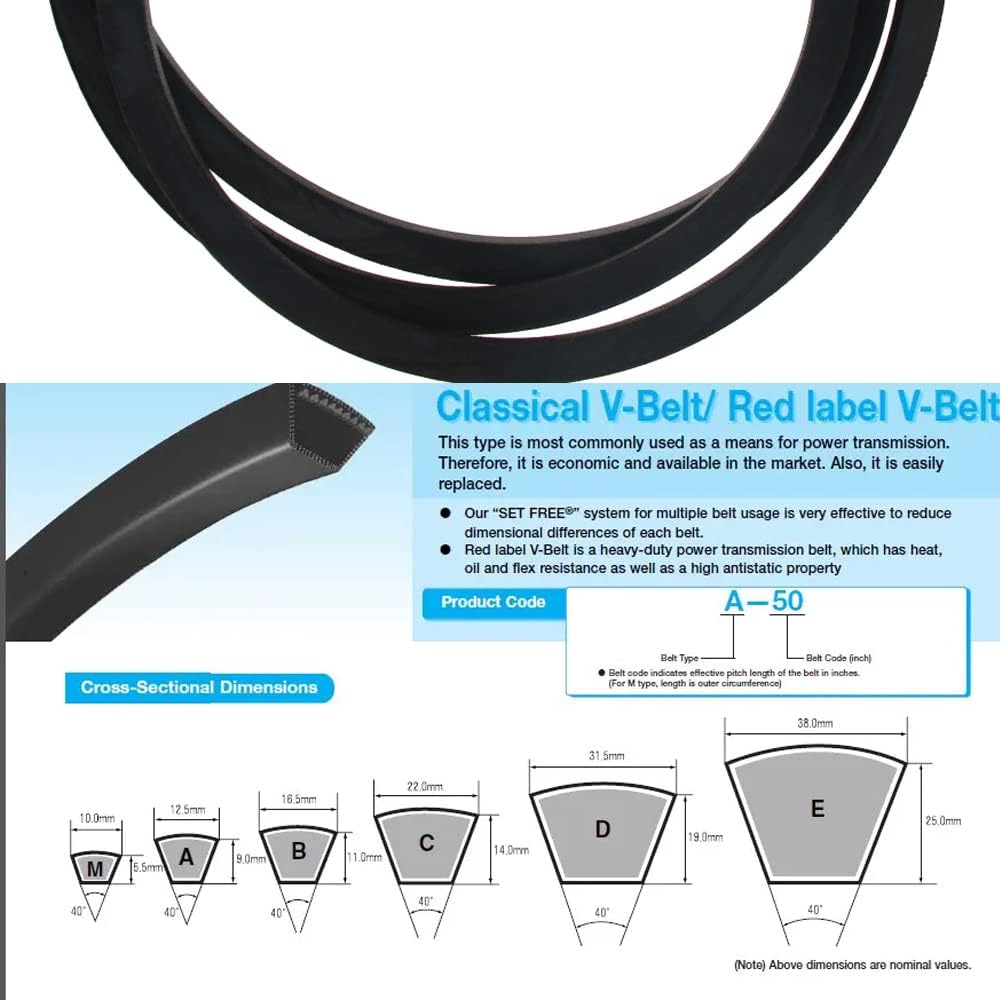
Image 2.1: Diagram illustrating various V-belt types (M, A, B, C, D, E) and their respective cross-sectional dimensions, including width and height, for reference.
3. Setup and Installation
Proper preparation and installation are crucial for the longevity and efficient operation of the V-belt. Follow these steps carefully:
3.1. Preparation
- Check Alignment: Ensure that the pulleys are correctly aligned. Misalignment can significantly shorten the belt's service life and lead to premature wear.
- Lubrication: Periodically lubricate all working parts of the machinery as recommended by the equipment manufacturer.
- Pulley Inspection: Verify that pulley grooves are clean, free from debris, and have equal dimensions. Uneven or damaged grooves can cause belt damage.
- Cleanliness: Before installation, thoroughly check the belt and pulleys for any rust, dirt, or grease. Remove any contaminants that might impede proper belt function or cause slippage.
3.2. Installation
- Positioning: Locate the belt by carefully moving the motor or adjusting the tensioning mechanism to create slack.
- Mounting: Install the belts onto the pulleys one by one, starting with the driving pulley. Avoid forcing the belt.
- Avoid Force: Do not use a lever or any sharp object to force the belt onto the pulleys. This can damage the belt's internal structure or the pulley surfaces.
- Tension Adjustment: After the belt is in place, readjust the tension according to the equipment manufacturer's specifications.
- Initial Run and Re-tension: Apply the recommended tension, run the machine for approximately 5 minutes, and then re-tension the belt. It is advisable to re-tension again after a few days of operation as the belt may stretch slightly.
- Belt Compatibility: Do not combine new and used belts in the same drive system. This can lead to uneven stretch, premature wear, and operational issues.
- Ventilation: Ensure adequate ventilation around the belt drive system to prevent overheating.

Image 3.1: Detailed visual guide for preparing and installing the V-belt, including steps for alignment, lubrication, pulley inspection, and proper tensioning techniques.
4. Operating Guidelines
Once installed, ensure the V-belt operates within its intended parameters. Monitor for any unusual noises, vibrations, or signs of slippage. Regular checks during initial operation can help identify and correct issues early.
- Always operate machinery with appropriate safety guards in place.
- Avoid overloading the drive system beyond its rated capacity, as this can stress the belt and lead to premature failure.
- Ensure the operating environment is free from excessive dust, moisture, or corrosive substances that could degrade the belt material.
5. Maintenance
Consistent maintenance is essential for maximizing the lifespan and reliability of your Othmro V-belt.
- Regular Inspection: Periodically inspect the belt for any signs of wear, cracks, fraying, or hardening. Replace the belt if any significant damage is observed.
- Cleanliness: Keep the belt and pulleys clean and free from debris, oil, grease, and other contaminants. Use a clean cloth to wipe down surfaces.
- Tension Check: Check belt tension regularly (e.g., monthly or as per equipment manufacturer's recommendation) and adjust as necessary. An under-tensioned belt can slip, causing heat buildup and wear, while an over-tensioned belt can strain bearings and reduce belt life.
- Pulley Alignment: Re-verify pulley alignment periodically, especially if the belt shows uneven wear patterns.
- Storage: Store spare belts in a cool, dry place away from direct sunlight, heat sources, and chemicals to prevent material degradation.
6. Applications
The Othmro A-1854 Drive V Belt is suitable for a wide range of industrial and mechanical applications, particularly where reliable power transmission is required.
- Woodworking tools such as lathes, table saws, and band saws.
- Lawn mowers and other outdoor power equipment.
- General industrial machinery requiring power transmission.
- Applications in wind power generation.
- Agricultural equipment.
- Mining equipment.
- Other heavy-duty applications where space, weight, and power requirements are significant.

Image 6.1: Examples of various applications for Othmro V-belts, including wind power, agricultural equipment, mining equipment, and general industrial fields.
7. Troubleshooting
This section addresses common issues that may arise with V-belts and provides potential solutions.
| Problem | Possible Cause | Solution |
|---|---|---|
| Belt Slippage | Insufficient tension, oil/grease on belt/pulleys, worn belt/pulleys. | Adjust tension, clean belt/pulleys, replace worn components. |
| Premature Belt Wear | Incorrect tension (too high or too low), pulley misalignment, foreign objects, worn pulleys, excessive heat. | Adjust tension, check and correct alignment, inspect for obstructions, replace damaged pulleys, ensure proper ventilation. |
| Excessive Noise (Squealing, Chirping) | Belt slippage, pulley misalignment, worn bearings in associated components. | Check and adjust tension, verify pulley alignment, inspect and lubricate/replace bearings. |
| Belt Breakage | Overloading, sudden impacts, incorrect installation, severe wear. | Ensure proper load, avoid sudden impacts, follow installation guidelines, replace severely worn belts. |
8. Warranty and Support
For specific warranty information regarding your Othmro A-1854 Drive V Belt, please refer to the purchase documentation or contact your retailer. For technical support or further inquiries, please reach out to Othmro customer service through their official channels.
You can visit the Othmro store for more product information: Othmro Store on Amazon
Ask a question about this manual
Ask about setup, troubleshooting, compatibility, parts, safety, or missing instructions. Manuals+ will review the question and use this page’s manual context to help answer it.