
Fielect FLT20190905K-0106
Fielect Universal Steering Shaft U Joint Coupler
Instruction Manual
1. Product Overview
The Fielect Universal Steering Shaft U Joint Coupler is a versatile mechanical component designed for connecting shafts that are not perfectly aligned or require angular movement. It provides efficient torque transmission and alignment, making it suitable for various applications in electrical engineering equipment, motors, and remote-controlled models.

Image: Fielect Single Universal Steering Shaft Joint. This image illustrates the primary function of the universal joint in connecting two intersecting shafts for movable rigid coupling.
2. Product Features
- High-Quality Material: Constructed from premium metal, ensuring sturdiness and durability for long-lasting use.
- Efficient Torque Transmission: Designed to provide reliable torque transmission and maintain alignment between connected shafts.
- Flexible Design: Features a rotatable coupling that is highly flexible and easy to use, accommodating angular misalignment.
- Versatile Application: Ideal for connecting motor shafts and hexagon wheels in robots, toy cars, and other models.
- Cost-Effective: Offers a practical and economical solution for shaft coupling needs.

Image: Close-up view highlighting the features of the Fielect universal joint couplers, showing their robust construction.
3. Specifications
| Attribute | Value |
|---|---|
| Model Number | FLT20190905K-0106 |
| Thread Size | M4 |
| Length | 35mm / 1.38 inch |
| Outer Diameter (OD) | 14mm / 0.55 inch |
| Inner Hole Diameter (ID) | 8mm x 8mm / 0.31 inch x 0.31 inch |
| Material | Metal |
| Exterior Finish | Silver |
| Finish Type | Polished |

Image: Detailed diagram illustrating various dimensions and specifications of single-section universal joints, including the 14x35x8x8mm model.
4. Components Overview
The Fielect Universal Joint Coupler consists of several key components working in conjunction to allow for angular movement and torque transfer between two shafts. Understanding these components is crucial for proper installation and maintenance.

Image: Exploded view diagram of a universal joint, showing its main structural components such as the yokes, cross (block), and pins, along with their material treatments.
- Yokes: The two end pieces that connect to the shafts.
- Cross (Spider/Block): The central component that connects the two yokes, allowing them to pivot relative to each other.
- Pins: Secure the cross within the yokes, enabling rotational movement.
- Set Screws: Used to secure the coupler to the shafts, typically with an Allen wrench.
5. Installation Guide
Proper installation ensures optimal performance and longevity of the universal joint coupler. Follow these general steps:
- Prepare Shafts: Ensure the shafts to be connected are clean, free of burrs, and have the correct diameter (8mm for this model).
- Align Coupler: Slide one end of the universal joint coupler onto the first shaft.
- Secure First Shaft: Tighten the set screw(s) on the coupler's first bore using an appropriate Allen wrench (M4 thread size). Ensure a snug fit to prevent slippage.
- Connect Second Shaft: Align the second shaft with the remaining open bore of the coupler. Slide the coupler onto the second shaft.
- Secure Second Shaft: Tighten the set screw(s) on the coupler's second bore. Verify that both shafts are securely fastened and the coupler allows for smooth angular movement.
- Test Movement: Gently rotate the connected shafts to confirm smooth operation and proper alignment.
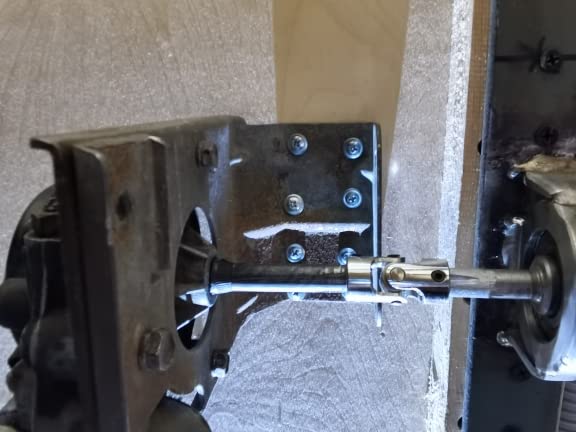
Image: An example of the universal joint coupler installed in an electrical engineering equipment setup, demonstrating its application in connecting shafts.
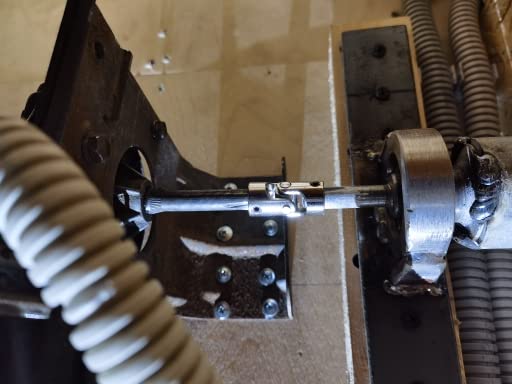
Image: Another view of the universal joint coupler integrated into a mechanical system, highlighting its role in power transmission between components.
6. Operation
Once installed, the universal joint coupler facilitates the transfer of rotational motion and torque between two shafts, even if they are not perfectly collinear. It accommodates angular misalignment, allowing for smooth and efficient power transmission in applications where precise linear alignment is challenging or where a degree of flexibility is required.
The design allows for a certain degree of angular deflection, ensuring that the connected components can operate effectively without binding or excessive wear due to misalignment.
7. Maintenance
To ensure the longevity and optimal performance of your Fielect Universal Joint Coupler, consider the following maintenance tips:
- Regular Inspection: Periodically inspect the coupler for any signs of wear, damage, or looseness in the set screws.
- Cleaning: Keep the coupler clean from dust, debris, and corrosive substances. A dry cloth is usually sufficient.
- Lubrication: While these couplers are generally low-maintenance, a light application of appropriate lubricant to the pivot points can reduce friction and extend life, especially in high-stress or dusty environments.
- Tighten Fasteners: Re-tighten set screws if any looseness is detected during inspection.
8. Troubleshooting
If you encounter issues with your universal joint coupler, consider the following:
- Excessive Backlash/Play:
- Ensure set screws are fully tightened.
- Verify that the shaft diameters precisely match the coupler's inner bore diameter (8mm). Inaccurate shaft sizing can lead to play.
- Inspect the coupler for internal wear if it has been in use for an extended period under heavy load.
- Binding or Stiff Movement:
- Check for proper alignment of the shafts. While universal joints accommodate misalignment, excessive angles can cause binding.
- Ensure no foreign objects are obstructing the joint's movement.
- Apply a small amount of lubricant to the pivot points.
- Coupler Slipping on Shaft:
- Re-tighten set screws firmly.
- Ensure the shaft surface is not oily or greasy, which can reduce friction.
- Verify the shaft diameter is correct and not undersized.
9. Applications
The Fielect Universal Steering Shaft U Joint Coupler is widely applicable in various fields requiring flexible shaft connections:
- RC Models: Perfect for connecting motor shafts in remote-controlled cars, boats, and other hobbyist models.
- Robotics: Used in robotic mechanisms for flexible power transmission to joints and actuators.
- Electrical Engineering Equipment: Integrates into various electrical and electronic devices requiring shaft coupling.
- Small Machinery: Suitable for light-duty machinery where angular misalignment needs to be accommodated.
- DIY Projects: A versatile component for custom mechanical builds and prototypes.

Image: Depicts various industrial settings where universal joints are commonly used, including metallurgy, chemical industry, machinery, and vehicle manufacturing.
10. Safety Information
Please observe the following safety precautions when handling and installing the universal joint coupler:
- Always ensure power is disconnected from any machinery before installation or maintenance.
- Wear appropriate personal protective equipment (PPE), such as safety glasses, when working with mechanical components.
- Do not exceed the specified torque limits or operational speeds for the coupler.
- Ensure all fasteners are securely tightened to prevent accidental detachment during operation.
- Keep hands and loose clothing away from rotating parts.
- If the coupler shows signs of significant wear or damage, replace it immediately to prevent failure.
11. Support
For technical assistance, product inquiries, or support, please contact Fielect customer service. Refer to the product model number (FLT20190905K-0106) when contacting support.
You can find more information and contact details by visiting the official Fielect store on Amazon: Fielect Amazon Store.
Ask a question about this manual
Ask about setup, troubleshooting, compatibility, parts, safety, or missing instructions. Manuals+ will review the question and use this page’s manual context to help answer it.