
Pikasola B07ZPSGJZK
Pikasola 200W 12V Vertical Axis Wind Turbine Generator User Manual
Model: B07ZPSGJZK
Introduction
This manual provides essential information for the safe and efficient installation, operation, and maintenance of your Pikasola 200W 12V Vertical Axis Wind Turbine Generator. Please read this manual thoroughly before installation and use to ensure optimal performance and longevity of your product.
Safety Information
WARNING: Improper installation or use can lead to serious injury or property damage. Always follow local electrical codes and safety regulations.
- Ensure the installation site is clear of obstructions and away from power lines.
- Always wear appropriate personal protective equipment (PPE) during installation and maintenance.
- Do not attempt to install or service the wind turbine during high winds or adverse weather conditions.
- Disconnect all power sources before performing any maintenance or repairs.
- The wind turbine must be securely mounted to a stable structure.
- Keep children and unauthorized personnel away from the installation area.
Package Contents
Verify that all components are present and undamaged before proceeding with installation.

Image: All components of the Pikasola 200W 12V Vertical Axis Wind Turbine Generator kit, including the generator, blades, controller, mounting flange, bolts, and an anemometer.
- Vertical Axis Wind Turbine Generator
- 5 Wind Blades (reinforced fiber nylon)
- Wind Generator Controller (12V/24V, 200W/400W)
- Mounting Flange
- Fasteners and Installation Tools (e.g., Allen wrench, bolts)
- Anemometer (for wind speed measurement)
Setup and Installation
Proper installation is crucial for the performance and safety of your wind turbine. It is recommended to have this installed by a qualified professional.
1. Site Selection
Choose a location with consistent, unobstructed wind flow. The turbine should be installed where there are no tall buildings or obstacles. If obstacles are present, the installation height should be at least 20 feet higher than the top of the nearest obstruction to maximize wind energy utilization. Avoid cliff edges or turbulent regions.

Image: Diagram illustrating optimal wind turbine placement relative to obstructions and terrain, emphasizing higher elevation for better wind capture.
2. Mounting the Generator
The vertical axis wind turbine can be mounted using a screw pile foundation or a concrete foundation. A screw pile foundation offers cost reduction and easier, quicker installation, and is environmentally friendly. The generator requires a pole with a diameter of approximately 2 inches (±0.8 inches).

Image: Close-up of the wind turbine generator base showing the mounting flange and indicating a pole diameter of 2 inches (±0.8).
3. Assembling the Blades
Attach the reinforced fiber nylon blades to the generator hub using the provided fasteners. Ensure each blade is securely fastened to prevent detachment during operation. The 5-leaf double-axis vertical blade design is fixed inside by a flange for high safety.

Image: The five red vertical axis wind turbine blades arranged for assembly, with the central hub visible.
4. Electrical Connection
Connect the wind turbine generator to the included wind generator controller. The controller manages the power output and protects the battery system. For a hybrid wind-solar system, connect the controller to your battery bank and then to an inverter for AC loads. Refer to the controller's specific wiring diagram for correct connections.

Image: A schematic diagram showing the connection of the wind turbine generator to the wind power controller, battery group, and an inverter for AC loads, illustrating a typical off-grid setup.
The controller is designed for 12V/24V systems and has a rated operating current of 10A/20A. It features IP67 protection and a braking voltage of DC 15V/DC 30V.

Image: The Pikasola wind generator controller with specifications and wiring terminals visible.
Operating Instructions
Once installed and connected, the wind turbine will begin generating power when sufficient wind is present. The vertical axis design allows it to start with a breeze and adapt to 360° wind without needing a yaw system.
- Monitoring: Use the included anemometer to measure wind speed at your location. The controller will indicate charging status.
- Power Generation: The permanent magnet three-phase AC generator efficiently converts wind energy into electricity.
- Quiet Operation: The vertical wind turbine is designed for quiet operation, making it suitable for residential, marine, and monitoring applications.
- System Integration: This turbine is ideal for supplementing solar panel systems, providing power during cloudy days or at night.
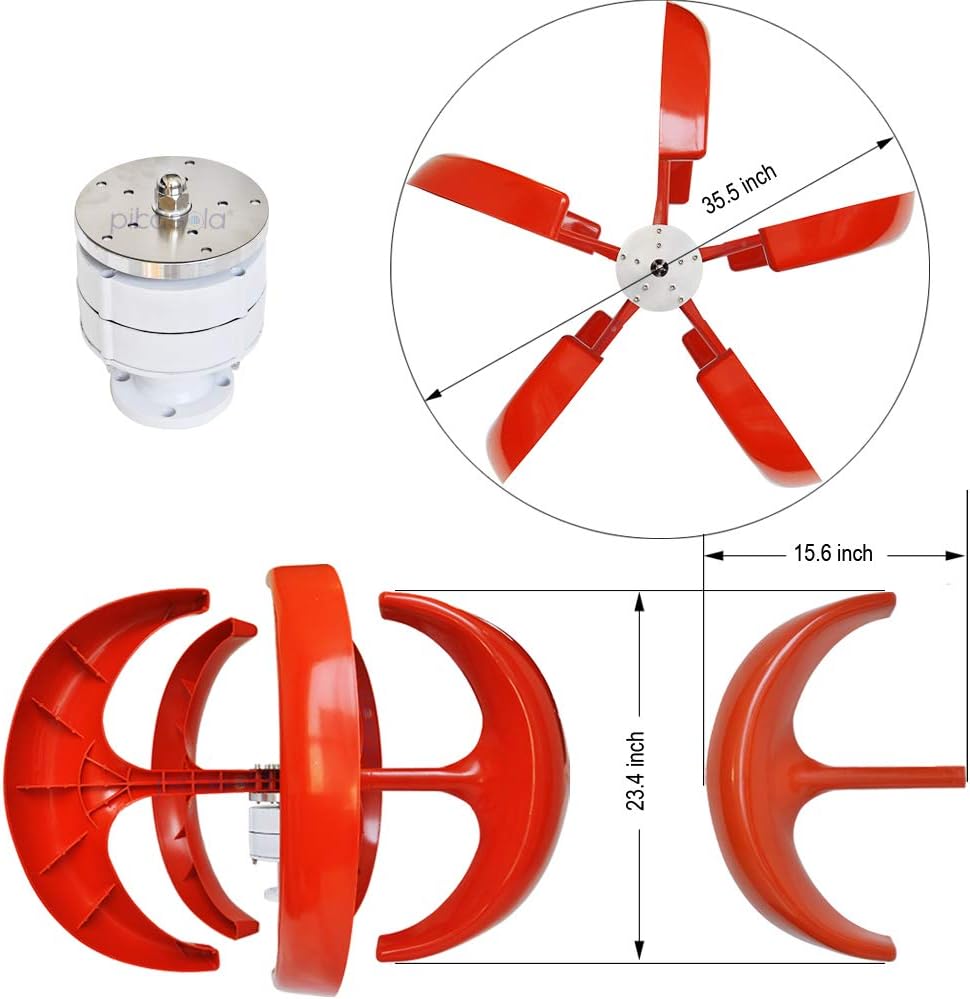
Image: A Pikasola vertical axis wind turbine installed on a pole against a blue sky, demonstrating its operational appearance.
Maintenance
Regular maintenance ensures the longevity and optimal performance of your wind turbine.
- Visual Inspection: Periodically inspect the blades, mounting pole, and electrical connections for any signs of wear, damage, or corrosion.
- Cleaning: Keep the blades and generator housing clean from dirt, debris, and ice buildup. Use a soft cloth and mild detergent if necessary.
- Fasteners: Check all bolts and fasteners for tightness, especially after initial installation and during periods of strong winds.
- Bearings: The double bearings are designed for stability and silent rotation. Listen for unusual noises which may indicate bearing issues.
- Controller: Ensure the wind controller is free from moisture and extreme temperatures. Check indicator lights for normal operation.
Troubleshooting
| Problem | Possible Cause | Solution |
|---|---|---|
| No power generation | Insufficient wind speed; Loose electrical connections; Controller malfunction; Damaged generator. | Check wind speed with anemometer; Verify all wiring connections are secure; Inspect controller for error indicators; Contact support if generator is suspected to be faulty. |
| Turbine not spinning or spinning slowly | Low wind speed; Obstructions; Bearing issues; Blade damage. | Ensure adequate wind; Clear any obstructions; Inspect blades for damage; Check for unusual resistance in bearings. |
| Unusual noise during operation | Loose components; Bearing wear; Blade imbalance. | Tighten all fasteners; Inspect bearings for wear; Check blades for damage or imbalance. |
| Controller not functioning | No input power; Faulty wiring; Internal fault. | Verify power input from turbine and battery; Check wiring integrity; Contact support for controller replacement if necessary. |
Specifications
- Brand: Pikasola
- Model Number: B07ZPSGJZK
- Rated Wattage: 200 watts
- Maximum Wattage: 220 watts
- Voltage: 12 volts
- Fuel Type: Wind
- Power Source: Wind Powered
- Generator Type: 3 Phase AC Permanent Magnet
- Number of Blades: 5
- Blade Material: Reinforced Fiber Nylon
- Controller: Included, 12V/24V, IP67, Braking Voltage DC 15V/DC 30V
- Item Weight: 11.27 kg (approximately 24.8 lbs)
- Recommended Uses: Commercial, Residential, Hybrid Wind Solar Systems
- Frequency: 50 hertz

Image: Diagram showing key dimensions of the Pikasola vertical axis wind turbine, including blade length and overall height.
Warranty and Support
For warranty information and technical support, please contact Pikasola customer service. Keep your purchase receipt as proof of purchase.
Manufacturer: PIKASOLA Inc
For further assistance, visit the official Pikasola store on Amazon: Pikasola Store
Ask a question about this manual
Ask about setup, troubleshooting, compatibility, parts, safety, or missing instructions. Manuals+ will review the question and use this page’s manual context to help answer it.