
Tangxi Tangxiigazcfdsuy
PH Electrode Probe User Manual
Model: Tangxiigazcfdsuy
Introduction
This user manual provides comprehensive instructions for the installation, operation, and maintenance of your PH Electrode Probe. This device is designed for accurate measurement of pH values in aqueous solutions across various applications.
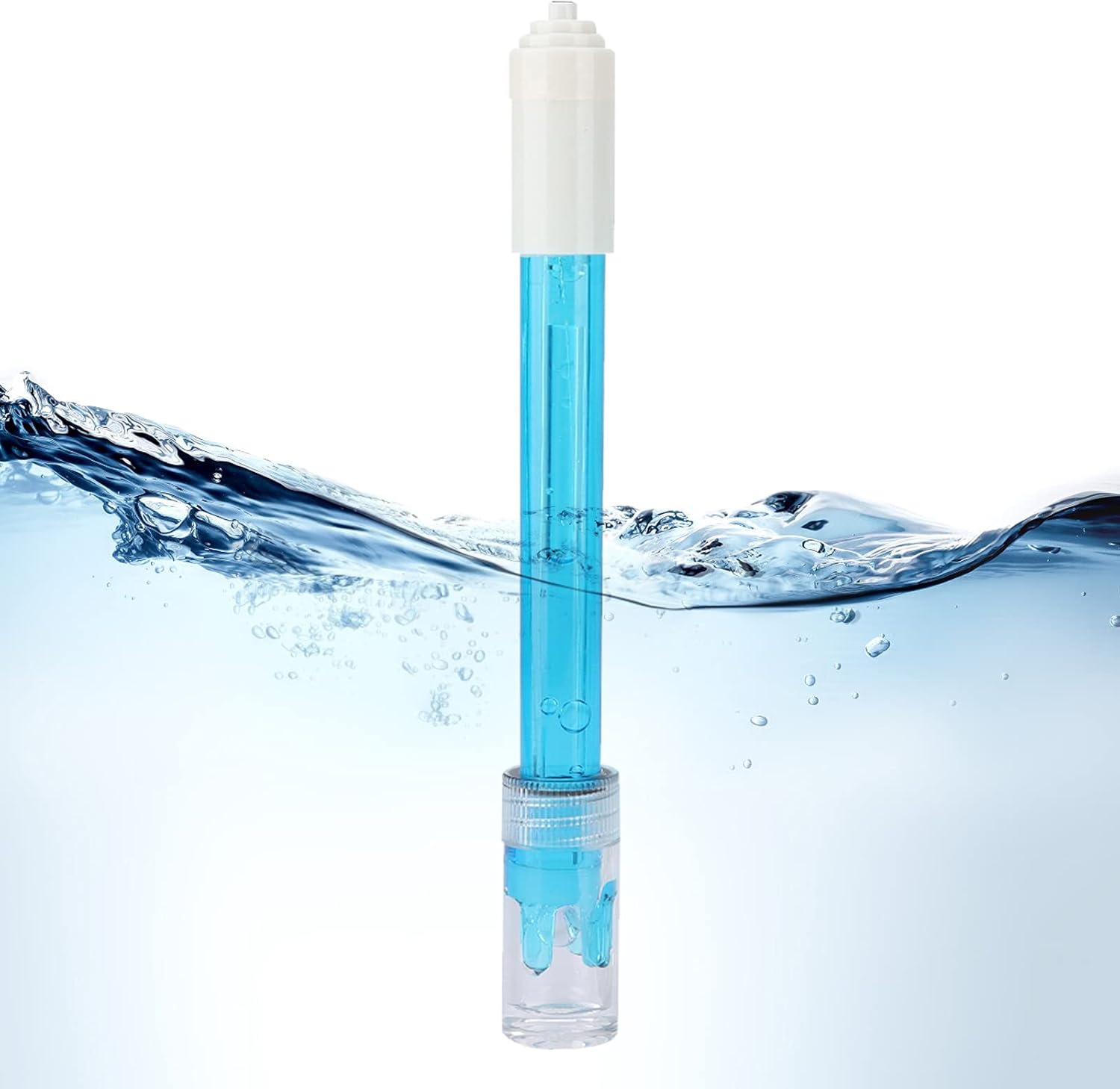
Image: The PH Electrode Probe partially submerged in water, demonstrating its intended use for liquid measurement.
Product Overview and Components
The PH Electrode Probe system consists of the pH electrode, a BNC connector, and a sensor module. Understanding each component is crucial for proper operation.
- PH Electrode Probe: The primary sensor responsible for detecting pH levels in a solution.
- BNC Connector: A standard coaxial cable connector used to connect the pH electrode to the sensor module or directly to compatible pH meters.
- Sensor Module: An electronic board that processes the signal from the pH electrode, converting it into a readable format for digital meters.
- Sensor Cover: A protective cap for the electrode tip, often containing a storage solution to keep the electrode hydrated.

Image: A visual breakdown of the main components: the pH sensor, the BNC connector, and the sensor module. A beaker labeled "Sensor Cover" is also shown, indicating the protective cap for the electrode.

Image: The complete kit, including the pH electrode probe, the sensor module, and the necessary connecting cables, ready for assembly.
Specifications
Key technical specifications for the PH Electrode Probe:
- Measuring Range: 0.00 ~ 14.00 pH
- Resolution: 0.01 pH
- Accuracy: ±0.01 pH
- Measuring Temperature: 0 ~ 60 °C
- Cable Length: Approximately 300 cm (extra long cable)
- Compatibility: Works well with handheld meters, testers, or other digital pH measurement devices.
- Product Dimensions: 5.63 x 0.67 x 0.67 inches
- Item Weight: 3.52 ounces
- Model Number: Tangxiigazcfdsuy
- Manufacturer: PUSOKEI
- Country of Origin: China

Image: A visual representation of the product's key functions and specifications, including measuring range, resolution, and accuracy.
Setup Instructions
- Unpack Components: Carefully remove the pH electrode probe, sensor module, and any connecting cables from their packaging.
- Connect Electrode to Module: Attach the BNC connector of the pH electrode probe to the corresponding BNC input on the sensor module. Ensure a secure connection.

Image: The pH electrode probe with its BNC connector securely attached to the sensor module, illustrating the primary connection step.
- Connect Module to Meter: Use the provided cables (e.g., 3-pin connector) to connect the sensor module to your compatible digital pH meter or microcontroller. Refer to your meter's manual for specific connection ports.

Image: A detailed view of the sensor module, highlighting the BNC input and the multi-pin connector for interfacing with a pH meter or data acquisition system.
- Initial Calibration (Recommended): Before first use, it is highly recommended to calibrate the pH electrode using standard buffer solutions (e.g., pH 4.00, 7.00, 10.00). Follow the calibration procedure outlined in your specific pH meter's instruction manual.
Operating Instructions
- Prepare Sample: Ensure the aqueous solution to be measured is at a stable temperature within the operating range (0-60 °C).
- Rinse Electrode: Before each measurement, rinse the electrode tip thoroughly with distilled or deionized water. Gently blot dry with a lint-free tissue.
- Immerse Electrode: Submerge the tip of the pH electrode into the sample solution. Ensure the sensing bulb and the reference junction are fully immersed.
- Stabilize Reading: Allow sufficient time for the reading on your connected pH meter to stabilize. This may take a few seconds to a minute, depending on the solution and electrode condition.
- Record Measurement: Once the reading is stable, record the pH value.
- Clean After Use: After measurement, rinse the electrode again with distilled water and replace the protective sensor cover.
Maintenance
- Keep Electrode Plug Clean and Dry: Always ensure the BNC connector and the electrode plug are clean and dry to prevent signal interference and corrosion.
- Electrode Storage: When not in use, the electrode tip should be kept hydrated. Store the electrode with its protective cap filled with a suitable storage solution (e.g., 3NKCL solution or pH 4 buffer). Never store the electrode dry or in distilled water for extended periods.
- Avoid Acidic Fluoride Solutions: The electrode should avoid long-term immersion in acidic fluoride solutions, as this can damage the glass membrane.
- Regular Calibration: Calibrate the electrode regularly according to your application's requirements and the frequency of use to maintain accuracy.

Image: A visual summary of important notes regarding the product, including maintenance tips and warnings about specific solution types.
Troubleshooting
If you encounter issues with your PH Electrode Probe, consider the following:
- Unstable Readings:
- Ensure the electrode is properly calibrated.
- Check for air bubbles trapped on the electrode tip.
- Verify the sample temperature is stable.
- Inspect the BNC connection for looseness or corrosion.
- Inaccurate Readings:
- Recalibrate the electrode with fresh buffer solutions.
- Ensure the electrode is clean and free from contamination.
- Verify the external reference solution is 3NKCL solution.
- Avoid cross-contamination between solutions during measurement to prevent affecting measurement accuracy.
- No Reading:
- Check all cable connections between the electrode, module, and meter.
- Ensure the pH meter is powered on and functioning correctly.
Note: The electrode is composed of a PH glass electrode and a silver chloride silver reference electrode, and is a measuring component of the PH meter for measuring the pH value of the aqueous solution. Proper handling and storage are essential for its longevity and accuracy.
Applications
The PH Electrode Probe is suitable for a wide range of applications requiring accurate pH measurement of aqueous solutions, including but not limited to:
- Swimming Pools
- Spas
- Wastewater Treatment
- Laboratory Research
- Aquariums
- Hydroponics
- Food Processing
- Environmental Monitoring (e.g., acid rain)

Image: Illustrates diverse applications for the pH electrode, such as use in swimming pools, spas, wastewater analysis, and laboratory settings.
Warranty and Support
This product is covered by a standard manufacturer's warranty. For specific warranty terms and conditions, please refer to the documentation provided with your purchase or contact the manufacturer directly.
If you experience any issues or have questions regarding the PH Electrode Probe, please contact our customer support team. We are committed to providing the best quality service and will assist you in resolving any problems in a timely manner.
Contact information can typically be found on the product packaging or the manufacturer's official website.
Related Documents - Tangxiigazcfdsuy
 |
accumet® Refillable Combination pH/Temperature Electrodes: Instructions and Specifications Comprehensive instructions and performance specifications for Fisher Scientific's accumet® Refillable Combination pH/Temperature Electrodes, including setup, operation, maintenance, and troubleshooting. |
 |
PMK MMCX Probe Series: High-Fidelity Oscilloscope Probes up to 1 GHz Explore the PMK MMCX Probe Series, featuring a universal BNC interface, low capacitive loading (<4pF), and bandwidth up to 1 GHz. Ideal for precise measurements, testing, and design validation. Includes detailed specifications, safety, and ordering information. |
 |
Aquaread Aquaprobe AP-700, AP-800, AP-2000 Instruction Manual: Setup, Calibration & Maintenance Guide Comprehensive instruction manual for Aquaread Aquaprobe AP-700, AP-800, and AP-2000 multiparameter water quality probes and Aquameter. Covers setup, operation, calibration, maintenance, and troubleshooting. |
 |
PMK FireFly Series High Voltage Optically-Isolated Probes Datasheet Datasheet for the PMK FireFly Series high voltage optically-isolated probes, featuring >1.5 GHz bandwidth, >180dB CMRR, and a universal BNC interface for advanced measurement solutions in GaN and SiC device characterization. |
 |
Apera LabSen 213 Routine 3-in-1 pH Electrode User Manual User manual for the Apera LabSen 213 Routine 3-in-1 pH Electrode, detailing its features, technical specifications, usage, maintenance, and warranty information for high-precision pH measurements. |
 |
Apera Instruments 2310-C High-Range Conductivity Electrode User Manual User manual for the Apera Instruments 2310-C High-Range Conductivity Electrode, detailing its features, technical specifications, installation, usage, maintenance, and limited warranty. |
Ask a question about this manual
Ask about setup, troubleshooting, compatibility, parts, safety, or missing instructions. Manuals+ will review the question and use this page’s manual context to help answer it.