
1. Introduction
The Protmex PT625A is a handheld digital anemometer designed for measuring air velocity and airflow. This device is suitable for various applications, including environmental monitoring, HVAC system analysis, outdoor sports, and industrial use. It provides accurate and fast readings with multiple measurement units and data handling capabilities.
2. Product Overview
2.1 Components
- Air Velocity Flow Sensor: The fan blade assembly at the top of the device.
- Display: LCD screen for showing measurement readings and indicators.
- Control Buttons: Power, Function, Unit, Max/Min/Avg, Data Hold, Record.
- Battery Compartment: Located on the back for battery installation.
- Micro USB Port: For data connection (on some models, not explicitly stated for PT625A but mentioned in video).
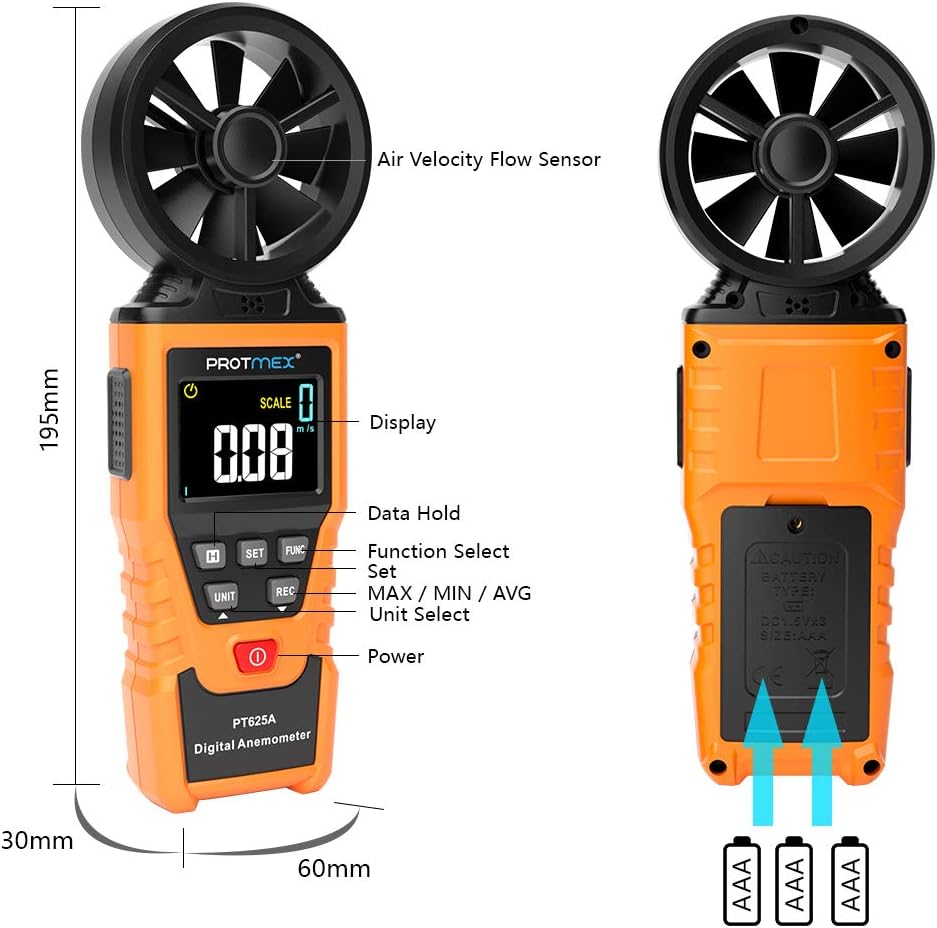
Figure 1: Front view of the Protmex PT625A Anemometer with key components labeled, including the air velocity flow sensor, display, and control buttons.
2.2 Features
- High accuracy for wind speed measurement (0.4~40 m/s).
- Multiple units for wind speed: m/s, km/h, ft/s, knots, mil/h, fp/m.
- Air volume measurement in CFM, CMM, CMS.
- 8-blade aviation wing fan for sensitive and accurate readings.
- MAX/MIN/AVG data display.
- Data Hold function.
- Auto power off.
- Low battery indicator.
- Air duct area setting for airflow calculation.
3. Setup
3.1 Battery Installation
- Locate the battery compartment on the back of the device.
- Use a screwdriver to open the battery compartment cover.
- Insert the provided 9V battery, ensuring correct polarity (+/-).
- Replace the battery compartment cover and secure it with the screw.

Figure 2: Back view of the anemometer, indicating the battery compartment where a 9V battery is inserted. A screwdriver is required to open the compartment.
4. Operating Instructions
4.1 Power On/Off
Press the Power button ( ) to turn the device on or off. The device features an auto power-off function to conserve battery life.
4.2 Measuring Air Velocity
- Turn on the anemometer.
- Point the air velocity flow sensor (fan) directly into the airflow you wish to measure. Ensure the airflow passes through the fan blades.
- The current air velocity reading will be displayed on the LCD screen.
- Press the UNIT button to cycle through different measurement units (m/s, km/h, ft/s, knots, mil/h, fp/m).

Figure 3: The anemometer being used to measure wind speed in an outdoor environment, demonstrating how to position the sensor into the airflow.
4.3 Airflow Measurement (CFM/CMM/CMS)
- Turn on the anemometer.
- Press the FUNC button to enter airflow measurement mode.
- Use the SET button to input the cross-sectional area of the air duct or channel. This is crucial for accurate airflow calculation.
- Once the area is set, point the sensor into the airflow. The device will display the airflow volume in CFM, CMM, or CMS.
- Press the UNIT button to select the desired airflow unit.

Figure 4: Illustration of the anemometer displaying airflow measurement after setting the air duct area. The screen shows both area input and calculated flow.
4.4 Data Hold, Max/Min/Avg, and Record Functions
- Data Hold: Press the HOLD button to freeze the current reading on the display. Press again to release.
- MAX/MIN/AVG: Press the MAX/MIN/AVG button to cycle through maximum, minimum, and average readings during a measurement session.
- Record: Press the REC button to initiate data recording. (Note: Specific details on data storage and retrieval may be in the full manual or software).
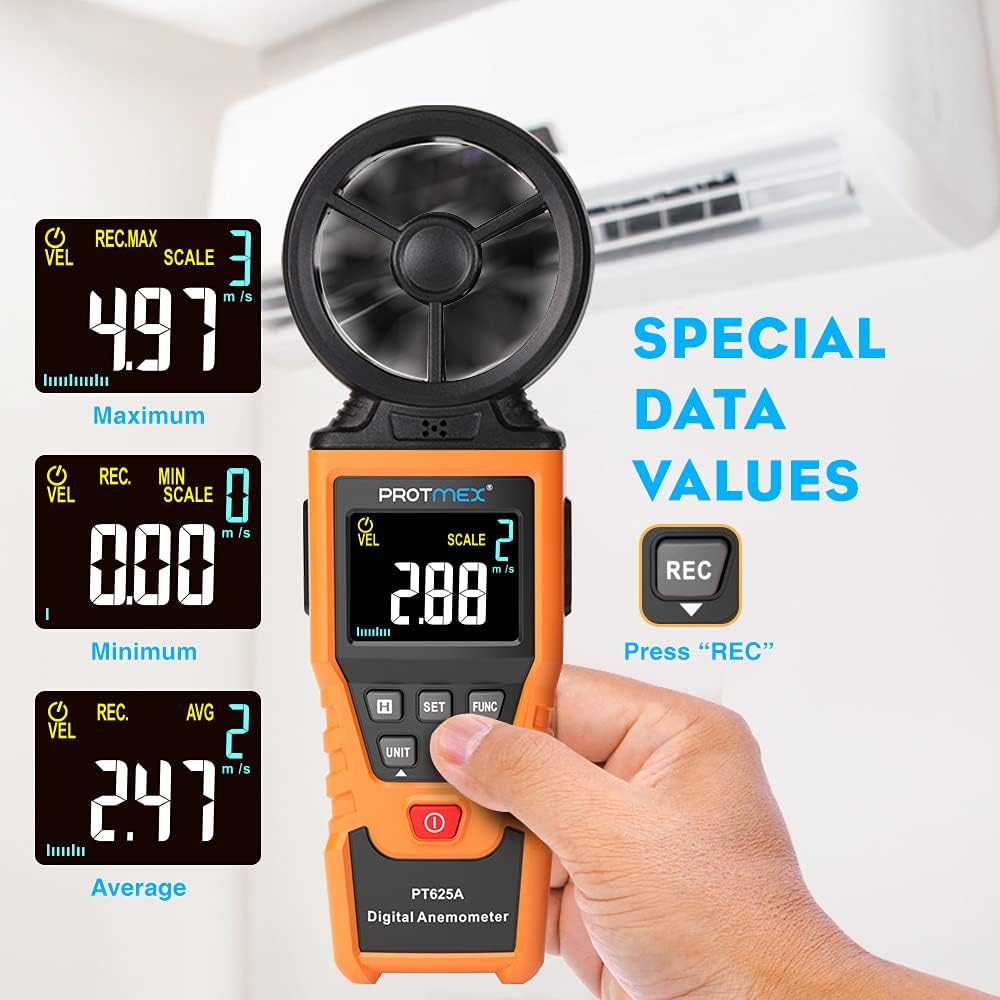
Figure 5: The anemometer's display showing maximum, minimum, and average wind velocity readings, accessible via the dedicated buttons.
5. Maintenance
- Keep the device clean and dry. Wipe with a soft, damp cloth. Do not use abrasive cleaners or solvents.
- Ensure the fan blades are free from dust and debris to maintain measurement accuracy.
- When not in use for extended periods, remove the battery to prevent leakage.
- Store the anemometer in its protective case in a cool, dry place.
6. Troubleshooting
- No Display/Device Not Turning On:
- Check if the battery is installed correctly with the right polarity.
- Replace the battery if it is low or depleted.
- Inaccurate Readings:
- Ensure the fan blades are clean and spinning freely.
- Verify that the sensor is pointed directly into the airflow.
- Check if the correct measurement unit is selected.
- For airflow measurements, confirm the air duct area setting is accurate.
- Buttons Not Responding:
- Turn the device off and then on again.
- Replace the battery.
7. Specifications
| Parameter | Value |
|---|---|
| Wind Speed Range | 0.4~40 m/s |
| Wind Speed Units | m/s, km/h, ft/s, knots, mil/h, fp/m |
| Air Volume Units | CFM, CMM, CMS |
| Sampling Time | Approx. 0.5s/time |
| Maximum Display Value | 9999 |
| Power Supply | 9V Battery |
| Dimensions (L x W x H) | 8.85 x 4.52 x 1.77 inches |
| Item Weight | 10 ounces |
| Material | Rubber |

Figure 6: A detailed screen introduction showing various symbols and their descriptions, including MAX, MIN, AVG, VEL, FLOW, AREA, and different units of measurement.
8. Warranty and Support
Protmex products are designed for quality and reliability. For any issues or support, please refer to the contact information provided with your purchase or visit the official Protmex website. The product is CE (LVE, EMC), RoHS approved.
Protmex offers 24/7 online friendly support. Your satisfaction is our priority.


