
FORTINET FG-100F
Contents
FortiGate-100F Firewall Appliance User Manual
Model: FG-100F
1. Introduction
This manual provides detailed instructions for the installation, operation, maintenance, and troubleshooting of the FortiGate-100F Firewall Appliance. The FortiGate-100F is a high-performance network security appliance designed to provide comprehensive threat protection and secure connectivity for various network environments.

Figure 1.1: FortiGate-100F Firewall Appliance (Front View)
2. Setup and Installation
2.1 Package Contents
Before proceeding with the installation, verify that all components are present in the package:
- FortiGate-100F Appliance
- Power Cords (x2)
- Rack-mount Kit (brackets and screws)
- Console Cable (RJ45 to DB9)
- Quick Start Guide
2.2 Physical Installation
The FortiGate-100F is designed for rack-mounting. Follow these steps for secure installation:
- Attach the provided rack-mount brackets to the sides of the appliance using the included screws.
- Secure the appliance into a standard 19-inch equipment rack using appropriate rack screws. Ensure adequate ventilation around the unit.
- Connect the power cords to the dual power supply inputs on the rear of the appliance and then to grounded power outlets.
2.3 Initial Connectivity
To perform initial configuration, connect to the appliance via the console port or a management interface.

Figure 2.1: FortiGate-100F Front Panel Interfaces
- Console Connection: Connect the console cable from your management workstation to the RJ45 Console port on the front panel. Configure your terminal emulator with settings: 9600 baud, 8 data bits, no parity, 1 stop bit, no flow control.
- Management Interface: Connect an Ethernet cable from your management workstation to one of the GE RJ45 management ports (e.g., port 1 or 2). The default IP address for management access is typically 192.168.1.99.
Once connected, power on the appliance. The system will boot up, and you can proceed with basic network configuration.
3. Operating the FortiGate-100F
The FortiGate-100F runs on FortiOS, Fortinet's proprietary operating system, providing a robust suite of security and networking features.
3.1 Web-based Manager Access
After initial setup, the primary method for managing the FortiGate-100F is through its web-based manager.
- Open a web browser and navigate to the IP address of the FortiGate's management interface (e.g.,
https://192.168.1.99). - Log in using the default credentials (username:
admin, no password). You will be prompted to create a new password upon first login. - The dashboard provides an overview of the system status, network activity, and security events.
3.2 Key Features Overview
The FortiGate-100F offers a range of capabilities:
- Firewall and VPN: Configurable firewall policies and various VPN options (IPsec, SSL VPN) for secure remote access and site-to-site connectivity.
- Intrusion Prevention System (IPS): Protects against known and unknown threats by detecting and blocking malicious traffic patterns.
- Secure SD-WAN: Optimizes WAN performance and cost by intelligently routing traffic across multiple connections.
- Application Control: Granular control over network applications, allowing or blocking specific applications regardless of port or protocol.
- Web Filtering: Blocks access to malicious or inappropriate websites.
- Antivirus/Antimalware: Scans traffic for viruses, spyware, and other malware.

Figure 3.1: Fortinet Security Fabric Architecture
For detailed configuration of these features, refer to the FortiGate Administration Guide available on the Fortinet support website.
4. Maintenance
Regular maintenance ensures the optimal performance and security of your FortiGate-100F appliance.
4.1 Firmware Updates
Fortinet regularly releases firmware updates that include new features, bug fixes, and security enhancements. It is recommended to keep your FortiGate's firmware up to date.
- Download the latest firmware from the Fortinet Support Portal.
- Backup your current configuration before performing a firmware upgrade.
- Follow the upgrade instructions provided with the firmware release notes.
4.2 Configuration Backup and Restore
Regularly back up your FortiGate's configuration to prevent data loss in case of system failure or misconfiguration.
- From the web-based manager, navigate to System > Configuration > Backup.
- Save the configuration file to a secure location.
- To restore, navigate to System > Configuration > Restore and upload the backup file.
4.3 Monitoring and Logging
Monitor system logs and performance metrics to identify potential issues or security incidents.
- Access logs via Log & Report in the web-based manager.
- Utilize FortiAnalyzer or FortiManager for centralized logging and reporting in larger deployments.
5. Troubleshooting
This section provides solutions to common issues you might encounter with your FortiGate-100F.
5.1 LED Indicators
The front panel LEDs provide quick status information:

Figure 5.1: FortiGate-100F Front Panel with LED Indicators
- STATUS: Green (System operating normally), Blinking Green (Activity), Red (System error).
- ALARM: Red (Critical alarm), Blinking Red (Minor alarm).
- HA: Green (HA cluster active), Blinking Green (HA synchronization).
- POWER: Green (Power on), Off (Power off).
5.2 Common Issues and Solutions
- No Power:
- Verify power cords are securely connected to both the appliance and power outlets.
- Check power outlet functionality.
- Ensure both power supplies are functioning (dual power supplies for redundancy). - Cannot Access Web-based Manager:
- Verify network connectivity to the management interface.
- Check if the management interface IP address is correct.
- Ensure no firewall policies are blocking access.
- Try accessing via the console port. - Network Connectivity Issues:
- Check physical cable connections to all ports.
- Verify interface configurations (IP addresses, subnet masks, VLANs).
- Review firewall policies to ensure traffic is allowed.
- Check routing tables.
5.3 Factory Reset
If all troubleshooting steps fail, you may consider performing a factory reset. Warning: This will erase all configurations and restore the appliance to its default settings.
- Connect via the console port.
- During boot-up, press 'a' when prompted to enter maintenance mode.
- Follow the on-screen instructions to perform a factory reset.
6. Specifications
The following table details the technical specifications of the FortiGate-100F Firewall Appliance.

Figure 6.1: FortiGate-100F Performance Specifications
| Feature | Specification |
|---|---|
| Model Number | FG-100F |
| Dimensions (LxWxH) | 22 x 17 x 14 inches (Appliance Only) |
| Item Weight | 11.15 pounds |
| Interface Type | RJ45, SFP, SFP+ |
| Number of Ports | 22 GE RJ45, 4 SFP, 2 10G SFP+ FortiLinks |
| Data Transfer Rate | Up to 20 Gigabits Per Second |
| Operating System | Proprietary Fortinet operating system (FortiOS) |
| Power Supplies | Dual, Redundant |
| Firewall Throughput (1518/512/64 byte UDP) | 20/18/10 Gbps |
| Threat Protection Throughput | 1 Gbps |
| IPS Throughput | 2.6 Gbps |
| NGFW Throughput | 1.6 Gbps |
| IPsec VPN Throughput (512 byte) | 11.5 Gbps |
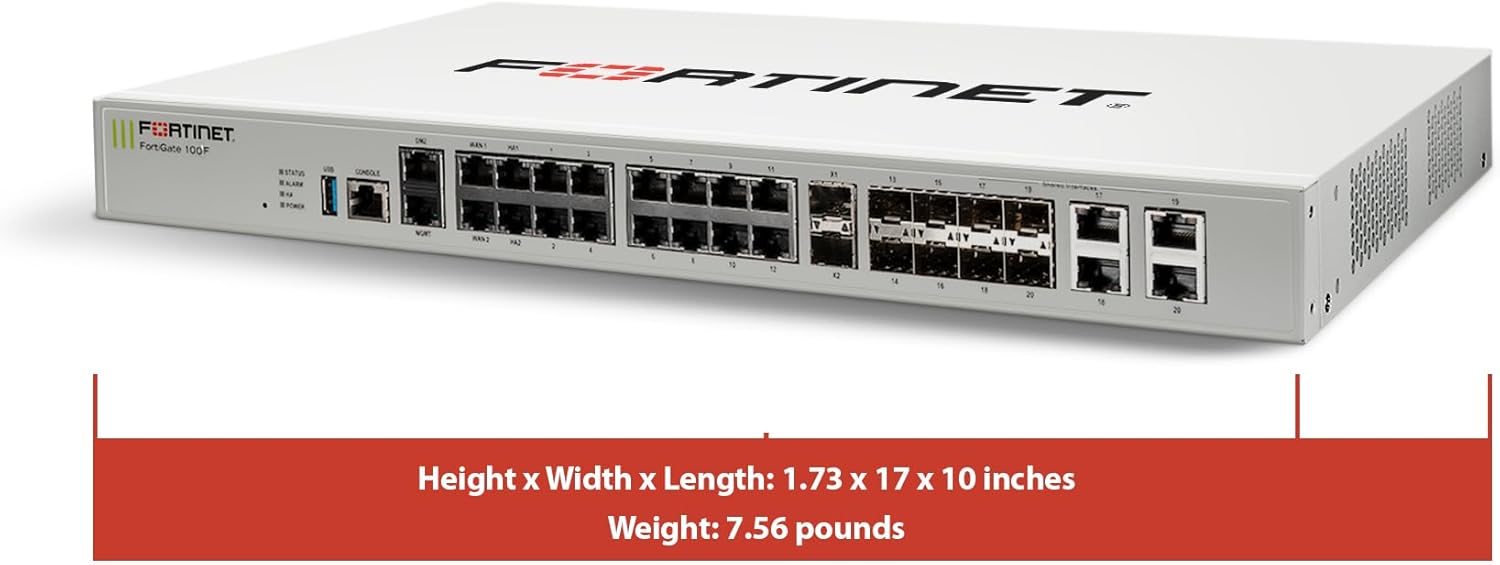
Figure 6.2: FortiGate-100F Physical Dimensions
7. Warranty and Support
7.1 Product Warranty
Fortinet products typically come with a limited hardware warranty. For specific warranty terms and conditions applicable to your FortiGate-100F, please refer to the official Fortinet website or the warranty documentation included with your purchase. Warranty coverage usually includes defects in materials and workmanship under normal use.
7.2 Technical Support
For technical assistance, product registration, and access to software updates and documentation, please visit the official Fortinet Support website:
You will need your product's serial number for registration and to access certain support resources. Fortinet offers various support plans and services to meet different operational needs.
Ask a question about this manual
Ask about setup, troubleshooting, compatibility, parts, safety, or missing instructions. Manuals+ will review the question and use this page’s manual context to help answer it.