
1. Introduction
This manual provides essential instructions for the installation, operation, and maintenance of your Risco Panda Radio Keypad with Proximity Reader (Model RW332KPP800A). Please read this manual thoroughly before using the device to ensure proper functionality and safety. This device is designed to be an integral part of a security system, offering convenient control and access.
2. Product Overview
The Risco Panda Radio Keypad is a wireless input device for security systems, featuring an integrated proximity reader for easy arming and disarming. It communicates wirelessly via 868 MHz radio frequency, ensuring reliable connection to your main alarm panel.
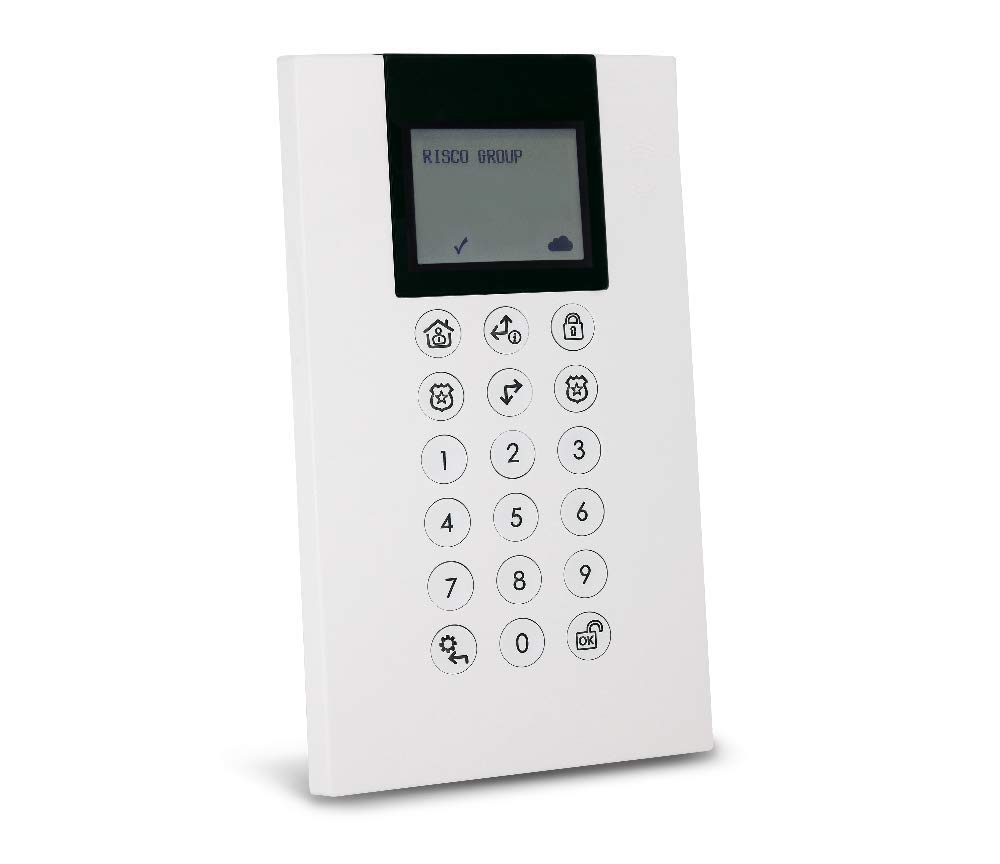
Image showing the Risco Panda Radio Keypad, featuring its white casing, numeric keypad, and integrated proximity reader.
Key Features:
- Integrated Proximity Reader
- 868 MHz Radio Communication
- Rechargeable Battery Powered
- Membrane Keypad with QWERTY Layout
- 78 Buttons
- Durable Plastic Material
3. Setup
3.1 Unpacking and Inspection
Carefully remove the keypad from its packaging. Inspect for any signs of damage. Ensure all components are present.
3.2 Mounting
Choose a suitable location for the keypad, typically near an entry/exit point. Ensure the mounting surface is flat and secure. Use appropriate screws and wall plugs (not included) to fix the keypad securely to the wall. Avoid mounting near large metal objects that could interfere with radio communication.
3.3 Powering the Keypad
The keypad is battery-powered and rechargeable. Connect the provided charging cable to the keypad and a suitable power source (e.g., USB adapter, not included) to fully charge the internal battery before first use. A full charge ensures optimal performance and battery life.
3.4 Pairing with the Alarm System
To integrate the keypad with your Risco alarm system, follow these steps:
- Put your main Risco alarm panel into 'Enrollment' or 'Programming' mode (refer to your alarm panel's manual for specific instructions).
- On the Panda Radio Keypad, enter the designated pairing sequence (e.g., a specific key combination or holding a button). This will transmit the keypad's unique identifier to the alarm panel via 868 MHz radio frequency.
- Confirm successful pairing on your alarm panel. The keypad should now be recognized as a zone or input device.
- Test the communication by sending a command from the keypad (e.g., arming the system) and verifying the response on the alarm panel.
4. Operating Instructions
4.1 Arming the System
To arm your security system using the keypad:
- Using Code: Enter your valid user code followed by the 'Arm' button (or equivalent).
- Using Proximity Reader: Present your authorized proximity tag or card to the integrated reader on the keypad. The system will provide an audible and/or visual confirmation of arming.
4.2 Disarming the System
To disarm your security system:
- Using Code: Enter your valid user code followed by the 'Disarm' button (or equivalent).
- Using Proximity Reader: Present your authorized proximity tag or card to the integrated reader. The system will provide an audible and/or visual confirmation of disarming.
4.3 Keypad Input
The keypad features a QWERTY layout with 78 membrane buttons. Use the numeric keys for code entry and the function keys for specific system commands (e.g., panic, bypass, status check). Refer to your main alarm panel's manual for specific command codes and functions.
5. Maintenance
5.1 Cleaning
To clean the keypad, use a soft, dry, or slightly damp cloth. Do not use abrasive cleaners, solvents, or excessive moisture, as these can damage the plastic material and electronic components.
5.2 Battery Management
The keypad is powered by a rechargeable battery. When the battery level is low, the keypad or your main alarm panel will indicate a low battery warning. Recharge the keypad promptly using the provided charging cable. Battery life varies depending on usage and environmental factors. If the battery no longer holds a charge, contact Risco support or a qualified technician for replacement.
6. Troubleshooting
- Keypad Unresponsive:
Possible Cause: Low battery or no power.
Solution: Recharge the keypad's battery. Ensure the charging cable is properly connected.
Possible Cause: Communication loss with the alarm panel.
Solution: Verify the alarm panel is powered on and within range. Re-pair the keypad if necessary (refer to Section 3.4). - Proximity Reader Not Working:
Possible Cause: Unauthorized tag/card.
Solution: Ensure you are using an authorized proximity tag or card that has been programmed into the system.
Possible Cause: Reader malfunction.
Solution: Test with another authorized tag. If the issue persists, contact support. - System Not Arming/Disarming:
Possible Cause: Incorrect user code.
Solution: Double-check the entered code. Ensure it is valid and active.
Possible Cause: System fault or open zone.
Solution: Check your main alarm panel for any fault indications (e.g., open doors/windows) preventing arming.
7. Specifications
| Brand | Risco |
| Model Number | RW332KPP800A |
| Manufacturer Reference | RISCO20 |
| Connectivity Technology | RF (868 MHz) |
| Special Features | Rechargeable |
| Compatible Devices | Laptop (for configuration/management), Risco Alarm Panels |
| Keypad Description | Membrane |
| Material | Plastic |
| Power Source | Battery Powered |
| Switch Type | Membrane |
| Keypad Layout | QWERTY |
| Number of Buttons | 78 |
| Dimensions | 102 x 178 x 37 mm |
8. Warranty and Support
Information regarding specific warranty terms, spare parts availability, and guaranteed software updates for the Risco Panda Radio Keypad (RW332KPP800A) is not available in the provided product details. For detailed warranty information, technical support, or to inquire about spare parts, please contact your product retailer or the official Risco customer support directly. Keep your proof of purchase for any warranty claims.