
PetSafe PPA19-16811
PetSafe Microchip Cat Flap User Manual
Model: PPA19-16811
Introduction
Thank you for choosing the PetSafe Microchip Cat Flap. This advanced pet door provides your cat with the freedom to enter and exit your home while ensuring that only your pets are granted access, keeping stray animals out. By reading your cat's unique microchip ID, this system offers a secure and convenient solution for pet owners. Please read this manual carefully to ensure proper installation, operation, and maintenance of your new cat flap.
Product Overview
Key Features
- Reads your cat’s unique 15-digit microchip ID for exclusive access.
- Allows programming for up to 40 pets.
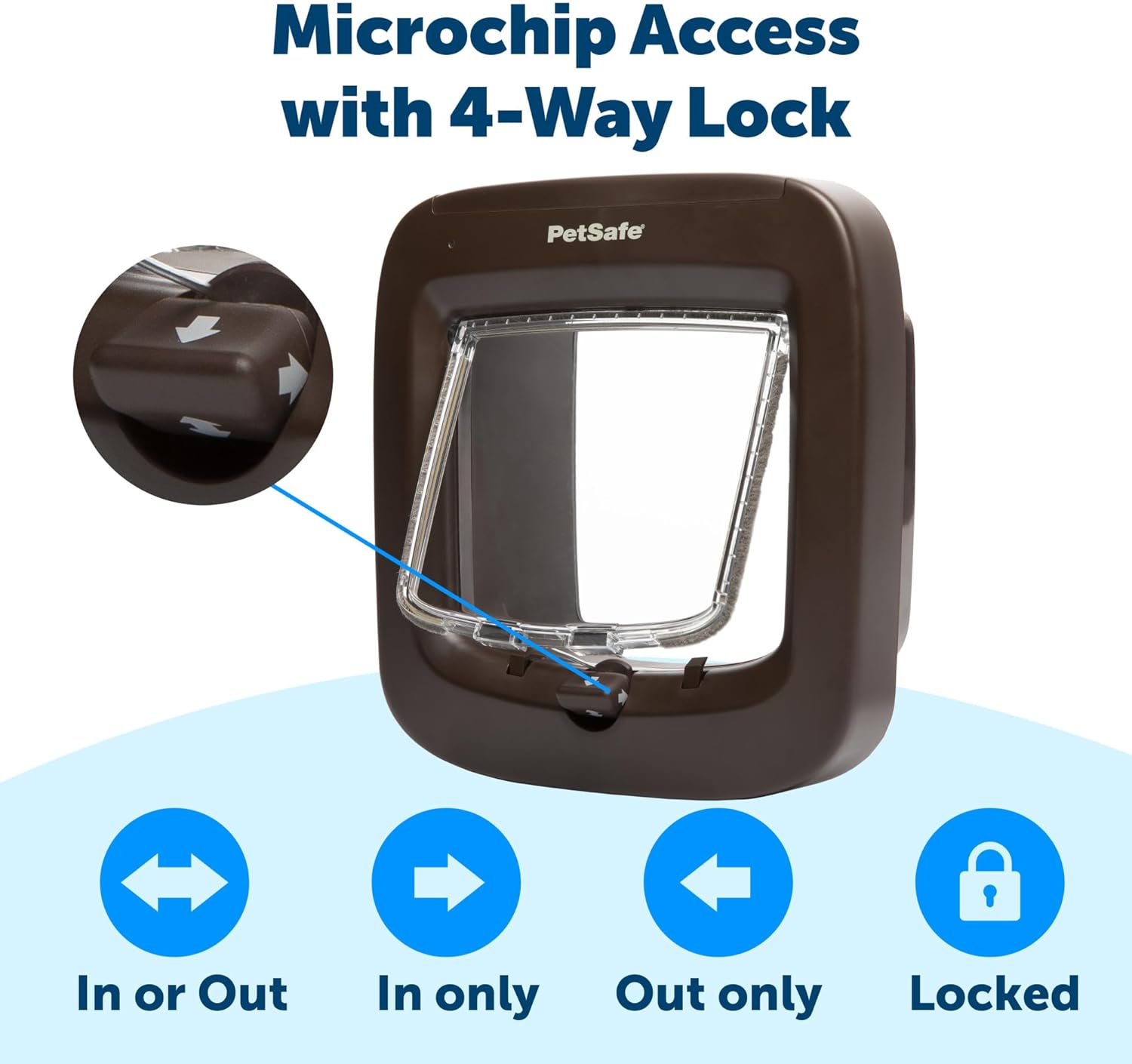
- Features a manual 4-way lock: Locked, Unlocked, Enter Only, or Exit Only.
- Equipped with two magnetic latches to deter unwanted guests and reduce drafts.
- Built-in weather stripping for improved insulation.
- Battery-powered with a low battery indicator.
- Easy installation in most wood, PVC, and uPVC doors.
- Compatible with all FDXB microchips.
Components
The PetSafe Microchip Cat Flap is designed for durability and ease of use. Below are the main components and their functions:


Setup and Installation
Before Installation
- The cat flap requires 4 AA batteries (not included). Ensure you have these ready before installation.
- It is highly recommended to program your pet's microchip to the door before installation. This allows for easier training and avoids potential stress for your pet during the programming process.
Installation Guidelines
The PetSafe Microchip Cat Flap is designed for straightforward installation in various door types. Consider the material of your door for proper installation:
- Fits most wood, PVC, and uPVC doors without additional adapters.
- For installation in metal, glass, brick, or wall surfaces, additional accessories (such as an installation adapter or tunnel extensions) may be required and are sold separately.

Ensure the cutout dimensions are accurate for a secure fit. If installing into a thick wall, multiple tunnel extensions might be needed to bridge the gap, and longer bolts may be required.
Operation
Programming Your Pet's Microchip
The cat flap can be programmed to recognize up to 40 unique 15-digit microchip IDs. For pets without a microchip, programmable collar keys are available and sold separately.
- Insert the required 4 AA batteries into the battery compartment.
- Press and hold the program button (refer to the product diagram for location).
- Gently guide your cat's head through the cat flap opening until the microchip is read. A click or light indicator will confirm successful programming.
- Repeat for all pets you wish to grant access.

Using the 4-Way Lock
The manual 4-way lock provides control over your cat's access. Rotate the dial on the bottom of the flap to select one of the following settings:
- Locked: No entry or exit. The flap remains closed.
- Unlocked (In or Out): Allows free entry and exit for programmed pets.
- Enter Only: Allows programmed pets to enter but not exit.
- Exit Only: Allows programmed pets to exit but not enter.
Pet Training
Some cats may require a period of adjustment to become comfortable using the microchip cat flap. Initial hesitation, especially due to the sound of the lock disengaging, is normal. Encourage your cat with treats and positive reinforcement. You may need to temporarily set the lock to 'Unlocked' to allow them to get used to passing through before activating the microchip reading function.
Maintenance
Battery Replacement
The cat flap is powered by 4 AA batteries. A low battery indicator light will signal when it's time to replace them. Promptly replace all four batteries to ensure continuous operation and prevent issues such as the clock resetting or inconsistent performance.
Cleaning
Regularly clean the cat flap with a damp cloth and mild detergent. Avoid abrasive cleaners that could damage the plastic or electronic components. Ensure the flap mechanism is free of debris to allow smooth operation.
Troubleshooting
- Unwanted animals entering: Ensure the 4-way lock is set correctly. The magnetic latches are designed to keep the flap securely closed when not in use by a programmed pet.
- Cat not using the door: This can be due to the sound of the lock or general unfamiliarity. Try training your cat by propping the flap open initially, then gradually introducing the microchip function. Use treats and positive reinforcement.
- Microchip not reading consistently: Ensure your cat's microchip is an FDXB type. Reprogramming the chip may resolve the issue. Check battery levels and replace if necessary.
- Batteries draining quickly or clock resetting: This may indicate faulty batteries or an issue with the unit. Ensure you are using high-quality batteries. If the problem persists, contact customer support.
- Door sticking or closing on tail: Ensure the flap is clean and free of obstructions. The magnetic latches should allow smooth operation. If the issue persists, inspect the hinges and contact customer support.
Specifications
| Feature | Detail |
|---|---|
| Model Number | PPA19-16811 |
| Product Dimensions | 9.41 x 8.66 x 4.8 inches (23.9 cm x 22 cm x 12.2 cm) |
| Flap Opening Dimensions | Approximately 5.91 inches (15 cm) wide x 5.51 inches (14 cm) high |
| Item Weight | 1.63 pounds (0.74 kg) |
| Weight Limit | Up to 7 Kilograms (15.4 pounds) |
| Material | Plastic frame with metal components |
| Batteries | 4 AA batteries required (not included) |
| UPC | 729849168114 |


Warranty and Support
Customer Care
PetSafe is committed to providing quality products and excellent customer service. Our U.S.-based customer care team is available to assist you with any questions or concerns regarding your Microchip Cat Flap. You can reach them by phone, email, or chat.
Quality Promise
Since 1998, PetSafe has been a trusted global leader in pet behavior, containment, and lifestyle innovations. We are dedicated to helping keep your pet healthy, safe, and happy through reliable and innovative solutions.
Related documentsPPA19-16811


Ask a question about this manual
Ask about setup, troubleshooting, compatibility, parts, safety, or missing instructions. Manuals+ will review the question and use this page’s manual context to help answer it.