1. Introduction
Welcome to the Guild D-240E Acoustic Guitar. This instrument is part of the Westerly Collection, designed to deliver a classic acoustic sound with balanced voicing. It features a solid spruce top, mahogany sides, and an arched mahogany back, contributing to its full-bodied tone, volume, and sustain. The D-240E is equipped with Guild's Fishman-designed AP-1 electronics for amplified performance, a pau ferro fingerboard and bridge, bone nut and saddle, and a matte polyurethane finish.

Full front view of the Guild D-240E acoustic guitar, showing the entire instrument from headstock to body.
2. Setup
2.1 Unpacking and Initial Inspection
Carefully remove the guitar from its packaging. Inspect the instrument for any signs of damage that may have occurred during shipping. Retain all packaging materials for future transport or storage. Before playing, visually inspect the guitar's body, neck, headstock, and strings. Ensure all components appear secure and undamaged.

Front view of the Guild D-240E acoustic guitar, showcasing the spruce top, soundhole rosette, and tortoiseshell pickguard.
2.2 Tuning the Guitar
The guitar should be tuned to standard pitch (E-A-D-G-B-e) using an electronic tuner. Gently stretch new strings after initial tuning to help them settle and improve tuning stability.
2.3 Electronics Battery Installation
The D-240E features Fishman AP-1 electronics which require a 9V battery. Locate the battery compartment, typically near the output jack or on the side of the guitar. Insert a fresh 9V alkaline battery, ensuring correct polarity. Replace the cover securely.
3. Operating Instructions
3.1 Acoustic Play
The D-240E is designed for rich acoustic projection. Experiment with different strumming and picking techniques to explore its tonal range. The dreadnought body shape and arched back contribute to its volume and sustain.
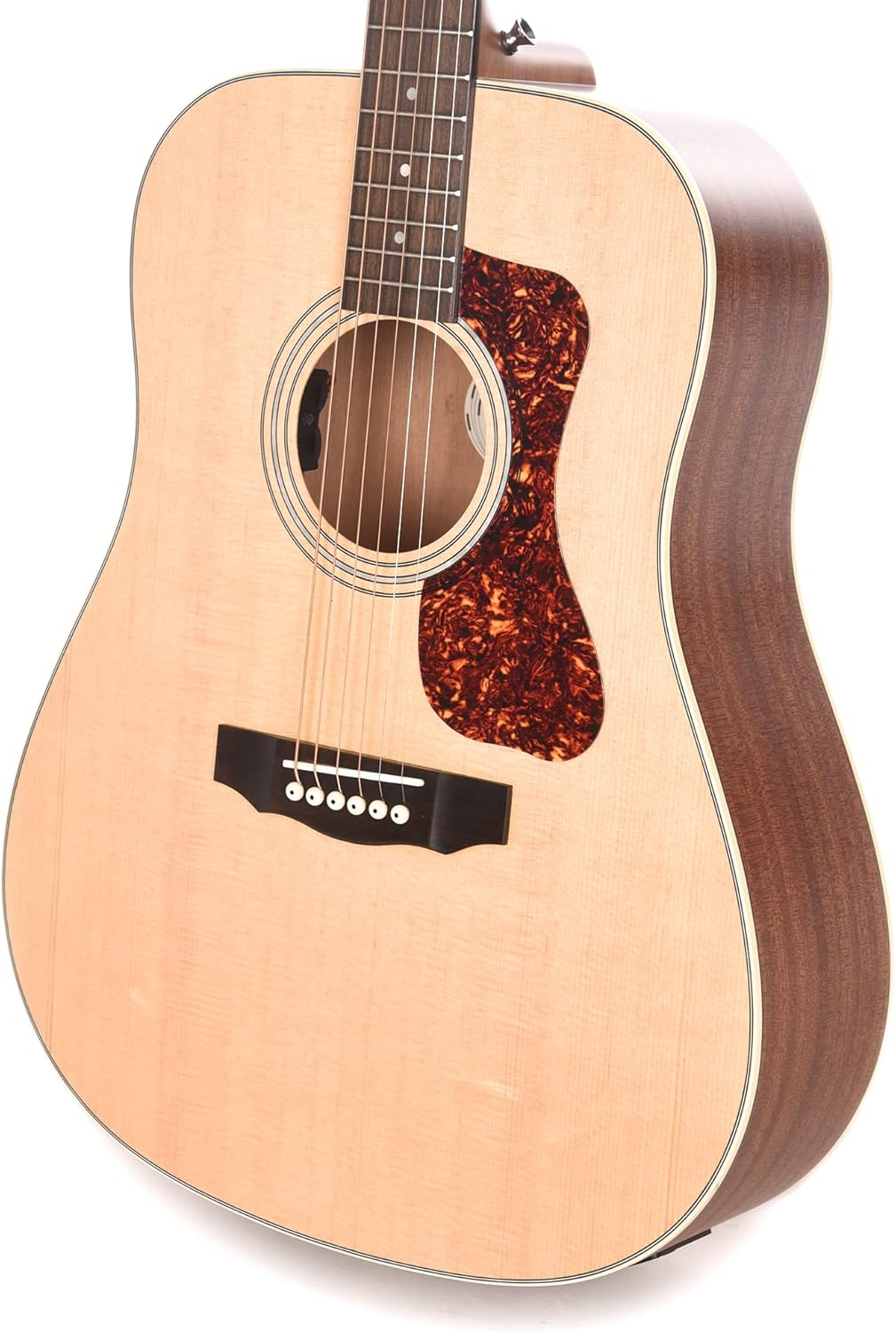
Angled front view of the Guild D-240E acoustic guitar, highlighting the dreadnought body shape and natural finish.
3.2 Using Fishman AP-1 Electronics
The Fishman AP-1 system allows for amplified sound. Connect a standard 1/4-inch instrument cable from the guitar's output jack to an amplifier or PA system. The controls for the AP-1 system are typically located on the side of the guitar. Adjust the volume and tone controls to achieve your desired amplified sound. Start with controls at a neutral position and adjust incrementally.
4. Maintenance
4.1 Cleaning
Regularly wipe down the guitar with a soft, lint-free cloth to remove dust and fingerprints. For the body, a guitar-specific polish can be used sparingly. Clean the fretboard with a suitable fretboard conditioner during string changes to prevent drying and cracking.
4.2 String Replacement
Strings should be replaced periodically, depending on playing frequency and string type. Replace one string at a time to maintain neck tension. Use light gauge phosphor bronze acoustic guitar strings for optimal performance.
4.3 Humidity Control and Storage
Acoustic guitars are sensitive to humidity changes. Store the guitar in an environment with stable humidity (ideally 45-55% relative humidity) to prevent wood warping or cracking. A guitar humidifier may be necessary in dry climates. When not in use, store the guitar in a case or gig bag to protect it from dust, impacts, and environmental fluctuations. Avoid exposing the guitar to extreme temperatures or direct sunlight.

Rear view of the Guild D-240E acoustic guitar, displaying the mahogany arched back and wood grain.
5. Troubleshooting
5.1 Buzzing Strings
If strings buzz, check for proper neck relief, fret wear, or action height. Minor adjustments may be possible, but significant issues may require professional setup by a qualified technician.
5.2 No Sound from Electronics
Ensure the 9V battery is fresh and correctly installed. Check the instrument cable and amplifier connection. Verify that the volume control on the guitar and amplifier is turned up. If the issue persists, consult a service professional.
5.3 Tuning Instability
New strings require time to stretch and settle. Ensure strings are properly wound on tuning pegs. Extreme temperature or humidity changes can affect tuning stability. Regular maintenance and proper storage can help mitigate this.

Close-up of the Guild D-240E headstock from the front, featuring the Guild logo and tuning machines.
6. Specifications
| Feature | Detail |
|---|---|
| Model Number | GUI D240E NAT |
| Item Weight | 4.5 pounds |
| Product Dimensions | 42 x 15.75 x 4.75 inches |
| Body Material | Spruce (Top), Mahogany (Back & Sides) |
| Neck Material Type | Mahogany |
| Fretboard Material | Pau Ferro Wood |
| Scale Length | 25.5 inches |
| Number of Strings | 6 |
| String Material | Phosphor Bronze |
| Guitar Pickup Configuration | Piezoelectric (Fishman AP-1) |
| Batteries | 1 x 9V (included) |
| Color Name | Natural Satin |
| Hand Orientation | Right |
7. Warranty & Support
7.1 Warranty Information
Guild Guitars provides a limited warranty for manufacturing defects. For specific warranty terms and conditions, please refer to the official Guild Guitars website or contact their customer support. Keep your proof of purchase for warranty claims.
7.2 Customer Support
For technical assistance, parts, or service, please visit the official Guild Guitars support page or contact an authorized Guild service center. You can find contact information and service center locations on the Guild Guitars official website.


