
Introduction
This user manual provides essential information for the installation, operation, and maintenance of your cciyu RU-638 HVAC Heater Blower Motor Resistor. This component is crucial for controlling the fan speed of your vehicle's heating, ventilation, and air conditioning (HVAC) system. Proper installation and understanding of its function will ensure optimal performance and comfort in your vehicle.
Product Overview and Specifications
The cciyu RU-638 Blower Motor Resistor is designed as a direct replacement part to restore proper functionality to your vehicle's HVAC system. It controls the speed of the blower fan, ensuring comfortable cabin temperatures.
Key Features:
- Direct replacement for original Blower Motor Resistor.
- Restores control over fan speed in AC and heating systems.
- Durable design to resist common failures like overheating.
- Equipped with 6 pins for specific vehicle compatibility.
Technical Specifications:
| Specification | Detail |
|---|---|
| Manufacturer | cciyu |
| Model Name | cciyu High Performance Blower Motor Resistor |
| Item Model Number | 991031-5210-1052560594 |
| OEM Part Numbers | 4885482AC, 4885482AA, 4885482AB, RU-638, 68003999AA, 68038199A, RU-399, 973-027 |
| Terminal Quantity | 6 Pins (Note: Not compatible with 4-pin systems) |
| Item Weight | 6.7 ounces |
| Product Dimensions | 3.54 x 4.72 x 1.77 inches |
Product Views:

This image displays the cciyu RU-638 Blower Motor Resistor from an angled perspective. The main body is black plastic, housing the electronic components, while a prominent silver heat sink with multiple fins extends upwards, designed to dissipate heat generated during operation. The connector port is visible at the bottom.
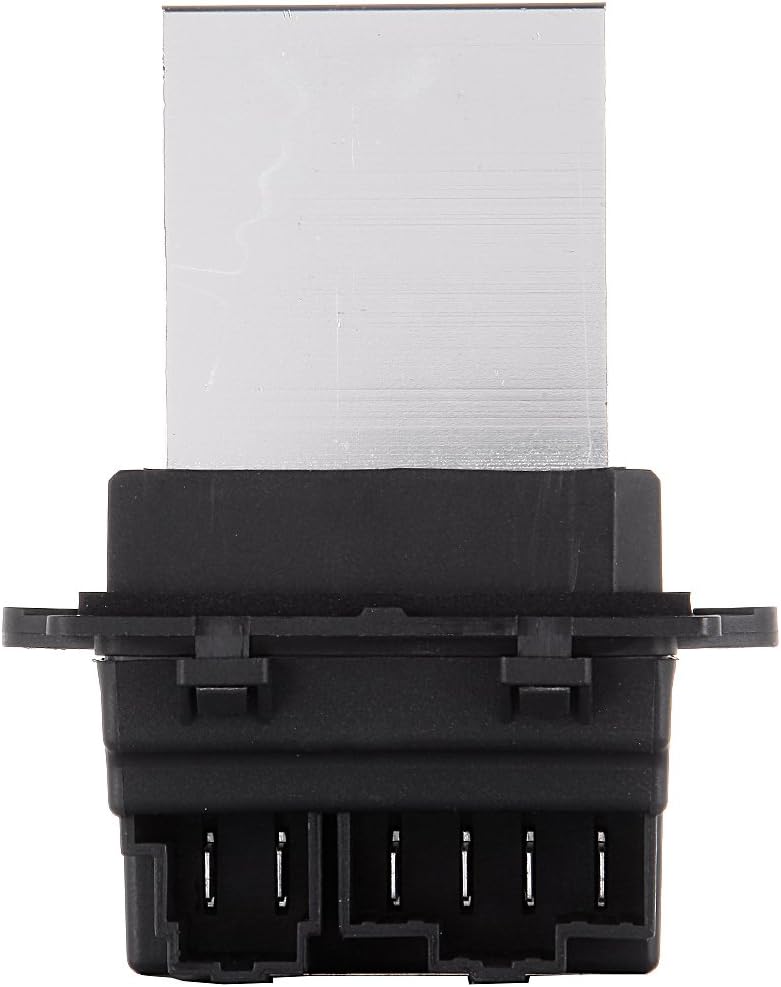
This image provides a direct front view of the resistor, clearly showing the 6-pin electrical connector at the base. The heat sink is visible above the black housing, indicating the component's design for efficient heat management.

A side profile of the blower motor resistor, with the heat sink fins prominently displayed. This view illustrates the depth and design of the fins, which are critical for dissipating heat and preventing component failure.
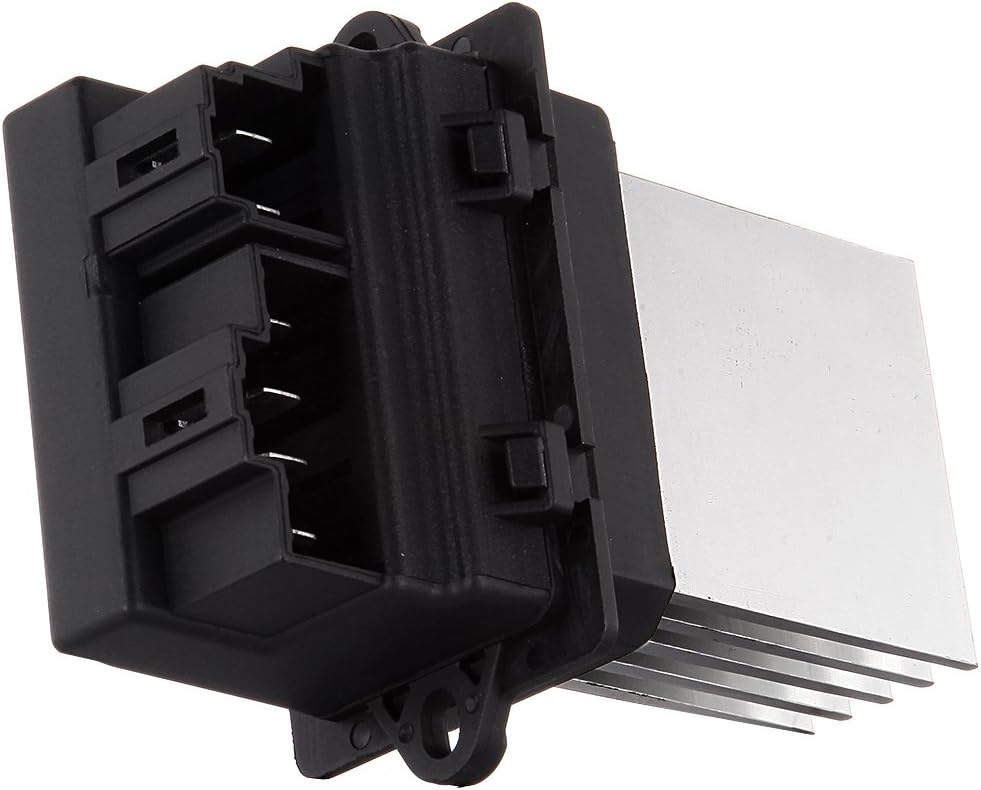
This image shows another angled perspective, with a clearer view of the black plastic connector housing and the overall compact design of the resistor unit.

A detailed close-up of the electrical connector, showing the six individual pins. This view is important for verifying the correct pin configuration before installation.
Vehicle Compatibility
The cciyu RU-638 HVAC Heater Blower Motor Resistor is compatible with a range of Chrysler, Dodge, and Jeep vehicles. Please verify your vehicle's make, model, and year against the list below and confirm the original part number to ensure proper fitment. This resistor is designed for systems with a 6-pin connector.
Compatible Vehicle Applications:
- For Chrysler:
- 2001-2005 Chrysler Town & Country
- 2001-2002 Chrysler Voyager Base Mini Passenger Van
- 2001-2005 Chrysler Voyager Base Mini Passenger Van
- 2001-2005 Chrysler Voyager LX Mini Passenger Van
- 2002-2003 Chrysler Voyager LX Mini Passenger Van
- 2004 Chrysler Pacifica Base Sport Utility
- For Dodge:
- 2001-2005 Dodge Caravan
- 2001-2004 Dodge Caravan Sport Mini Passenger Van
- 2001-2005 Dodge Caravan SE Mini Passenger Van
- 2001-2005 Dodge Grand Caravan
- 2002 Dodge Caravan Ec Mini Passenger Van
- 2004-2005 Dodge Durango
- 2004-2005 Dodge Caravan SXT Mini Passenger Van
- 2007-2011 Dodge Nitro
- For Jeep:
- 2006, 2008 Jeep Commander
- 2005-2006, 2008 Jeep Grand Cherokee
- 2010-2012 Jeep Liberty
Important Note: This resistor is designed with 6 pins. It is not compatible with vehicles that require a 4-pin blower motor resistor. Always cross-reference with your vehicle's original part number before purchase and installation.
Installation Guide
Replacing the blower motor resistor typically involves accessing the component, which is often located near the blower motor itself, usually under the dashboard on the passenger side. While this guide provides general steps, it is highly recommended to consult your vehicle's specific service manual or a qualified automotive technician for detailed instructions tailored to your vehicle model.
Safety Precautions:
- Always disconnect the vehicle's negative battery terminal before beginning any electrical work to prevent accidental short circuits or electrical shock.
- Wear appropriate personal protective equipment, such as gloves and eye protection.
- Ensure the vehicle is parked on a level surface with the parking brake engaged.
General Installation Steps:
- Locate the Blower Motor Resistor: The resistor is usually mounted in the HVAC housing, often accessible from under the glove box or dashboard on the passenger side. You may need to remove trim panels or the glove box itself to gain access.
- Disconnect Electrical Connector: Carefully disconnect the electrical connector(s) from the old blower motor resistor. Be gentle to avoid damaging the wires or connector clips.
- Remove Old Resistor: The resistor is typically held in place by a few screws or clips. Remove these fasteners and carefully pull the old resistor out of its mounting location. Note its orientation for reinstallation.
- Inspect and Clean: Before installing the new resistor, inspect the mounting area and electrical connector for any corrosion, debris, or signs of damage. Clean as necessary.
- Install New Resistor: Align the new cciyu RU-638 resistor with the mounting holes and secure it with the screws or clips removed earlier. Ensure it is seated firmly.
- Reconnect Electrical Connector: Reconnect the electrical connector(s) to the new resistor, ensuring a secure and snug fit.
- Reconnect Battery: Reconnect the negative battery terminal.
- Test System: Start the vehicle and test the HVAC system. Verify that all fan speeds function correctly and that the air volume can be adjusted as expected.
- Reassemble: Reinstall any trim panels or the glove box that were removed for access.
If you encounter any difficulties or are unsure about any step, it is advisable to seek professional assistance.
Operation
The blower motor resistor is an integral part of your vehicle's HVAC system, responsible for regulating the speed of the blower fan. When you adjust the fan speed setting on your vehicle's climate control panel, the resistor changes its electrical resistance, which in turn controls the amount of current flowing to the blower motor. This allows for varying fan speeds, from low to high, providing precise control over the airflow in the cabin.
A properly functioning resistor ensures that you can select any fan speed setting and the blower motor will respond accordingly, delivering the desired air volume for heating or cooling.
Troubleshooting Common Issues
If your vehicle's HVAC system is experiencing issues related to fan speed control, the blower motor resistor is often the culprit. Here are common symptoms that indicate a potential problem with the resistor and how this replacement part can resolve them:
- HVAC Fan Not Working at All: If the blower fan completely stops working, especially on all speed settings, a faulty resistor or blower motor is a likely cause. Replacing the resistor can restore full functionality.
- Fan Only Works on One Speed (Often High): This is a classic symptom of a failed blower motor resistor. When the resistor fails, it often defaults to allowing full current to the motor, resulting in only the highest fan speed working. Installing a new resistor will allow all speeds to function again.
- Cannot Adjust Air Volume: If you can't change the intensity of the airflow from the vents, it indicates a loss of control over the blower motor speed, which is managed by the resistor. A new resistor will restore this adjustability.
- Warning Light on Dashboard: In some modern vehicles, a faulty HVAC component like the blower motor resistor can trigger a warning light on the dashboard. Replacing the resistor may clear this warning.
- Intermittent Fan Operation: If the fan works sometimes and not others, or cuts out unexpectedly, it could be due to an intermittently failing resistor.
If these issues persist after replacing the blower motor resistor, it is recommended to consult a professional automotive technician to diagnose other potential problems within the HVAC system, such as the blower motor itself, wiring, or the climate control module.
Maintenance
The cciyu RU-638 Blower Motor Resistor is a sealed electronic component and generally requires no routine maintenance. However, to ensure its longevity and the overall health of your vehicle's HVAC system, consider the following:
- Keep Connections Clean: Periodically inspect the electrical connector for any signs of corrosion or loose connections. Clean with an electrical contact cleaner if necessary.
- Ensure Proper Airflow: The heat sink on the resistor relies on airflow for cooling. Ensure that the area around the resistor and blower motor is free from debris, leaves, or other obstructions that could impede airflow and lead to overheating.
- Check Cabin Air Filter: A clogged cabin air filter can put extra strain on the blower motor and resistor. Replace your cabin air filter according to your vehicle manufacturer's recommendations.
- Address Blower Motor Issues Promptly: If the blower motor itself is failing or drawing excessive current, it can prematurely wear out the resistor. Address any unusual noises or weak airflow from the blower motor promptly.
Warranty and Support
For specific warranty information regarding your cciyu RU-638 HVAC Heater Blower Motor Resistor, please refer to the documentation provided with your purchase or contact cciyu customer support directly. cciyu is committed to providing high-quality automotive parts and customer satisfaction.
You can find more information and contact details on the official cciyu brand store: