
1. Introduction
This manual provides instructions for the installation, configuration, and operation of your TP-Link TL-WR850N N300 Wi-Fi Router. This device offers 300 Mbps wireless speed, 2.4GHz single band connectivity, and supports features like IPv6, Parental Controls, and Guest Network. Please read this manual thoroughly before use.
2. Package Contents
Verify that your package contains the following items:
- Wireless N Router TL-WR850N
- Power supply unit
- Ethernet Cable
- Quick Installation Guide

Figure 2.1: Front view of the TP-Link TL-WR850N N300 Wi-Fi Router, showing its two external antennas and status indicators.
3. Hardware Overview
3.1 Front Panel (LED Indicators)
The front panel features LED indicators that display the router's status. Refer to the Quick Installation Guide for detailed LED behavior.

Figure 3.1: Angled view of the TP-Link TL-WR850N N300 Wi-Fi Router, highlighting the status LEDs on the top panel.
3.2 Rear Panel (Ports and Buttons)
The rear panel contains all the necessary ports for connecting the router to your network and power source.
- Power Port: Connects to the provided power adapter.
- WAN Port (Blue): Connects to your modem or internet service provider's (ISP) network.
- LAN Ports (Yellow): Connects to your wired devices such as computers, smart TVs, or gaming consoles.
- WPS/Reset Button: Used for Wi-Fi Protected Setup (WPS) or to reset the router to factory defaults.

Figure 3.2: Rear view of the TP-Link TL-WR850N N300 Wi-Fi Router, showing the power port, WAN port, LAN ports, and WPS/Reset button.
4. Setup
4.1 Hardware Connection
- Power Off: Disconnect power from your modem and router (if applicable).
- Connect Modem: Connect your modem to the router's blue WAN port using an Ethernet cable.
- Connect Devices (Optional): Connect your computer or other wired devices to the router's yellow LAN ports using Ethernet cables.
- Power On: Connect the power adapter to the router's power port and plug it into an electrical outlet. Power on your modem, then the router. Wait for the router's indicators to stabilize.
4.2 Initial Configuration
The router can be configured using a web browser. The Quick Installation Guide provides initial access details.
- Connect to Router: Connect your computer to the router either via an Ethernet cable or wirelessly using the default Wi-Fi name (SSID) and password printed on the label at the bottom of the router.
- Access Web Interface: Open a web browser and enter the default access address (e.g.,
http://tplinkwifi.netor192.168.0.1). - Login: Enter the default username and password (usually
adminfor both). - Run Quick Setup: Follow the on-screen instructions of the Quick Setup wizard to configure your internet connection and wireless settings.
Figure 4.1: Illustration of the easy setup process, emphasizing the user-friendly interface for quick online access.
5. Operating the Router
5.1 Wireless Settings
The TL-WR850N provides 300 Mbps wireless N speed, suitable for various network tasks.
- Network Name (SSID): You can change the default wireless network name (SSID) in the router's web interface.
- Wireless Password: It is recommended to set a strong WPA2-PSK password for your wireless network.
- CCA Technology: Clear Channel Assessment (CCA) automatically avoids channel conflicts, enhancing wireless performance.
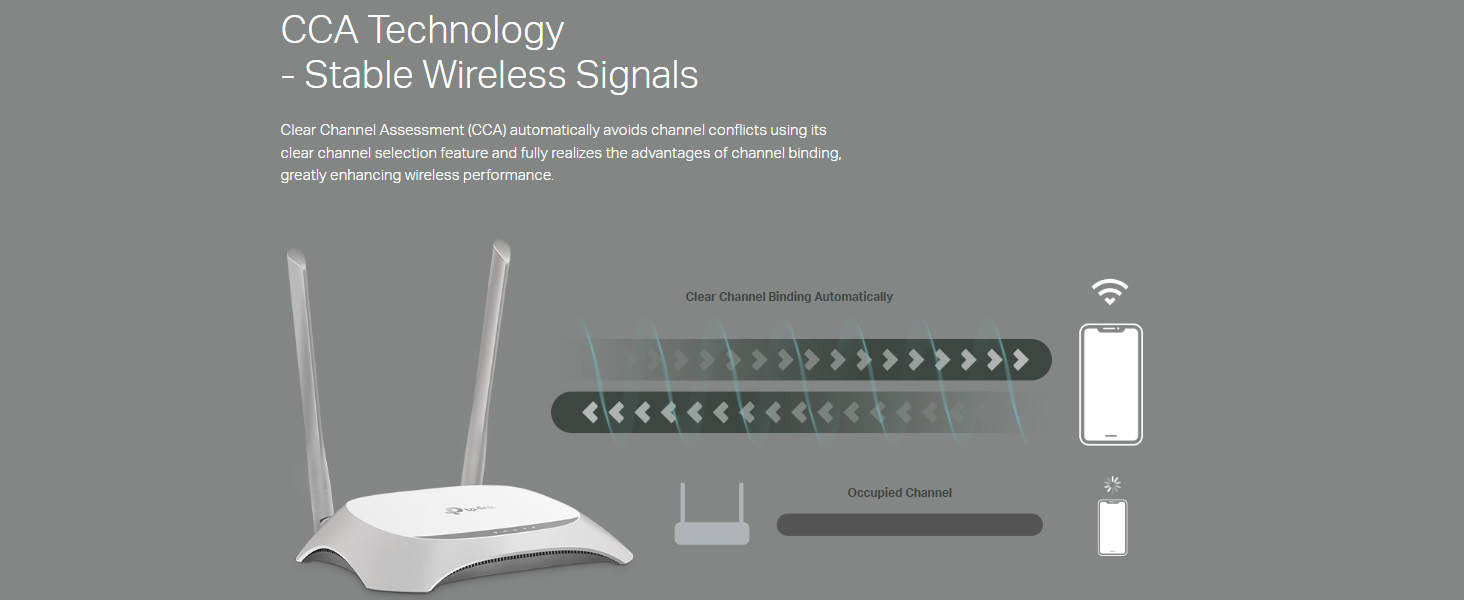
Figure 5.1: Diagram illustrating CCA Technology, which helps in selecting clear channels to improve wireless signal stability and performance.
5.2 Guest Network
Enable the Guest Network feature to provide separate Wi-Fi access for guests, keeping your main network secure and private.
- Access the Guest Network settings in the web interface.
- Enable the Guest Network and configure its SSID and password.
- You can also set bandwidth limits or access restrictions for guest users.
5.3 Parental Controls
Manage when and how connected devices can access the internet using Parental Controls.
- Navigate to the Parental Control section in the router's web interface.
- Specify devices to control and set time limits or website restrictions.
5.4 IPv6 Support
The router is compatible with IPv6 (Internet Protocol version 6), supporting the latest internet standards.
5.5 IP QoS (Quality of Service)
IP-based bandwidth control allows administrators to determine how much bandwidth is allocated to each connected device or user, optimizing performance for critical applications.
Figure 5.2: Visual representation of IP QoS, indicating its role in managing and allocating network bandwidth.
5.6 Aginet Config Support
The router supports Aginet Config, which enables Internet Service Providers (ISPs) to customize default configurations. This feature helps resolve issues that may arise when end-users reset the device, ensuring consistent service delivery.
Figure 5.3: Graphic indicating support for Aginet Config, a feature for ISP customization of router settings.
6. Maintenance
6.1 Firmware Update
Regularly check for and install firmware updates to ensure optimal performance, security, and access to new features.
- Visit the official TP-Link support website for your model (TL-WR850N).
- Download the latest firmware file.
- Access the router's web interface and navigate to the Firmware Upgrade section (usually under System Tools).
- Follow the on-screen instructions to upload and install the new firmware. Do not power off the router during the update process.
6.2 Factory Reset
If the router is not functioning correctly or you forget the login password, you can reset it to factory default settings.
- Method 1 (Hardware Button): With the router powered on, press and hold the WPS/Reset button on the rear panel for approximately 5-10 seconds until the system LED blinks rapidly. Release the button and wait for the router to restart.
- Method 2 (Web Interface): Access the router's web interface, navigate to System Tools > Factory Defaults, and click the Restore button. Confirm the action when prompted.
Note: A factory reset will erase all your custom configurations, and you will need to set up the router again.
7. Troubleshooting
7.1 Cannot Access the Internet
- Check all cable connections between the modem, router, and your computer. Ensure they are secure.
- Verify that the WAN LED on the router is lit, indicating a connection to your modem.
- Restart your modem and router. Power off both devices, wait 30 seconds, then power on the modem first, wait for it to fully boot, then power on the router.
- Confirm your internet settings in the router's web interface match those provided by your ISP.
7.2 Cannot Access the Router's Web Management Page
- Ensure your device is correctly connected to the router (wired or wireless).
- Verify that the router's IP address (e.g.,
http://tplinkwifi.netor192.168.0.1) is entered correctly in the browser. - Clear your browser's cache and cookies, or try a different browser.
- If you have changed the router's login credentials and forgotten them, perform a factory reset (refer to Section 6.2).
7.3 Wi-Fi Signal Issues
- Router Placement: Position the router in a central location, away from obstructions and interference sources (e.g., microwaves, cordless phones).
- Antenna Orientation: Adjust the antennas for optimal signal reception.
- Channel Interference: In the wireless settings, try changing the Wi-Fi channel to a less congested one.
- Firmware: Ensure your router's firmware is up to date.
8. Specifications
| Feature | Detail |
|---|---|
| Brand | TP-Link |
| Model Name | TL-WR850N |
| Wireless Standard | 802.11b/g/n |
| Frequency Band | Single-Band (2.4GHz) |
| Wireless Speed | Up to 300 Mbps |
| Connectivity Type | Wi-Fi, Ethernet |
| Ports | 1 WAN, 4 LAN |
| Special Features | CCA Technology, Easy Setup, Guest Mode, Parental Control, QoS, IPv6 Support, Aginet Config |
| Operating System Support | Linux, Mac OS, Windows |
| Power Input | 9 Volts (DC) |
| Dimensions (LxWxH) | 20 x 15 x 15 Centimeters |
| Item Weight | 650 g |
9. Warranty and Support
9.1 Warranty Information
For warranty details, please refer to the warranty card included with your product or visit the official TP-Link website for your region. Keep your purchase receipt for warranty claims.
9.2 Technical Support
If you encounter any issues that cannot be resolved using this manual, please contact TP-Link technical support.
- Toll-Free Contact: 1800 2094 168 (India)
- Email Support: support.in@tp-link.com
- Online Resources: Visit the official TP-Link website for FAQs, firmware downloads, and additional support documentation.
Manufacturer: TP-Link
Importer: TP-link India Private ltd. Office no 201, 2nd floor A-wing Time Square Building, Marol naka, Andheri Kurla Road, Andheri East, Mumbai.


