
HTZSAFE 805A+T704
Htzsafe Solar Driveway Alarm System User Manual
Brand: HTZSAFE
Model: 805A+T704
1. Setup
This section guides you through the initial setup of your Htzsafe Solar Driveway Alarm System, including component identification and basic pairing procedures.

Figure 1: The Htzsafe Solar Driveway Alarm System, featuring the solar-powered motion sensor and the plug-in receiver unit.

Figure 2: Detailed diagram illustrating the various parts and dimensions of both the plug-in alarm receiver and the solar wireless motion sensor for easy identification.
1.1 Initial Power-Up and Pairing
- Power the Receiver: Plug the receiver unit into a standard electrical outlet indoors. The indicator light on the receiver will illuminate.
- Activate the Sensor: Press the ON/OFF button on the back of the solar motion sensor four times to turn it on. The indicator light on the sensor will turn red for approximately 30 seconds, indicating it is ready for pairing.
- Pairing Process: While the sensor's indicator light is red, press and hold the volume button on the side of the receiver for about 5 seconds until the receiver's indicator light flashes. Release the button.
- Test Pairing: Once the indicator light on the receiver flashes, wave your hand in front of the sensor to activate it. The receiver should chime, confirming successful pairing.
1.2 Sensor Placement and Mounting
For optimal performance, position the solar motion sensor in an area that receives direct sunlight to ensure continuous charging. Mount it securely using the provided screws and mounting plate.
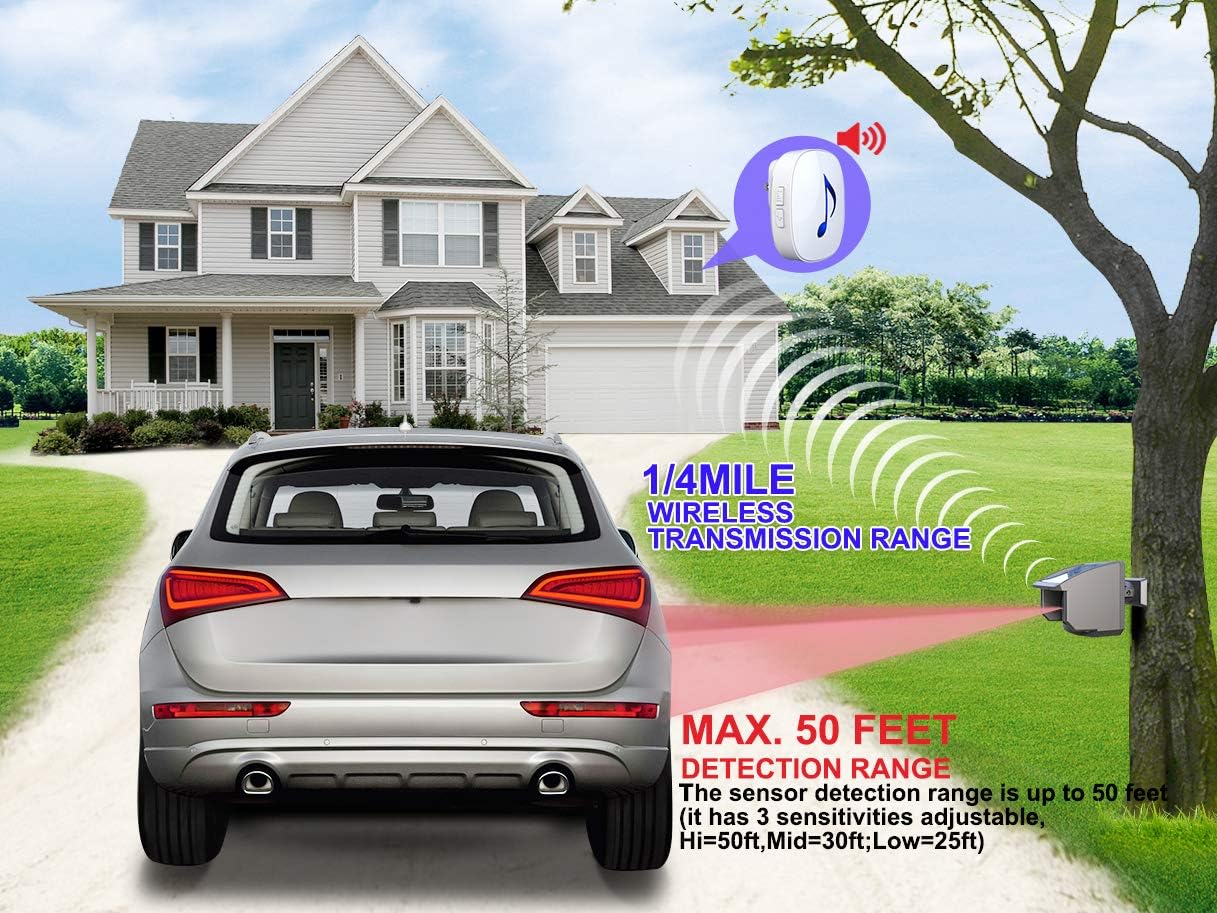
Figure 3: The system offers a wireless transmission range of up to 1/4 mile and a motion detection range of up to 50 feet, ideal for driveways and pathways.
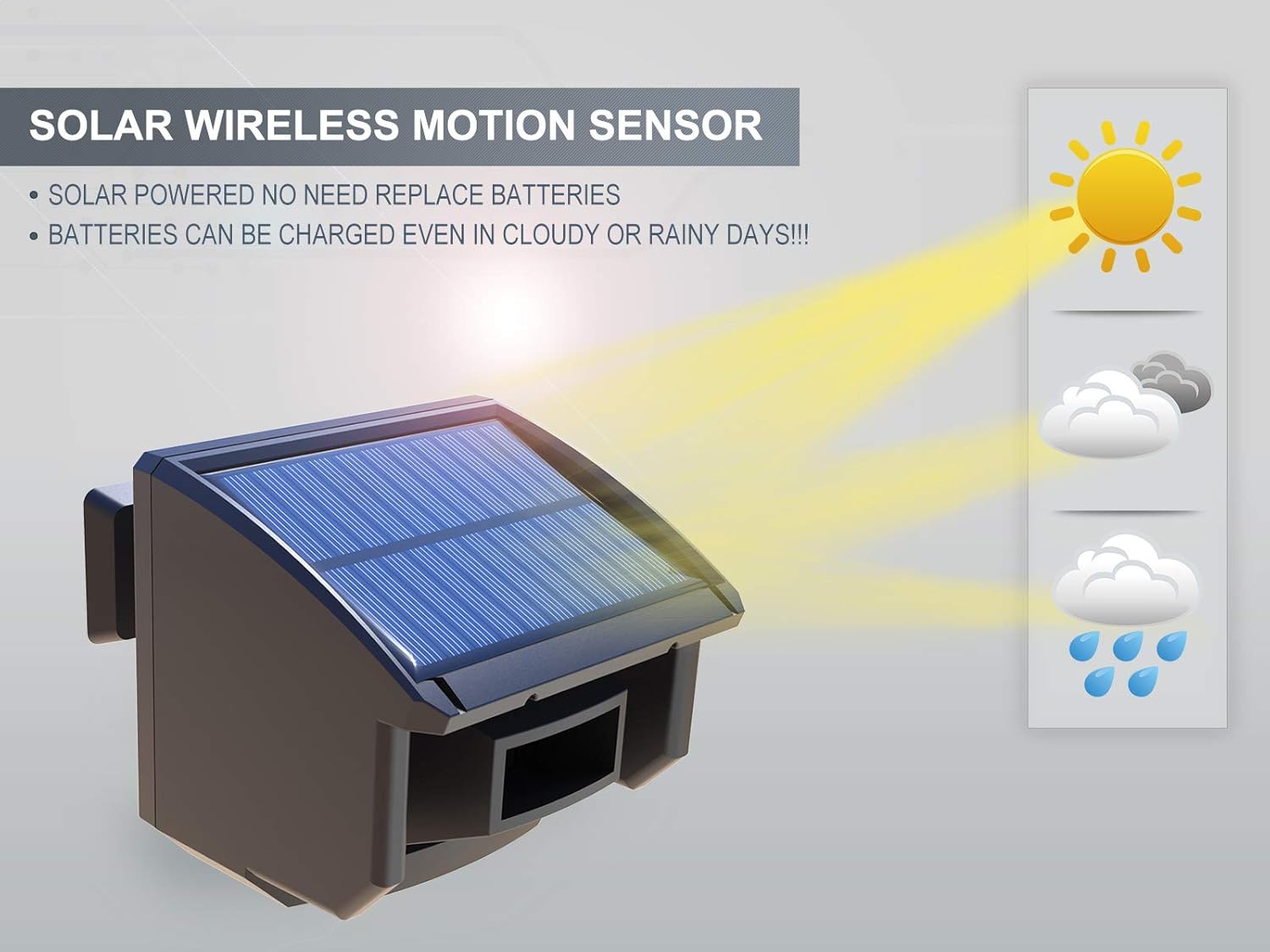
Figure 4: The solar panel on the motion sensor charges the built-in rechargeable battery, eliminating the need for frequent battery replacements, even on cloudy or rainy days.
1.3 Video Guide: Sensor and Receiver Setup
Video 1: A step-by-step guide on how to set up the HTZSAFE sensor (HB-T704) and receiver (HB-805A) for initial use.
1.4 Expanding Your System
The Htzsafe system is expandable, allowing you to add up to 32 sensors and unlimited alarm receivers for comprehensive property coverage. Follow the pairing steps above for each additional sensor.
Video 2: Instructions on how to add an extra sensor (HB-T704) to your existing receiver (HB-805A) for expanded coverage.
2. Operating Instructions
Understand how to effectively use your Htzsafe system for motion detection and alerts.
2.1 Sensitivity Adjustment
The motion sensor has three adjustable sensitivity levels: Hi (50ft), Mid (30ft), and Low (25ft). Adjust the sensitivity based on your specific needs and environment to minimize false alarms.
2.2 Melodies and Volume Control
The wireless receiver offers 35 optional ringtones and 4 volume levels. You can match different ringtones with different sensors to identify the location of detected motion. Use the volume and melody buttons on the receiver to customize your alert preferences.

Figure 5: The solar motion sensor detects heat movements from various sources such as persons, animals, and vehicles, making it versatile for different security needs.
3. Maintenance
Proper maintenance ensures the longevity and optimal performance of your Htzsafe system.
3.1 Solar Charging
The outdoor motion detector is powered by a built-in rechargeable battery that is continuously charged by the solar panel. Ensure the solar panel is kept clean and free from obstructions (like leaves or snow) to maximize charging efficiency. Even on rainy or cloudy days, the solar panel will provide a trickle charge.
3.2 Weather Resistance
The outdoor motion sensor is waterproof (IP66 rated) and features a fully-enclosed design, providing resistance to rain, fog, snow, wind, and temperature changes. It operates effectively in temperatures ranging from -30°C to 70°C (-22°F to 158°F). Regularly inspect the sensor for any physical damage or blockages that might affect its performance.
4. Troubleshooting
This section addresses common issues and provides solutions to ensure your driveway alarm system functions correctly.
4.1 False Alarms
- Environmental Factors: False alarms can be caused by direct sunlight, heavy rain, dense fog, or strong winds. Adjust the sensor's angle or relocate it to a less exposed area if necessary.
- Sensitivity: If small animals or distant objects are triggering the alarm, reduce the sensor's sensitivity level (e.g., from Hi to Mid or Low).
- Obstructions: Ensure there are no moving objects (like swaying branches or tall grass) directly in the sensor's detection path.
4.2 No Detection/No Chime
- Battery Level: Check if the sensor's battery is sufficiently charged. Ensure the solar panel is receiving adequate sunlight.
- Pairing: Re-verify that the sensor and receiver are properly paired according to the setup instructions (Section 1.1).
- Range: Confirm that the sensor is within the effective wireless transmission range of the receiver (up to 1/4 mile). Obstacles like thick walls or dense foliage can reduce this range.
- Sensor Alignment: Ensure the sensor is correctly aimed to cover the desired detection area.
5. Specifications
| Feature | Description |
|---|---|
| Brand | HTZSAFE |
| Model Number | 805A+T704 |
| Power Source | Solar, Battery Powered |
| Wireless Transmission Range | Up to 1/4 mile (actual range may vary) |
| Motion Detection Range | Up to 50 feet (3 adjustable sensitivities: Hi=50ft, Mid=30ft, Low=25ft) |
| Operating Temperature | -30°C to 70°C (-22°F to 158°F) |
| Waterproof Rating | IP66 |
| Mounting Type | Wall Mount |
| Product Dimensions | 5.31"D x 4.05"W x 3.62"H |
| Item Weight | 15.8 ounces |
6. Warranty and Support
For detailed warranty information and technical support, please refer to the official user manual PDF available on the product's Amazon page or contact HTZSAFE customer service directly.
You can find the User Manual (PDF) at: https://manuals.plus/m/7afee1a10f998795a968602dad3a67def494664af2eca8c0efb3079ebb2c2899
Related documents805A+T704


Ask a question about this manual
Ask about setup, troubleshooting, compatibility, parts, safety, or missing instructions. Manuals+ will review the question and use this page’s manual context to help answer it.