
1. Introduction
This manual provides essential information for the proper installation, operation, and maintenance of your DT Swiss 350 Straight Pull Front Hub. Designed for cycling enthusiasts, this hub features a 24-hole configuration, 12 x 100 mm thru-axle compatibility, and a Centre-Lock disc brake interface. Adhering to these instructions will help ensure the longevity and optimal performance of your product.
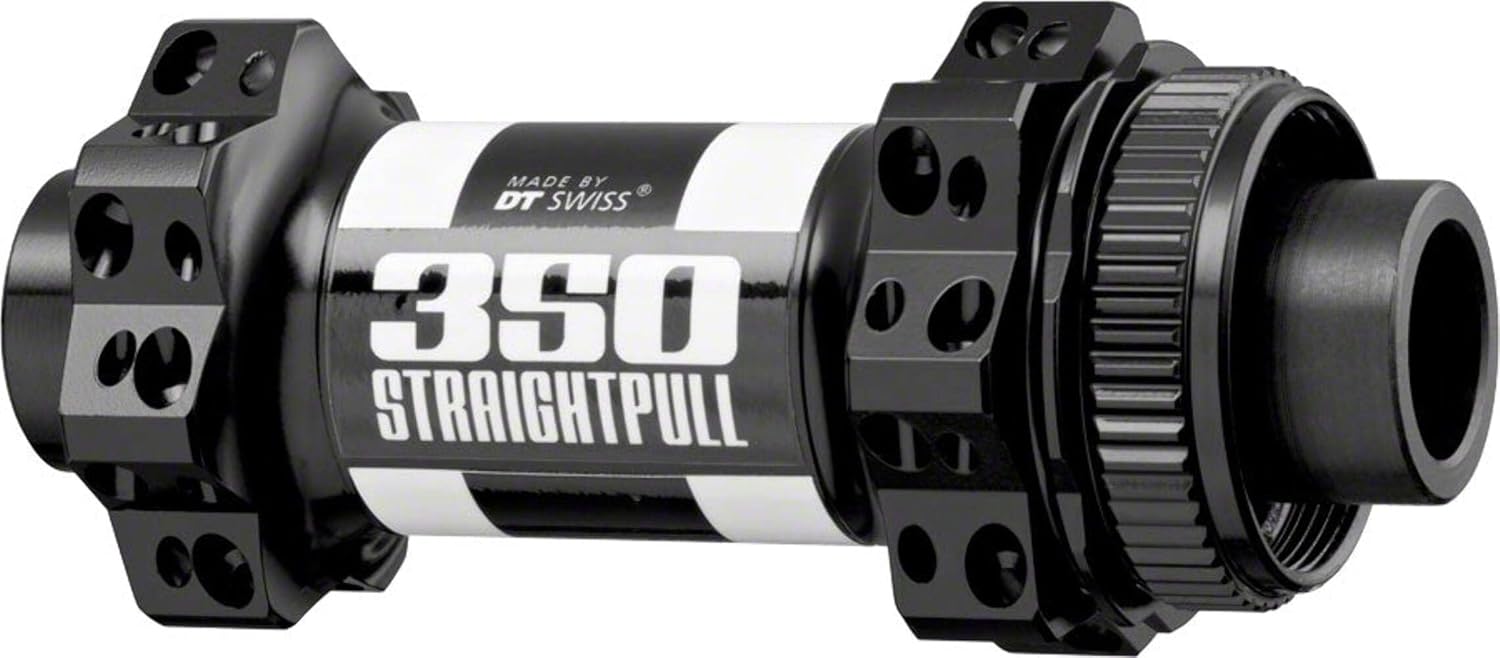
Figure 1: DT Swiss 350 Straight Pull Front Hub. This image displays the black hub with white DT Swiss 350 Straightpull branding, showcasing its Centre-Lock disc brake mount and thru-axle design.
2. Safety Information
Always prioritize safety when working with bicycle components. Improper installation or maintenance can lead to serious injury or product damage.
- Professional installation by a qualified bicycle mechanic is highly recommended for wheel building and hub installation.
- Wear appropriate safety gear, including eye protection and gloves, during installation and maintenance.
- Ensure all bolts and fasteners are tightened to the manufacturer's specified torque values. Overtightening or undertightening can compromise safety and performance.
- Regularly inspect your hub and wheel for any signs of wear, damage, or loose components.
- Do not modify the hub or its components. Use only genuine DT Swiss replacement parts.
3. Package Contents
Verify that all items are present and undamaged upon opening the package. If any components are missing or damaged, contact your retailer or DT Swiss support.
- 1 x DT Swiss 350 Straight Pull Front Hub (24 Hole, 12 x 100 mm Thru-axle, Centre-Lock)
- Instruction Manual (this document)
4. Setup
4.1 Wheel Building (Spoke Lacing)
The DT Swiss 350 Straight Pull Front Hub is designed for straight-pull spokes, which require specific lacing patterns and tensioning. Wheel building is a specialized skill. It is strongly recommended that this process be performed by a certified bicycle mechanic using appropriate tools and spoke tension meters. Refer to DT Swiss technical documentation for detailed spoke length calculations and lacing instructions.
4.2 Disc Brake Rotor Installation (Centre-Lock)
This hub utilizes the Centre-Lock disc brake rotor mounting system. Follow the instructions provided with your disc brake rotor for proper installation.
- Clean the Centre-Lock splines on both the hub and the rotor.
- Align the splines of the disc brake rotor with the splines on the hub.
- Slide the rotor onto the hub until it seats fully.
- Thread the Centre-Lock lockring onto the hub.
- Using a compatible lockring tool (e.g., a cassette lockring tool or bottom bracket tool, depending on lockring type), tighten the lockring to the manufacturer's specified torque (typically 40 Nm). Ensure the lockring is fully engaged and secure.
4.3 Wheel Installation onto Bicycle Fork
The DT Swiss 350 Front Hub is designed for 12 x 100 mm thru-axle forks.
- Ensure your bicycle fork is compatible with a 12 x 100 mm thru-axle.
- Carefully insert the wheel into the fork dropouts, ensuring the disc brake rotor aligns correctly with the brake caliper.
- Insert the 12 mm thru-axle through the fork dropout, hub, and opposite fork dropout.
- Tighten the thru-axle according to your fork manufacturer's specifications. This typically involves threading and then closing a quick-release lever or tightening a bolt with a hex key.
- Before riding, check that the wheel is securely seated and spins freely without rubbing against the brake pads or fork.
5. Operation
Once properly installed, the DT Swiss 350 Straight Pull Front Hub operates as a standard bicycle front hub. Its primary function is to provide a smooth-rolling interface for the front wheel. No specific user interaction is required beyond ensuring proper installation and regular maintenance.
6. Maintenance
Regular maintenance extends the life of your hub and ensures safe operation.
- Cleaning: Keep the hub clean from dirt, mud, and road grime. Use a mild soap and water solution, then rinse thoroughly and dry. Avoid high-pressure washing directly at the seals.
- Inspection: Periodically check for any signs of play in the bearings. Gently rock the wheel side-to-side while it's installed in the fork. Any noticeable play may indicate worn bearings or improper adjustment.
- Bearing Service: DT Swiss hubs are designed for durability, but bearings will eventually wear. Servicing or replacing bearings requires specialized tools and expertise. It is recommended to have this performed by a qualified bicycle mechanic. Refer to DT Swiss service manuals for detailed instructions.
- Spoke Tension: Regularly check spoke tension. Uneven or low spoke tension can lead to wheel damage or failure.
7. Troubleshooting
| Problem | Possible Cause | Solution |
|---|---|---|
| Wheel has side-to-side play | Worn bearings, loose thru-axle, or improperly installed end caps. | Check thru-axle tightness. Inspect end caps for proper seating. If play persists, bearing service or replacement by a mechanic is required. |
| Grinding noise from hub | Contaminated or worn bearings. | Bearing service or replacement by a mechanic. |
| Disc brake rub | Improperly aligned brake caliper, bent rotor, or wheel not fully seated. | Re-seat wheel in fork. Align brake caliper. Inspect rotor for trueness. |
8. Specifications
| Feature | Detail |
|---|---|
| Brand | DT Swiss |
| Model Name | Hbdt350sp13 |
| Hub Type | Front Hub |
| Spoke Type | Straight Pull |
| Hole Count | 24 Hole |
| Axle Type | Thru-axle |
| Axle Dimensions | 12 x 100 mm |
| Brake Interface | Centre-Lock Disc |
| Material | Metal |
| Color | Black (Standard) |
| Item Weight | 0.75 Pounds (approx. 0.34 kg) |
| Recommended Use | Cycling |
9. Warranty and Support
DT Swiss products are manufactured to high standards and come with a manufacturer's warranty. For specific warranty terms and conditions, please refer to the official DT Swiss website or contact your local DT Swiss distributor. For technical support, service, or inquiries regarding replacement parts, please visit the official DT Swiss support portal or contact their customer service department.
