
1. Introduction
The Svbony SV41 Mak 25-75x70 Spotting Scope is a versatile optical instrument designed for terrestrial and astronomical observation. Featuring a Maksutov-Cassegrain optical design, fully multi-coated lenses, and BAK-4 prisms, it delivers clear and bright images across a 25x to 75x magnification range. Its robust, waterproof construction ensures reliable performance in various outdoor conditions, making it suitable for target shooting, bird watching, wildlife observation, and landscape viewing.
2. Product Features
- Maksutov-Cassegrain Optical Design: Provides a compact form factor with a long focal length for enhanced resolution and effective magnification.
- Variable Magnification (25-75x): Allows for detailed observation from a broad overview to high-power close-ups.
- 70mm Objective Lens: Gathers ample light for bright and clear images, even in lower light conditions.
- Fully Multi-Coated (FMC) Optics: Reduces light loss and glare, enhancing image brightness, contrast, and color fidelity.
- BAK-4 Porro Prisms: Delivers intense colors and contrasts for a superior viewing experience.
- IPX7 Waterproof, Anti-fog, and Dustproof: Nitrogen-purged and O-ring sealed to withstand harsh weather and prevent internal fogging.
- Fine Focus Knob: Features a 12-coil stroke for precise and smooth focusing, especially at high magnifications.
- Compact and Portable Design: Easy to transport and set up for various outdoor activities.
- Foldable Rubber Eyecup: Provides comfort for both eyeglass and non-eyeglass wearers.
- Standard Tripod Interface: Equipped with a 3/8"-1/4" adapter for compatibility with a wide range of tripods.

Figure 1: Maksutov Optical Design. This diagram illustrates the internal light path and long focal length (780mm) achieved by the Maksutov-Cassegrain optical system.

Figure 2: 70mm Objective Lens with FMC. The image highlights the 70mm objective lens and the fully multi-coated (FMC) optics, which contribute to a bright and sharp field of view.

Figure 3: BAK4 Prism Advantage. This image compares the image quality produced by BAK4 prisms versus BK7 prisms, demonstrating the superior clarity and contrast of BAK4.
3. Package Contents
Please check the package contents upon receipt to ensure all items are present and undamaged:
- Svbony SV41 Mak 25-75x70 Spotting Scope
- Desktop Tripod
- Objective Lens Cap
- Eyepiece Cap
- Soft Carrying Case
- Cleaning Cloth
- Instruction Manual (this document)

Figure 4: Package Contents. An illustration of all items included in the product package.
4. Setup
- Attach the Tripod: Screw the spotting scope onto the included desktop tripod using the standard 3/8"-1/4" adapter. Ensure it is securely fastened for stability.
- Position the Scope: Place the tripod on a stable, level surface. Adjust the tripod legs and the scope's angle for comfortable viewing.
- Remove Lens Caps: Carefully remove the objective lens cap and the eyepiece cap.
- Adjust Eyecup: Rotate or fold down the rubber eyecup if you wear eyeglasses to achieve a full field of view. Extend it if you do not wear eyeglasses.

Figure 5: Spotting Scope on Tripod. This image shows the spotting scope securely mounted on its desktop tripod, highlighting the fine focus knob, rubber eyecup, and tripod interface.
5. Operating Instructions
- Adjust Magnification: Rotate the magnification ring on the eyepiece to select your desired power, from 25x to 75x. Start with lower magnification for a wider field of view and easier target acquisition, then increase as needed for more detail.
- Focusing: Look through the eyepiece and slowly turn the fine focus knob until the image appears sharp and clear. Make small adjustments for optimal clarity.
- Eyecup Adjustment: If you wear glasses, twist or fold down the eyecup to bring your eye closer to the eyepiece lens, allowing you to see the entire field of view. If you do not wear glasses, keep the eyecup extended.
- Observing: Once focused, you can pan and tilt the scope to follow moving objects or scan landscapes. For extended viewing, ensure the tripod is on a very stable surface.

Figure 6: Magnification Range. This image illustrates the visual effect of different magnification levels (25x, 50x, 75x) on a target, demonstrating the scope's zoom capability.

Figure 7: Smooth Focus Wheel. The image highlights the focus wheel and its effect on image clarity, showing a bird in both unfocused and focused states.
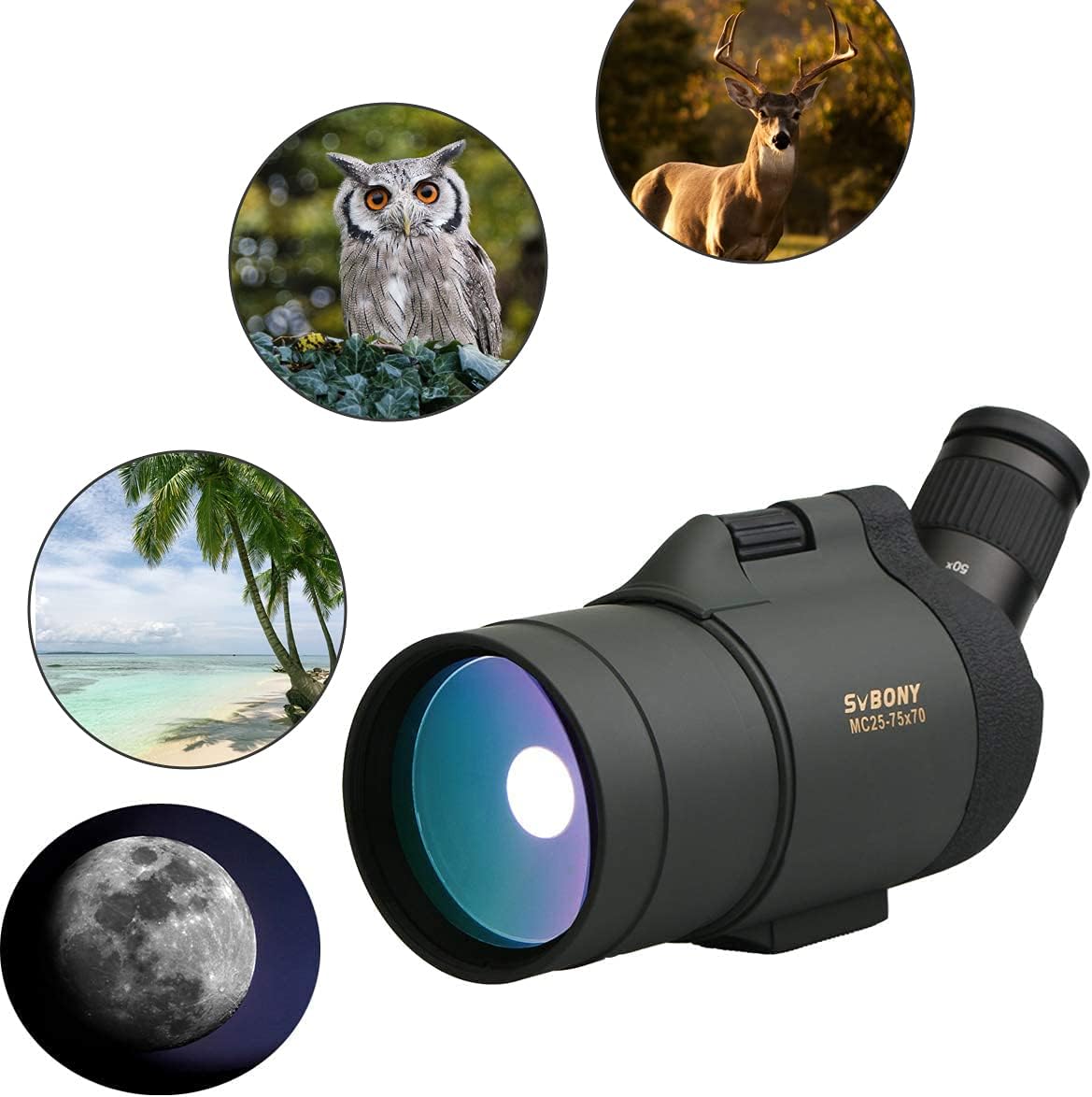
Figure 8: Versatile Applications. This image displays the spotting scope in various observation scenarios, including bird watching, wildlife viewing, landscape observation, and lunar viewing.
6. Maintenance
- Cleaning Lenses: Use the provided cleaning cloth or a soft, lint-free cloth specifically designed for optics. Gently wipe the lens surfaces. For stubborn smudges, use a small amount of lens cleaning fluid on the cloth, not directly on the lens.
- Body Cleaning: Wipe the body of the spotting scope with a soft, damp cloth. Avoid using harsh chemicals or abrasive materials.
- Storage: When not in use, store the spotting scope in its carrying case in a cool, dry place, away from direct sunlight and extreme temperatures. Ensure lens caps are in place to protect the optics.
- Waterproof Care: While the scope is IPX7 waterproof, avoid prolonged submersion. If it gets wet, wipe it dry with a soft cloth. Do not attempt to disassemble the waterproof seals.
7. Troubleshooting
| Problem | Possible Cause | Solution |
|---|---|---|
| Image is blurry or out of focus. | Improper focus adjustment; dirty lenses. | Adjust the fine focus knob slowly. Clean the objective and eyepiece lenses with a soft, optical cleaning cloth. |
| Image is dark or dim. | Objective lens cap still on; insufficient ambient light. | Ensure the objective lens cap is fully removed. Use the scope in adequately lit conditions. |
| View is unstable or shaky. | Tripod not stable; windy conditions. | Ensure the tripod is placed on a firm, level surface. Avoid touching the scope unnecessarily during observation. Consider a heavier-duty tripod for very windy conditions. |
| Cannot achieve full field of view with eyeglasses. | Eyecup is extended. | Twist or fold down the rubber eyecup completely. |
8. Specifications
| Brand | SVBONY |
| Model Name | SV41 Mak (EUF9334G) |
| Color | Army Green |
| Material | Rubber |
| Magnification | 25x - 75x |
| Objective Lens Diameter | 70 Millimeters |
| Eyepiece Relief | 19 Millimeters |
| Field of View | 35 Meters (at 1000m) |
| Prism Type | BAK-4 Porro |
| Lens Coating | Fully Multi-Coated (FMC) |
| Waterproof Rating | IPX7 |
| Tripod Mount Type | 3/8"-1/4" Adapter |
| Intended Use | Target shooting, bird watching, wildlife observation, landscape viewing |
| UPC | 609378743092 |

Figure 9: Product Dimensions. This image provides a visual representation of the spotting scope's dimensions, indicating a height of 392mm (15.43in) when mounted on the desktop tripod.
9. Warranty and Support
Svbony offers a lifetime warranty for spotting scopes, monoculars, binoculars, and microscopes. Additionally, a 30-day no-reason return policy is provided. Beyond the warranty period, maintenance services are available, with buyers responsible for associated costs.
For any inquiries or support, please contact Svbony customer service through the Amazon platform. We aim to respond within 12 hours.


