
1. Product Overview
The DELPHI PS10126 is a Manifold Absolute Pressure (MAP) sensor designed for automotive applications. This sensor measures the absolute pressure within the engine's intake manifold, providing crucial data to the Engine Control Unit (ECU) for optimal fuel delivery and ignition timing. Accurate pressure readings are essential for engine performance, fuel efficiency, and emissions control.
1.1 What's in the Box
- 1 x DELPHI PS10126 Manifold Absolute Pressure Sensor
This package contains one DELPHI PS10126 Manifold Absolute Pressure Sensor, ready for installation.
2. Specifications
| Feature | Detail |
|---|---|
| Model Number | PS10126 |
| Brand | Delphi |
| Number of Contact Plugs | 3 |
| Pressure Range (from) | 13 kPa |
| Product Dimensions (L x W x H) | 16.8 x 7.2 x 7.2 cm (6.61 x 2.83 x 2.83 inches) |
| Product Weight | 118 g (0.26 lbs) |
| Equivalent Part Numbers | Ford 1041954; Ford 1127268; Ford 98AB-9F479-BA; Ford 98AB-9S428-AB |
3. Compatibility
The DELPHI PS10126 MAP sensor is compatible with various Ford vehicle models. Please verify compatibility with your specific vehicle using the provided equivalent part numbers and your vehicle's VIN.
3.1 Compatible Vehicle Models (Examples)
- FORD FOCUS (DAW, DBW, DNW, DFW)
- FORD TRANSIT (P65, P70, P80)
- FORD FIESTA (JA, JB, JAS, JBS, J3, J5, J3S, J5S, JV, JVS)
- FORD TOURNEO
Important: Always cross-reference the part number with your vehicle's existing part or consult a professional to ensure correct fitment. Providing your vehicle's VIN to a parts specialist can confirm compatibility.
4. Setup and Installation
Installation of the DELPHI PS10126 MAP sensor should be performed by a qualified technician or individuals with appropriate automotive repair experience. Incorrect installation can lead to engine malfunctions or damage.
4.1 General Installation Guidelines
- Safety First: Ensure the vehicle's engine is off and cool. Disconnect the negative terminal of the battery to prevent electrical hazards.
- Locate the Existing Sensor: Identify the location of the current MAP sensor in your vehicle's intake manifold. Refer to your vehicle's service manual for precise location.
- Disconnect Electrical Connector: Carefully disconnect the electrical connector from the old MAP sensor. Avoid pulling on the wires.
- Remove Old Sensor: Unfasten any mounting bolts or clips securing the old sensor. Gently remove the sensor from its housing.
- Inspect Mounting Area: Clean the mounting surface and ensure there are no obstructions or debris that could affect the new sensor's seal.
- Install New Sensor: Insert the DELPHI PS10126 sensor into the manifold opening. Ensure it seats correctly and secure it with the mounting bolts or clips. Do not overtighten.
- Connect Electrical Connector: Reconnect the electrical connector to the new sensor, ensuring a secure and snug fit.
- Reconnect Battery: Reconnect the negative terminal of the battery.
- Test System: Start the engine and check for any warning lights or abnormal engine behavior. It may be necessary to clear any stored diagnostic trouble codes (DTCs) using an OBD-II scanner.
Note: Specific torque specifications for mounting bolts may vary by vehicle. Always consult your vehicle's repair manual.

Image 1: DELPHI PS10126 MAP Sensor showing the sensor body and integrated mounting bracket. This view highlights the sensor's physical form factor and connection port.
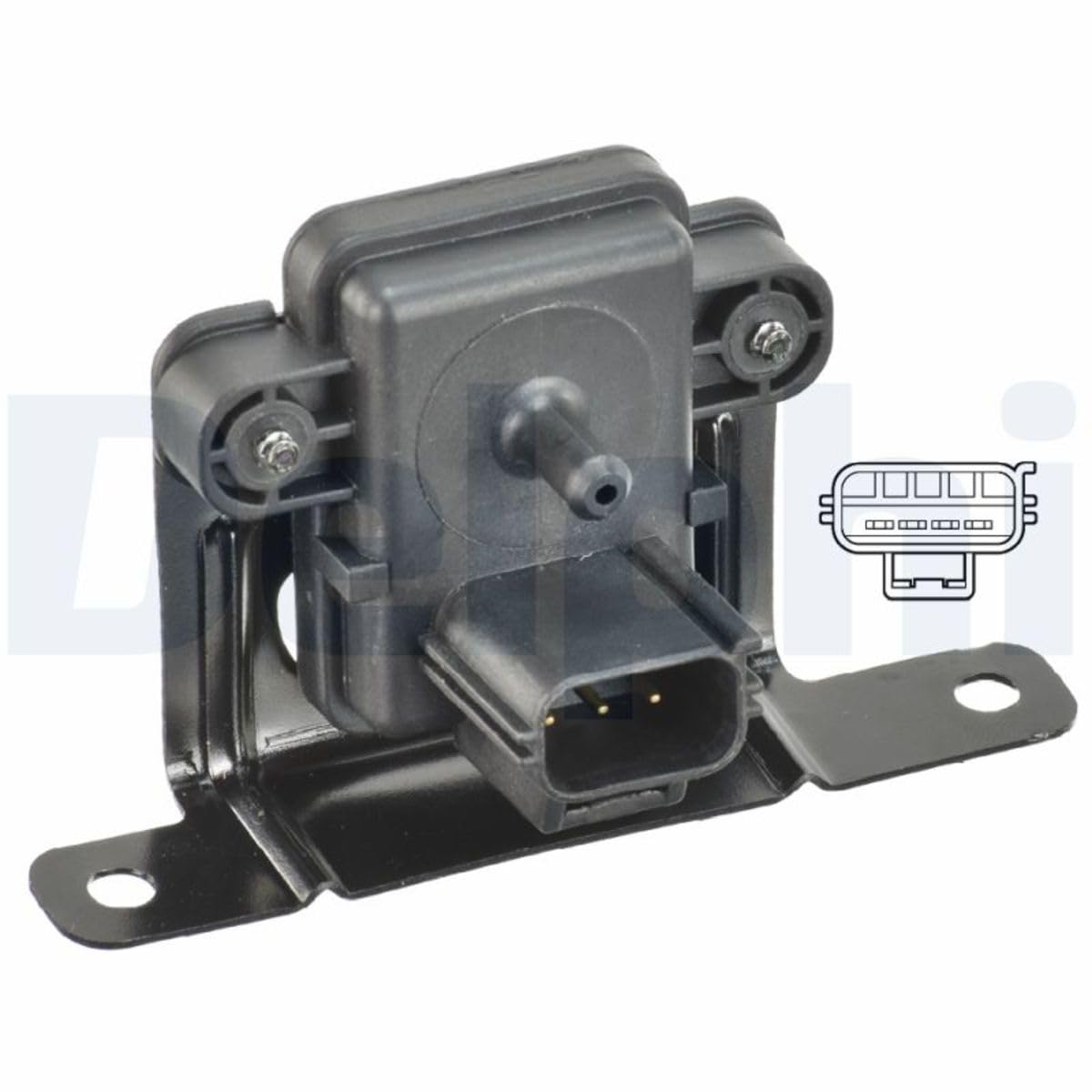
Image 2: Close-up view of the DELPHI PS10126 MAP Sensor, detailing the 3-pin electrical connector and the pressure sensing port. An illustrative diagram of a connector is also visible.
5. Operating Principles
The Manifold Absolute Pressure (MAP) sensor is a critical component of the engine management system. It measures the absolute pressure inside the intake manifold, which is directly related to engine load. This pressure reading is then converted into an electrical signal and sent to the Engine Control Unit (ECU).
The ECU uses this information, along with data from other sensors (such as throttle position, engine speed, and air temperature), to calculate the appropriate amount of fuel to inject and the optimal ignition timing for various engine operating conditions. A properly functioning MAP sensor ensures efficient combustion, leading to better fuel economy, reduced emissions, and consistent engine performance.
In turbocharged or supercharged engines, the MAP sensor also plays a role in monitoring boost pressure.
6. Maintenance
MAP sensors are generally maintenance-free components. However, their performance can be affected by contaminants in the intake manifold.
- Inspection: Periodically inspect the sensor and its electrical connector for any signs of damage, corrosion, or loose connections.
- Cleaning: If the sensor appears dirty, it can be carefully cleaned with a specialized sensor cleaner. Avoid using harsh chemicals or abrasive materials that could damage the sensing element. Ensure the sensor is completely dry before reinstallation.
- Intake System Integrity: Ensure the entire intake system, including hoses and gaskets, is free from leaks, as this can affect MAP sensor readings.
Regular engine maintenance, such as timely air filter replacement, can help prevent excessive contamination of the intake system and prolong the life of the MAP sensor.
7. Troubleshooting
A faulty MAP sensor can lead to various engine performance issues. Common symptoms and potential causes are listed below. Always consult a professional for accurate diagnosis and repair.
7.1 Common Symptoms of a Faulty MAP Sensor
- Check Engine Light (CEL) illuminated
- Poor fuel economy
- Rough idle or stalling
- Engine hesitation or misfires
- Difficulty starting the engine
- Failed emissions test
- Black smoke from the exhaust (rich fuel mixture)
7.2 Diagnostic Trouble Codes (DTCs)
An OBD-II scanner can retrieve specific DTCs related to the MAP sensor, such as P0105, P0106, P0107, P0108, and P0109. These codes indicate issues with the MAP sensor circuit or performance.
7.3 Basic Troubleshooting Steps
- Check Electrical Connection: Ensure the sensor's electrical connector is securely attached and free from corrosion or damage.
- Inspect Vacuum Hoses: Verify that all vacuum hoses connected to the intake manifold are intact, not cracked, or disconnected, as vacuum leaks can affect MAP sensor readings.
- Sensor Cleaning: If accessible, carefully clean the sensor as described in the Maintenance section.
- Professional Diagnosis: If symptoms persist, it is recommended to have the vehicle diagnosed by a professional mechanic. They can perform advanced tests to confirm sensor functionality and identify underlying issues.
8. Warranty and Support
This product is subject to the legal warranty applicable in your region. For example, a 2-year legal warranty may apply. Please retain your proof of purchase for warranty claims.
For technical support, compatibility inquiries, or warranty service, please contact your retailer or an authorized Delphi service center. When contacting support, please have your product model number (PS10126) and vehicle information readily available.
Note: The manufacturer's warranty may not apply; however, legal consumer guarantees are always applicable.