Introduction
This manual provides essential information for the installation, function, and maintenance of your Mopar OEM Spark Plug Set (Part Number: SPLZTR5A13). These genuine Mopar parts are designed to meet the specific requirements of your vehicle, ensuring optimal performance and reliability. This set includes 16 spark plugs, suitable for 6.1L engines in Dodge, Chrysler, and Jeep SRT vehicles.
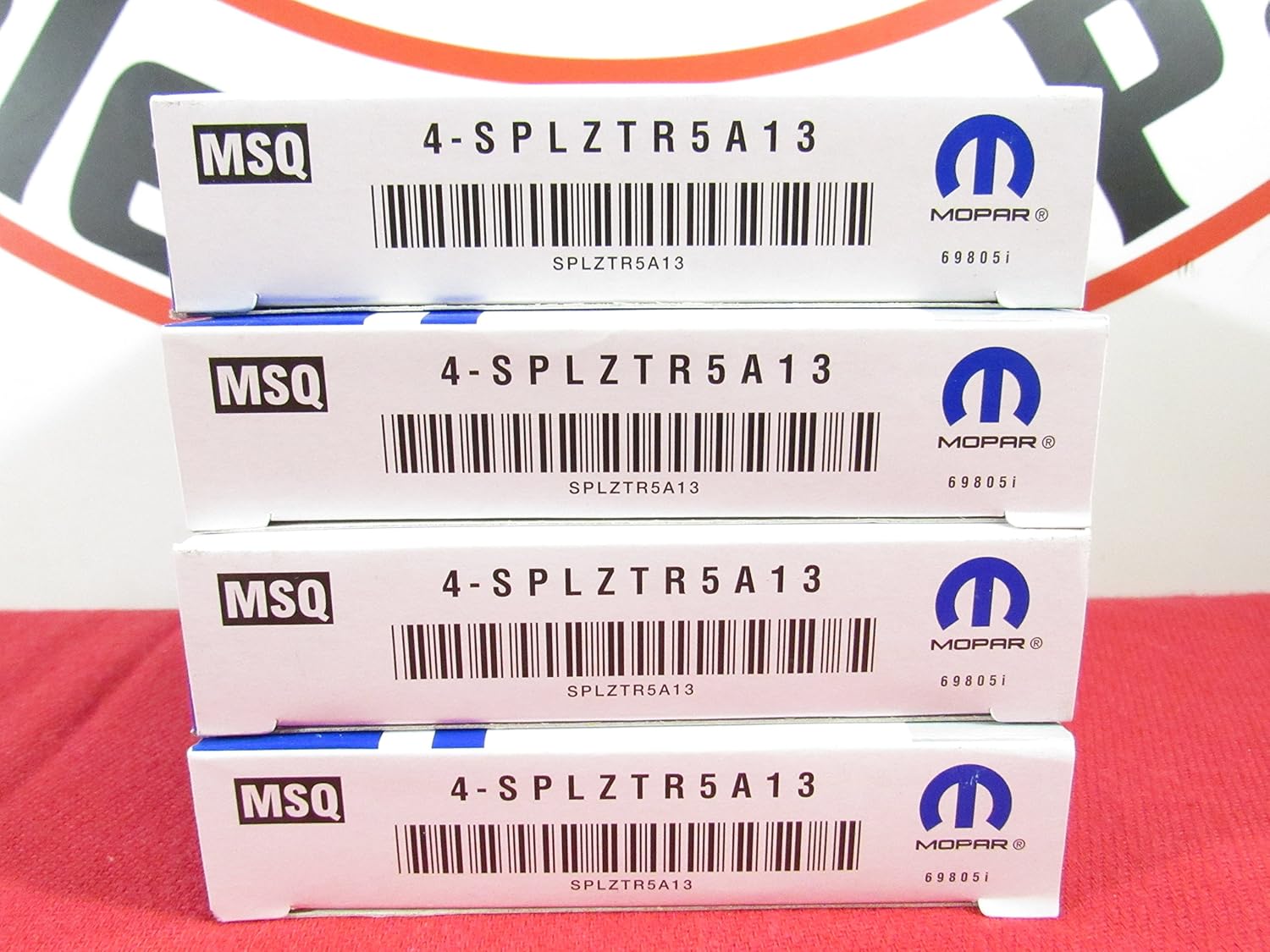
Image: Four individual boxes of Mopar spark plugs, each containing multiple units, stacked neatly. Each box displays the part number SPLZTR5A13 and the Mopar brand logo.
Setup and Installation
Proper installation of spark plugs is crucial for engine performance and longevity. It is recommended that installation be performed by a qualified technician. Always refer to your vehicle's specific service manual for detailed, model-specific instructions and torque specifications.
Pre-Installation Checks
- Ensure the engine is cool before beginning work.
- Disconnect the negative terminal of the vehicle's battery.
- Identify the location of all spark plugs.
- Clean the area around the spark plug wells to prevent debris from entering the combustion chamber.
- Verify that the new spark plugs match the specifications of the original equipment.
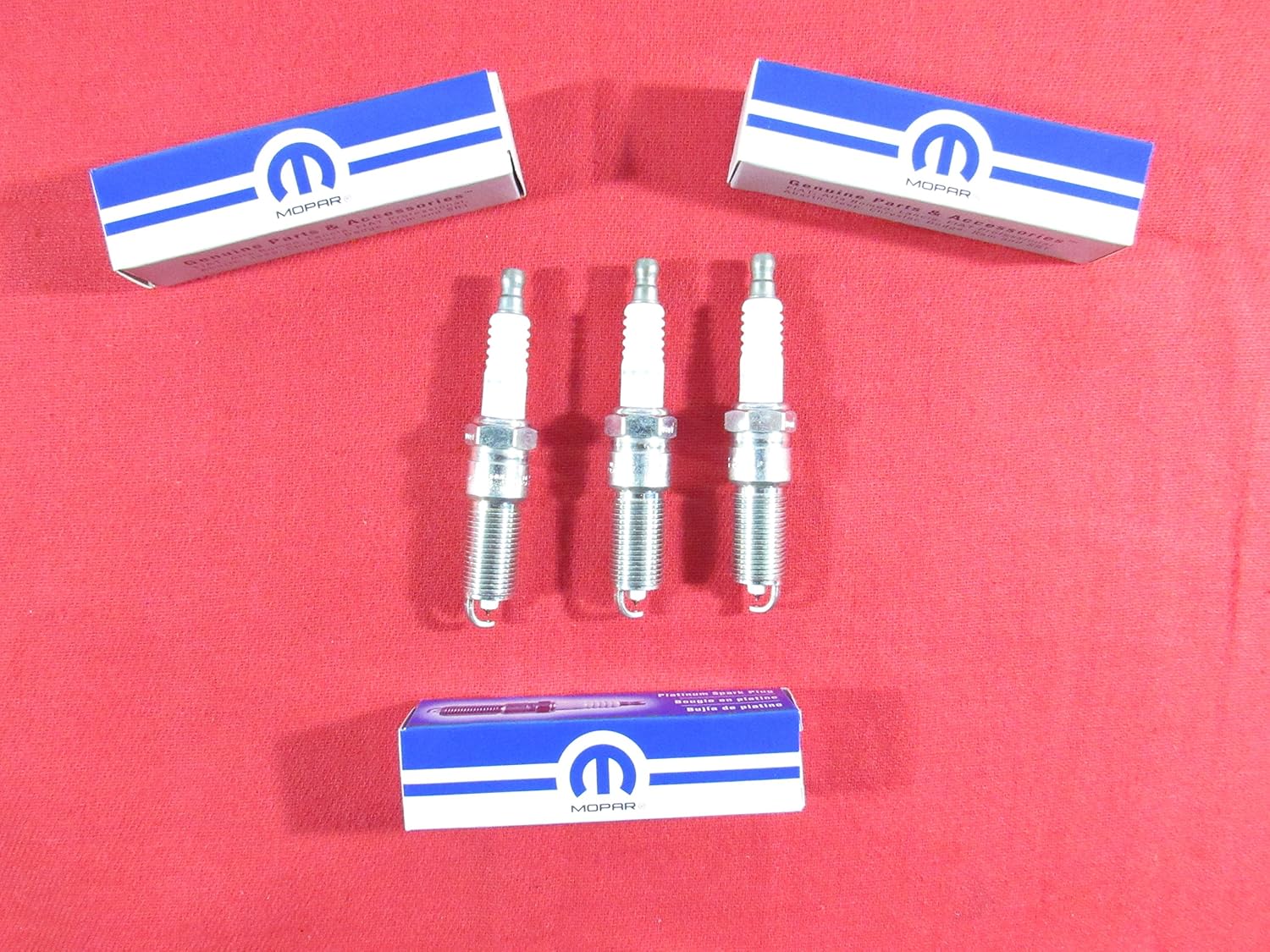
Image: Three Mopar spark plugs, removed from their individual boxes, showcasing their design and platinum tip. These are ready for inspection and installation.
Installation Steps (General)
- Carefully remove the spark plug wires or coil packs from the old spark plugs.
- Use a spark plug socket to loosen and remove the old spark plugs.
- Inspect the new spark plugs for any damage. Do not attempt to adjust the gap on platinum or iridium spark plugs unless specifically instructed by the manufacturer. These plugs are typically pre-gapped.
- Thread the new spark plugs into the cylinder head by hand to prevent cross-threading.
- Once finger-tight, use a torque wrench to tighten the spark plugs to the manufacturer's specified torque setting. Overtightening can damage the spark plug or cylinder head; undertightening can lead to misfires or overheating.
- Reattach the spark plug wires or coil packs, ensuring they are securely connected.
- Reconnect the negative battery terminal.

Image: A detailed view of a single Mopar spark plug, highlighting its ceramic insulator, metal shell, threads, and electrode tip. This view is useful for inspecting the plug before installation.
Function and Operation
Spark plugs are critical components of a gasoline engine's ignition system. Their primary function is to ignite the air-fuel mixture in the combustion chamber. When high voltage is applied to the spark plug's central electrode, it creates a spark that jumps across a small gap to the ground electrode, initiating combustion.
- Ignition: The spark ignites the compressed air-fuel mixture, driving the piston downwards.
- Heat Transfer: Spark plugs also help transfer heat away from the combustion chamber to the engine's cooling system.
- Engine Performance: Properly functioning spark plugs ensure efficient combustion, leading to optimal engine power, fuel economy, and reduced emissions.

Image: A magnified view of the spark plug's electrode tip, illustrating the precise gap between the central and ground electrodes where the ignition spark occurs. This gap is factory-set for optimal performance.
Maintenance
Regular inspection and timely replacement of spark plugs are essential for maintaining engine health and performance. Consult your vehicle's owner's manual for recommended service intervals.
Inspection
- Visual Check: Periodically inspect spark plugs for signs of wear, such as excessive electrode erosion, carbon fouling, oil fouling, or blistering.
- Color of Tip: A healthy spark plug tip should have a light tan or grayish-white color. Black, oily, or white deposits can indicate engine issues.
- Gap Check: While these plugs are pre-gapped, extreme conditions or mishandling could affect the gap. If checking, use a wire-type feeler gauge.
Replacement
Spark plugs wear out over time, leading to reduced fuel efficiency, misfires, and decreased engine power. Replace spark plugs according to your vehicle manufacturer's recommended schedule, typically every 30,000 to 100,000 miles depending on the plug type and engine.
Troubleshooting Common Issues
If you experience any of the following symptoms, your spark plugs may require inspection or replacement:
- Engine Misfires or Rough Idling: A common sign of a failing spark plug or incorrect gap.
- Reduced Fuel Economy: Inefficient combustion due to worn spark plugs can lead to increased fuel consumption.
- Difficulty Starting the Engine: Weak or inconsistent spark can make starting difficult.
- Lack of Acceleration or Power: Worn spark plugs can hinder the engine's ability to produce full power.
- Check Engine Light: Modern vehicles may trigger a check engine light for misfire codes related to spark plugs.
If you encounter these issues, it is advisable to have your vehicle inspected by a professional mechanic.
Specifications
| Feature | Specification |
|---|---|
| Brand | Mopar |
| Part Number | SPLZTR5A13 X16 (Set of 16) |
| Core Material | Nickel (Platinum tip) |
| Thread Size | 14mm |
| Item Weight (Total Set) | 1.6 pounds |
| Product Dimensions (Individual Plug) | Approx. 7 x 2 x 2 inches (packaging) |
| Vehicle Service Type | 4x4 (Compatible with specified Dodge, Chrysler, Jeep SRT 6.1L engines) |
Warranty and Support
For information regarding warranty coverage and technical support for genuine Mopar parts, please refer to the official Mopar website or contact an authorized Mopar dealer. Specific warranty terms may vary based on region and purchase conditions.
Note: This manual provides general guidance. Always consult your vehicle's specific service manual and a qualified professional for detailed procedures and safety information.


