
1. Introduction
This manual provides detailed instructions for the safe and effective operation of your BENNING CM 12 True RMS Digital Power Clamp Multimeter. Please read this manual thoroughly before using the device and keep it for future reference. The BENNING CM 12 is designed for demanding measurement tasks in industrial and commercial environments, offering precise measurements of AC, AC+DC True RMS, inrush current, and more, with data logging and Bluetooth connectivity.
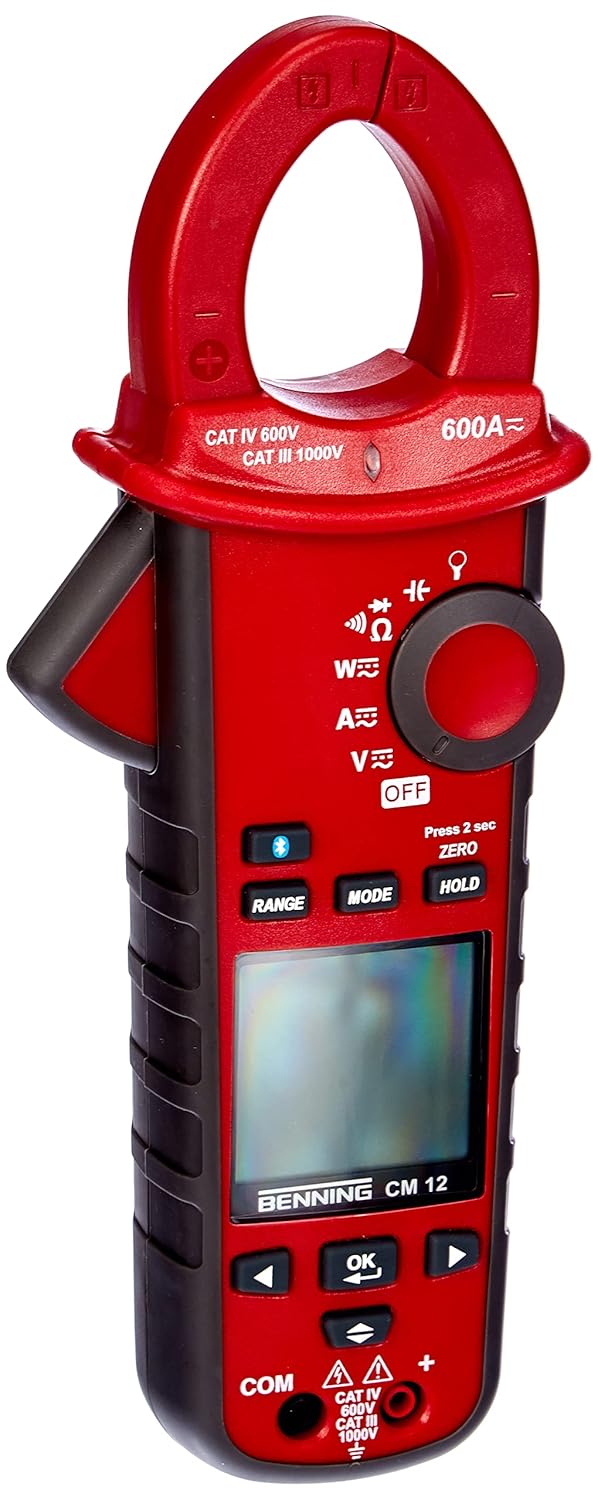
Figure 1: The Benning CM 12 True RMS Digital Power Clamp Multimeter. This image displays the main unit with its red casing, clamp jaw, display screen, and control buttons.
2. Safety Information
Always observe the following safety precautions to prevent personal injury and damage to the instrument:
- Do not use the meter if it appears damaged or if the insulation on the test leads is compromised.
- Ensure the correct function and range are selected before making measurements.
- Do not exceed the maximum input limits for any function.
- Use caution when working with voltages above 30V AC RMS, 42V peak, or 60V DC, as these pose a shock hazard.
- Always disconnect power to the circuit and discharge all high-voltage capacitors before performing resistance, continuity, diode, or capacitance tests.
- Adhere to local and national safety codes.
3. Product Components
The BENNING CM 12 package includes the following items:
- BENNING CM 12 Digital Power Clamp Multimeter
- Test Leads (Red and Black)
- AAA Batteries (6 included)
- Carrying Case
- User Manual (this document)
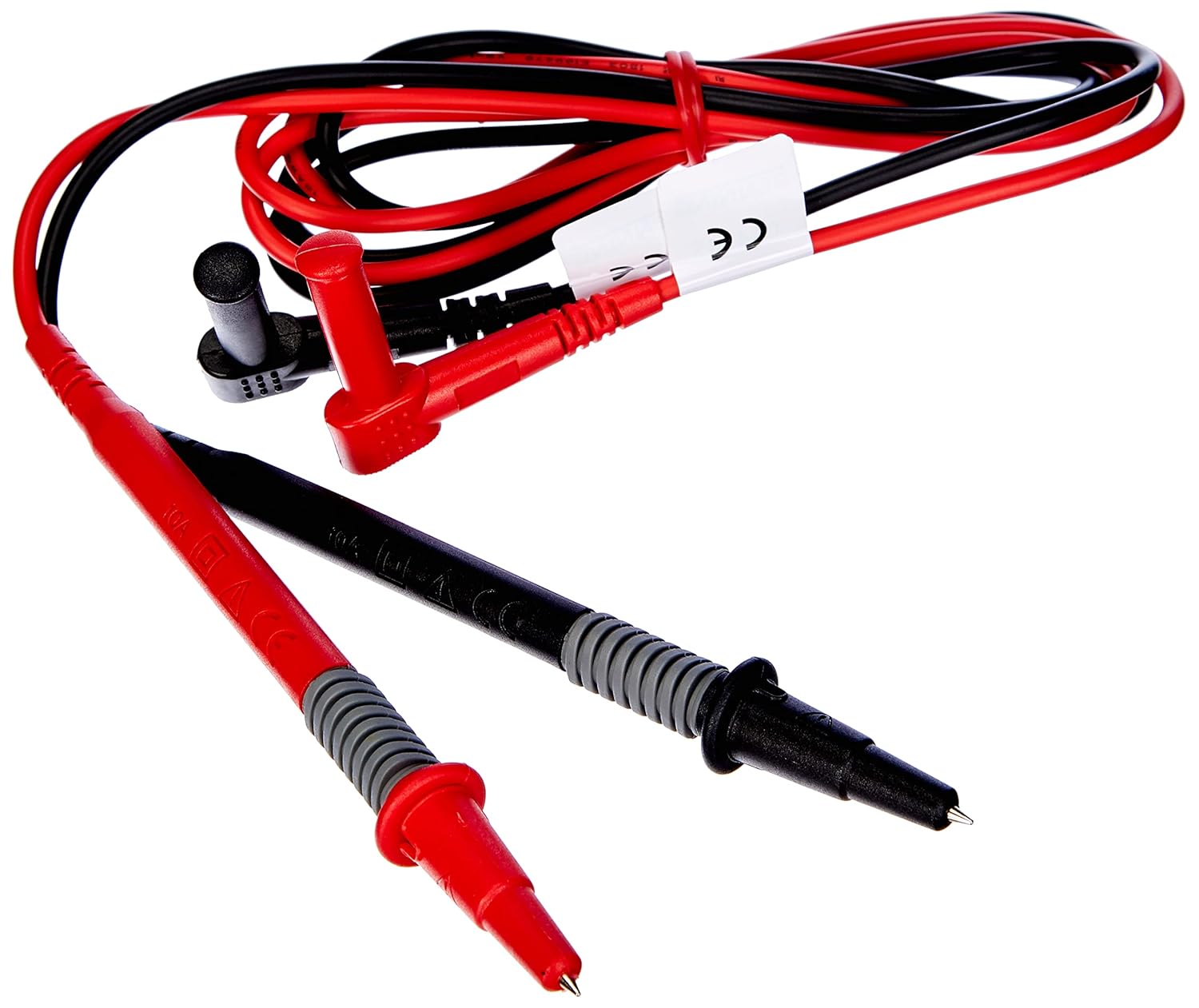
Figure 2: Red and black test leads. These leads are used for voltage, resistance, continuity, and other measurements.

Figure 3: Six AAA batteries. These batteries power the Benning CM 12 multimeter.

Figure 4: Black carrying case. This case provides protection and portability for the multimeter and its accessories.
4. Setup
4.1. Battery Installation
- Locate the battery compartment cover on the rear of the device.
- Use a screwdriver to open the battery compartment.
- Insert six (6) AAA batteries, ensuring correct polarity as indicated inside the compartment.
- Replace the battery compartment cover and secure it with the screw.
4.2. Initial Power On
Turn the rotary switch to any measurement function (e.g., V~ for AC Voltage) to power on the device. The display will illuminate, indicating the device is ready for use.
5. Operating Instructions
The BENNING CM 12 offers a variety of measurement functions. Select the desired function using the rotary switch.
5.1. AC/DC Current Measurement (Clamp Function)
- Turn the rotary switch to the 'A~' (AC Current) or 'A=' (DC Current) position.
- Press the clamp trigger to open the jaw.
- Enclose a single conductor with the clamp jaw. Ensure the jaw is fully closed.
- Read the current value on the display.
- For AC+DC True RMS measurements, ensure the appropriate mode is selected if available via the MODE button.
5.2. Voltage Measurement (AC/DC)
- Insert the red test lead into the 'VΩ' input jack and the black test lead into the 'COM' input jack.
- Turn the rotary switch to 'V~' (AC Voltage) or 'V=' (DC Voltage).
- Connect the test leads in parallel to the circuit or component under test.
- Read the voltage value on the display.
5.3. Resistance and Continuity Measurement
- Ensure the circuit is de-energized before measurement.
- Insert test leads as for voltage measurement.
- Turn the rotary switch to 'Ω' (Resistance/Continuity).
- Connect the test leads across the component.
- For continuity, the meter will beep if resistance is below approximately 30Ω - 100Ω.
5.4. Diode Test
- Ensure the circuit is de-energized.
- Insert test leads as for voltage measurement.
- Turn the rotary switch to the 'Diode' symbol.
- Connect the red lead to the anode and the black lead to the cathode of the diode. A forward voltage drop (approx. 0.8V) will be displayed. Reverse the leads for an open circuit reading.
5.5. Inrush Current Measurement
This function measures the initial surge of current when a device (e.g., motor, lamp) is first turned on.
- Turn the rotary switch to the 'A~' position.
- Press the 'INRUSH' button (if dedicated) or activate via 'MODE' button.
- Clamp the meter around the power conductor of the device.
- Turn on the device to measure the inrush current.
5.6. Power Measurement (W) and Power Factor
The BENNING CM 12 can simultaneously detect current (A) and voltage (V) to calculate active power (W) and power factor in AC/DC networks.
- Turn the rotary switch to the 'W' (Power) position.
- Connect the test leads for voltage measurement and clamp the jaw around the current conductor.
- The display will show active power (W) and power factor.
5.7. Data Logger Function (LOG) and Bluetooth Interface
The device features a data logger capable of storing 10,000 readings with a sampling rate from 1 second to 10 minutes. It also includes a Bluetooth interface for data connection to smartphones or tablets via the "BENNING MM-CM Link" app.
- Download and install the "BENNING MM-CM Link" app from your device's app store (iOS and Android compatible).
- Activate Bluetooth on your smartphone/tablet and on the BENNING CM 12 (refer to the device's specific button for Bluetooth activation, usually a dedicated button or a long press of 'MODE').
- Pair the device with the app.
- Use the app to configure logging parameters (sampling rate, start/stop logging) and to view/export recorded data.
5.8. Low-Pass Filter (HFR)
The HFR (High-Frequency Rejection) low-pass filter is used for accurate measurements on clocked motor drives or other noisy environments by filtering out high-frequency interference.
- Activate the HFR filter via a dedicated button or by pressing the 'MODE' button in relevant measurement functions (e.g., AC Voltage or Current).
- The display will typically show an indicator when the filter is active.
5.9. Total Harmonic Distortion (THD) Measurement
The THD function assesses network quality by measuring the total harmonic distortion of voltage or current waveforms.
- Select the THD function using the rotary switch or 'MODE' button in AC Voltage/Current modes.
- Connect the meter as appropriate for voltage or current measurement.
- The display will show the THD value.
5.10. Two-Pole Rotary Field Testing
This function is used to determine the phase sequence in three-phase systems.
- Turn the rotary switch to the 'Rotary Field' symbol (if dedicated) or select via 'MODE' button in a relevant AC voltage function.
- Connect the test leads to two phases of the three-phase system.
- The display will indicate the phase sequence (e.g., L1-L2, L2-L3).
6. Maintenance
6.1. Cleaning
Wipe the case with a damp cloth and mild detergent. Do not use abrasives or solvents. Ensure the device is powered off and disconnected from any circuits before cleaning.
6.2. Battery Replacement
When the low battery indicator appears on the display, replace the batteries as described in Section 4.1. Remove batteries if the device will not be used for an extended period to prevent leakage.
6.3. Storage
Store the multimeter in its carrying case in a cool, dry environment, away from direct sunlight and extreme temperatures. Remove batteries for long-term storage.
7. Troubleshooting
| Problem | Possible Cause | Solution |
|---|---|---|
| Meter does not power on. | Dead or incorrectly installed batteries. | Check battery polarity; replace batteries. |
| No reading or "OL" (Overload) displayed. | Incorrect range selected, open circuit, or measurement exceeds range. | Select appropriate range, check circuit connections, ensure measurement is within device limits. |
| Inaccurate readings. | Poor test lead connection, external interference, or low battery. | Ensure secure connections, move away from strong electromagnetic fields, replace batteries. |
| Bluetooth connection issues. | Bluetooth not activated on device/phone, app issues, or out of range. | Ensure Bluetooth is on for both devices, restart app, move closer to the meter. |
8. Specifications
| Feature | Detail |
|---|---|
| Model Number | CM 12 |
| Measurement Type | True RMS (AC, AC+DC) |
| Inrush Current | Yes |
| Load Profile Recording | Yes (single-phase and three-phase) |
| Power Measurement | Active Power (W), Power Factor |
| Continuity Test | 30 Ω - 100 Ω |
| Diode Test | 0.8 V |
| Rotary Field Testing | Two-pole |
| Low-Pass Filter | HFR (High-Frequency Rejection) |
| Harmonic Measurement | THD (Total Harmonic Distortion) |
| Data Logger | 10,000 readings, 1s - 10min sampling rate |
| Interface | Bluetooth (iOS and Android app "BENNING MM-CM Link") |
| Power Source | 6 AAA batteries (included) |
| Product Dimensions | 11.42 x 5.12 x 2.76 inches |
| Item Weight | 1.3 Pounds (590 Grams) |
| Manufacturer | Benning |

Figure 5: Dimensional view of the Benning CM 12 Multimeter, indicating its approximate height of 11 inches (27 cm).
9. Warranty Information
BENNING products are manufactured to high-quality standards. For specific warranty terms and conditions, please refer to the warranty card included with your product or visit the official BENNING website. Keep your proof of purchase for warranty claims.
10. Customer Support
If you encounter any issues or have questions regarding your BENNING CM 12, please contact BENNING customer support. You can find contact information on the official BENNING website or through your local distributor.
- Website: www.benning.de (Please check for your regional website)
- Email: Refer to the website for specific contact emails.
- Phone: Refer to the website for specific contact numbers.


