
1. Product Overview
The CHANZON SR2100 (SB2100) is a Schottky Barrier Rectifier Diode designed for various electronic applications. This component features a low forward voltage drop and fast switching speed, making it suitable for high-frequency rectification and protection circuits. It is supplied in a DO-15 (DO-204AC) axial package.

Figure 1: CHANZON SR2100 Schottky Barrier Rectifier Diodes, packaged for protection and identification.
Each package contains 100 pieces of the SR2100 diode, securely packed in an ESD (Electrostatic Discharge) bag with a main specifications label for long-term protection and easy identification.
2. Key Features
- Part Number: SR2100 (also known as SB2100)
- Forward Current: 2 Amperes (A)
- Maximum Repetitive Peak Reverse Voltage: 100 Volts (V)
- Package Type: DO-15 (DO-204AC) Axial, Through Hole
- Environmental Compliance: Lead-Free and RoHS Compliant
- Performance: High Forward Surge Current Capability, Low Power Loss, High Efficiency
- Thermal Characteristics: High Temperature Soldering capability
3. Specifications
Detailed electrical and mechanical specifications for the SR2100 diode are provided below and in the accompanying datasheet images.
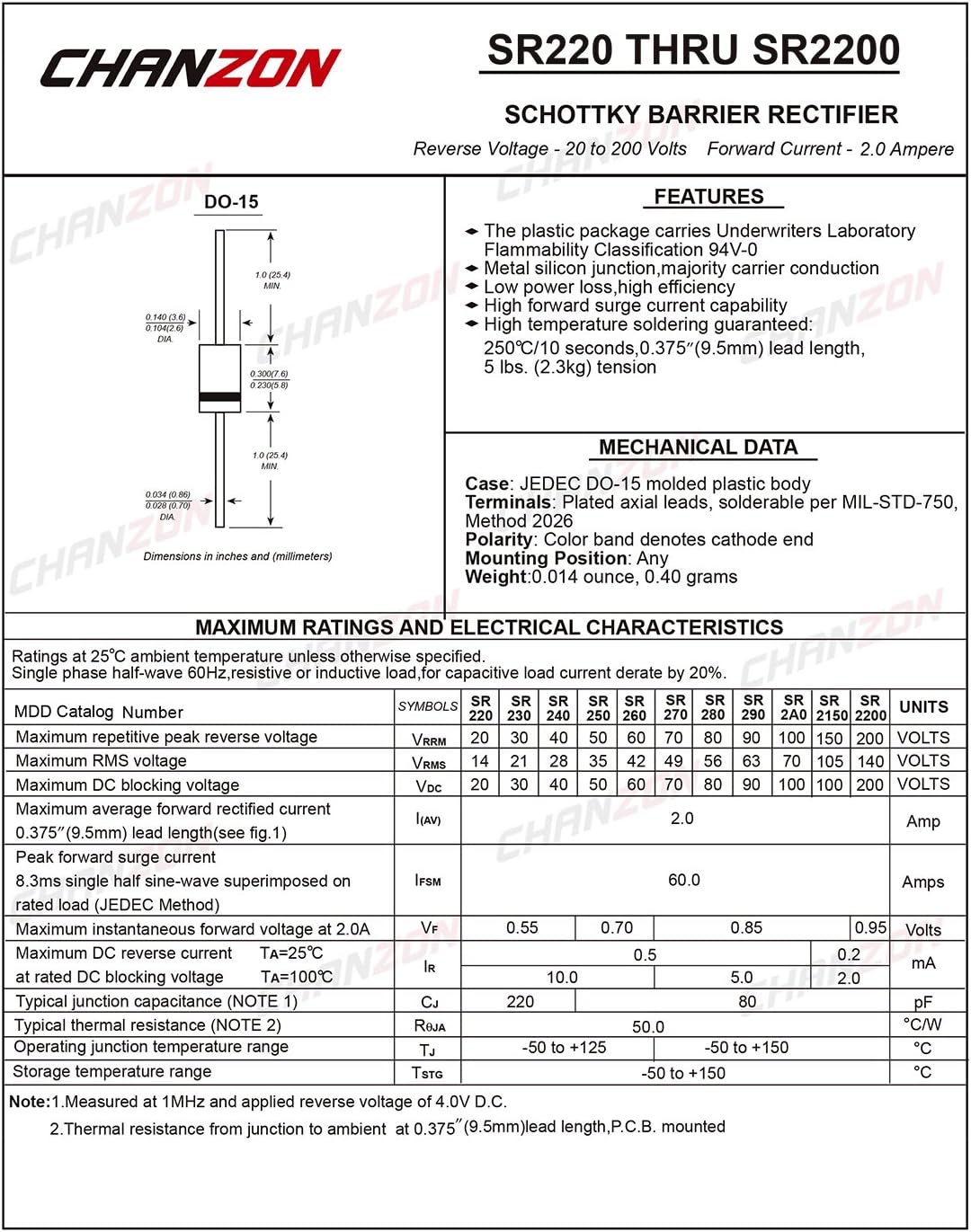
Figure 2: Mechanical data and maximum ratings for SR2100 diodes.
3.1. Mechanical Data
- Case: JEDEC DO-15 molded plastic body
- Terminals: Plated axial leads, solderable per MIL-STD-750, Method 2026
- Polarity: Color band denotes cathode end
- Mounting Position: Any
- Weight: Approximately 0.014 ounce (0.40 grams)
3.2. Maximum Ratings and Electrical Characteristics (at 25°C ambient temperature unless otherwise specified)
| Characteristic | Symbol | Value (SR2100) | Units |
|---|---|---|---|
| Maximum Repetitive Peak Reverse Voltage | VRRM | 100 | Volts |
| Maximum RMS Voltage | VRMS | 70 | Volts |
| Maximum DC Blocking Voltage | VDC | 100 | Volts |
| Maximum Average Forward Rectified Current (0.375" (9.5mm) lead length) | IF(AV) | 2.0 | Amp |
| Peak Forward Surge Current (8.3ms single half sine-wave superimposed on rated load) | IFSM | 60.0 | Amps |
| Maximum Instantaneous Forward Voltage (at 2.0A) | VF | 0.85 | Volts |
| Maximum DC Reverse Current (TA=25°C) | IR | 0.2 | mA |
| Typical Junction Capacitance (Note 1) | CJ | 80 | pF |
| Typical Thermal Resistance (Note 2) | RθJA | 50.0 | °C/W |
| Operating Junction Temperature Range | TJ | -50 to +150 | °C |
| Storage Temperature Range | TSTG | -50 to +150 | °C |
Note 1: Measured at 1MHz and applied reverse voltage of 4.0V DC.
Note 2: Thermal resistance from junction to ambient at 0.375" (9.5mm) lead length, P.C.B. mounted.

Figure 3: Graphical representation of SR2100 diode characteristics, including forward current derating, peak forward surge current, instantaneous forward characteristics, typical reverse characteristics, junction capacitance, and transient thermal impedance.
4. Setup and Installation
Schottky diodes are electronic components that require careful handling and proper installation to ensure optimal performance and longevity. Always observe standard electronic assembly practices.
- Polarity: Identify the cathode (negative) end, which is typically marked with a color band on the diode body. The anode (positive) end is the opposite. Incorrect polarity will prevent the diode from functioning correctly and may damage other components in the circuit.
- Soldering: When soldering, ensure that the soldering iron temperature and duration are within recommended limits to prevent thermal damage to the diode. The SR2100 is designed for high-temperature soldering. Refer to the datasheet for specific temperature and time guidelines.
- Lead Bending: Bend the leads carefully to fit the PCB holes or connection points. Avoid sharp bends near the diode body to prevent stress on the glass seal.
- ESD Precautions: Although diodes are generally less sensitive to ESD than other semiconductors, it is good practice to handle them in an ESD-safe environment, especially during installation, to prevent potential damage.
- Heat Dissipation: For applications involving higher currents or temperatures, consider appropriate heat sinking or lead length to manage thermal dissipation effectively.
5. Operating Principles
The SR2100 is a Schottky Barrier Rectifier diode. Its primary function is to allow current to flow in one direction (forward bias) while blocking it in the opposite direction (reverse bias). Key operating characteristics include:
- Low Forward Voltage Drop: Schottky diodes exhibit a lower voltage drop across them when conducting compared to standard silicon diodes. This characteristic contributes to higher efficiency and reduced power loss, especially in power supply applications.
- Fast Switching Speed: Due to their metal-semiconductor junction, Schottky diodes have very fast switching times, making them ideal for high-frequency applications such as switch-mode power supplies, inverters, and RF circuits.
- Reverse Recovery Time: Unlike PN junction diodes, Schottky diodes have negligible reverse recovery charge, which further enhances their high-frequency performance.
- Applications: Commonly used in rectification, voltage clamping, reverse polarity protection, and as freewheeling diodes in various electronic circuits.
6. Maintenance
Schottky barrier rectifier diodes are passive electronic components and generally require no routine maintenance once properly installed. However, certain considerations can help ensure their long-term reliability:
- Environmental Conditions: Ensure the operating environment remains within the specified temperature and humidity ranges. Extreme conditions can degrade performance or lead to premature failure.
- Physical Inspection: Periodically inspect the diodes and surrounding components for any signs of physical damage, discoloration (indicating overheating), or loose connections, especially in high-vibration environments.
- Cleaning: If necessary, clean the circuit board using appropriate electronic cleaning solutions and methods. Avoid harsh chemicals or abrasive materials that could damage the components or solder joints.
7. Troubleshooting
If a circuit incorporating the SR2100 diode is not functioning as expected, consider the following troubleshooting steps:
- Incorrect Polarity: Verify that the diode is installed with the correct polarity. The color band indicates the cathode.
- Open Circuit: Use a multimeter to check for continuity across the diode in forward bias. A properly functioning diode should show a low voltage drop (around 0.2V to 0.4V for Schottky diodes) in forward bias and high resistance in reverse bias. An open circuit reading in forward bias indicates a faulty diode.
- Short Circuit: If the diode shows very low resistance in both forward and reverse bias, it is likely short-circuited and needs replacement.
- Overheating: Check for signs of overheating (e.g., discoloration, burnt smell). This could indicate that the diode is operating beyond its current or voltage ratings, or that heat dissipation is insufficient. Ensure the diode's current and voltage limits are not exceeded.
- Solder Joints: Inspect solder joints for cold joints, bridges, or poor connections. Re-solder if necessary.
- Component Damage: Look for any visible damage to the diode body, such as cracks or breaks.
Always disconnect power from the circuit before performing any inspection or troubleshooting to prevent electrical shock or further damage.
8. Warranty and Support
CHANZON products are manufactured to high-quality standards. For specific warranty information or technical support, please refer to the official CHANZON website or contact their customer service directly. General return policies may apply as per the retailer's terms of sale, typically allowing returns within 30 days for refund or replacement.
Manufacturer: CHANZON
For further assistance, please visit the CHANZON Store on Amazon.