
Makita HS631DZS
Makita 18V Cordless Circular Saw HS631DZS Instruction Manual
Model: HS631DZS
Introduction
This instruction manual provides essential information for the safe and efficient operation, maintenance, and troubleshooting of your Makita 18V Cordless Circular Saw, model HS631DZS. Please read this manual thoroughly before using the tool to ensure proper handling and to prevent accidents.

Figure 1: Makita 18V Cordless Circular Saw HS631DZS, showing its compact and ergonomic design.
Safety Information
Always observe basic safety precautions to reduce the risk of fire, electric shock, and personal injury. Keep this manual for future reference.
- Work Area Safety: Keep the work area clean and well-lit. Cluttered or dark areas invite accidents. Do not operate power tools in explosive atmospheres, such as in the presence of flammable liquids, gases, or dust.
- Electrical Safety: Avoid body contact with earthed or grounded surfaces. Do not expose power tools to rain or wet conditions.
- Personal Safety: Stay alert, watch what you are doing, and use common sense when operating a power tool. Do not use a power tool while you are tired or under the influence of drugs, alcohol, or medication. Always wear eye protection, dust mask, non-skid safety shoes, hard hat, or hearing protection as appropriate for the conditions.
- Tool Use and Care: Do not force the power tool. Use the correct power tool for your application. Disconnect the battery pack from the power tool before making any adjustments, changing accessories, or storing power tools.
- Battery Tool Use and Care: Recharge only with the charger specified by the manufacturer. Use power tools only with specifically designated battery packs.
Product Overview
The Makita HS631DZS is a high-performance 18V cordless circular saw designed for a wide range of cutting tasks, from framing to intricate woodworking. It features a powerful brushless motor for cutting speed equivalent to AC machines and a "Same-Hada" premium white tip saw for enhanced efficiency.
Key Components
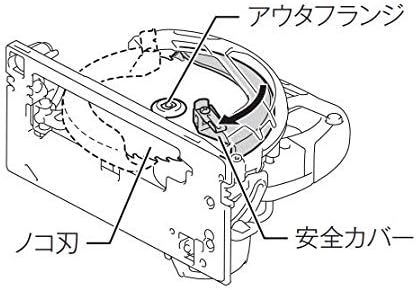
Figure 2: Diagram illustrating key components such as the saw blade, outer flange, and safety cover.

Figure 3: Rear view of the Makita HS631DZS, highlighting the motor housing and battery interface.
Features
- High-Power Brushless Motor: Delivers cutting performance comparable to corded models, with a maximum rotation speed of 5,000 RPM.
- "Same-Hada" Premium White Tip Saw: Designed for approximately 50% increased work volume per charge and reduced friction.
- Smooth Cutting Depth Adjustment: Allows for precise and easy adjustment of cutting depth.
- Blower Function: Clears the cutting line of sawdust for improved visibility.
- Rear Chip Ejection: Directs sawdust away from the user and work area.
- Arbitrary Cutting Depth Stopper: For consistent, repeatable cuts.
- Notch for Rear Ink Line Confirmation: Aids in accurate cutting along marked lines.
- Left 5° Bevel Cutting Function: Provides versatility for angled cuts.
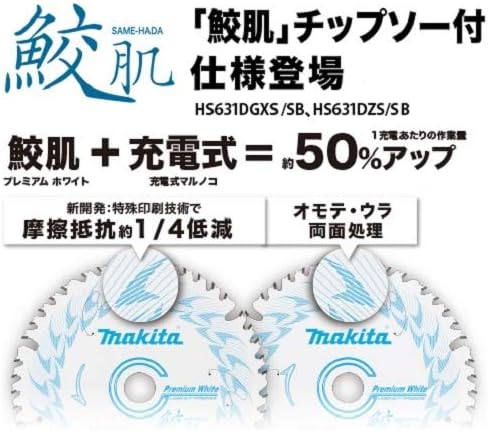
Figure 4: Illustration of the "Same-Hada" Premium White Tip Saw, highlighting its design for reduced friction and improved efficiency.
Setup
1. Battery Installation
This unit requires an 18V DC slide-type Makita battery (sold separately). Ensure the battery is fully charged before use.
- Align the battery pack with the battery port on the tool.
- Slide the battery pack into the port until it clicks securely into place.
- To remove, press the release button on the battery pack and slide it out.
2. Saw Blade Installation
Always disconnect the battery pack before installing or removing the saw blade.
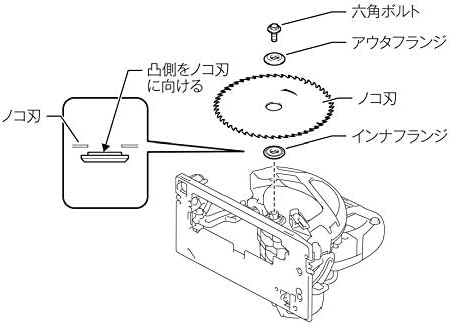
Figure 5: Detailed diagram showing the components involved in saw blade installation: hex bolt, outer flange, saw blade, and inner flange. Note the orientation of the inner flange.
- Lift the safety cover to expose the blade arbor.
- Place the inner flange onto the arbor, ensuring the raised side faces the saw blade.
- Position the saw blade onto the inner flange, making sure the teeth are oriented correctly for cutting (pointing towards the front of the tool).
- Place the outer flange onto the saw blade.
- Secure with the hex bolt, tightening it firmly with the provided hex wrench.
3. Adjustments
The HS631DZS allows for precise adjustments to suit various cutting needs.
- Cutting Depth Adjustment: Loosen the depth adjustment lever, set the desired cutting depth using the scale, and then firmly tighten the lever.
- Bevel Angle Adjustment: Loosen the bevel adjustment lever, tilt the base to the desired angle (up to 5° left), and tighten the lever.
- Parallel Guide Adjustment: The new parallel guide features a fixing knob for improved accuracy. Insert the parallel guide into the slot on the base and secure it with the fixing knob. There is also a fine adjustment mechanism for maintaining parallelism between the base side and the saw blade.
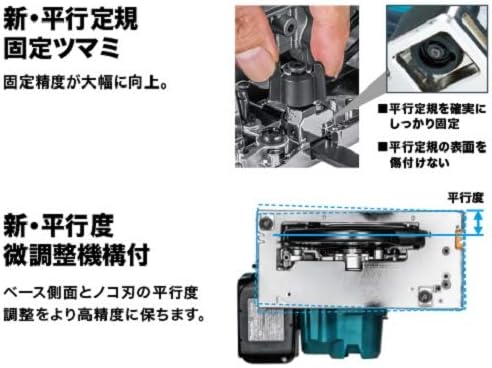
Figure 6: Illustration demonstrating the new parallel guide with its fixing knob for enhanced stability and the fine adjustment mechanism for precise parallelism.
Operating Instructions
Basic Operation
- Ensure the workpiece is securely clamped.
- Hold the tool firmly with both hands.
- Align the saw blade with your cutting line.
- Depress the trigger switch to start the motor. Allow the blade to reach full speed before beginning the cut.
- Gently push the saw forward through the workpiece, maintaining a steady and consistent feed rate. Do not force the tool.
- Once the cut is complete, release the trigger switch and allow the blade to stop completely before lifting the tool from the workpiece.
Cutting Techniques
- Straight Cuts: Use the parallel guide for accurate straight cuts.
- Bevel Cuts: Adjust the bevel angle as described in the Setup section for angled cuts.
- Plunge Cuts: For plunge cuts, ensure the blade guard is retracted and carefully lower the spinning blade into the material.
Maintenance
Regular maintenance ensures optimal performance and extends the life of your tool. Always disconnect the battery before performing any maintenance.
- Cleaning: Regularly clean the tool, especially the blade guard and motor vents, to prevent sawdust buildup. Use a soft cloth and avoid harsh chemicals. The blower function helps keep the cutting line clear during operation.
- Blade Inspection: Inspect the saw blade for sharpness and damage before each use. Replace dull or damaged blades immediately.
- General Inspection: Check all screws and fasteners for tightness. Ensure all moving parts operate smoothly.
Troubleshooting
If you encounter issues with your Makita HS631DZS, refer to the following common problems and solutions:
| Problem | Possible Cause | Solution |
|---|---|---|
| Tool does not start. | Battery not inserted correctly or discharged. | Ensure battery is fully inserted. Recharge battery. |
| Reduced cutting performance. | Dull or damaged saw blade. | Replace the saw blade. |
| Excessive vibration. | Loose blade or damaged blade. | Check blade for tightness and damage. Replace if necessary. |
| Sawdust buildup on cutting line. | Blower vents obstructed. | Clean blower vents. |
Specifications
| Feature | Detail |
|---|---|
| Brand | Makita |
| Model Number | HS631DZS |
| Package Dimensions | 32 x 30.2 x 21.2 cm |
| Color | Blue |
| Power Source | Battery Powered |
| Voltage | 18 Volts |
| Blade Material | Metal |
| Recommended Use | Wood |
| Special Features | Brushless Motor, Depth Adjustment |
| Included Components | Parallel guide, Hex wrench 5, Premium White 165-45 blade |
| Battery Included | No |
| Item Weight | 3 Kilograms |
| Saw Blade Dimensions | 165mm |
| Max Cutting Depth (90°) | 66mm |
| Max Cutting Depth (45°) | 46mm |
| Max Cutting Depth (Left 5°) | 55.5mm |
| No-load Speed | 5,000 rpm |
Warranty and Support
Warranty: According to the product specifications, there is no specific warranty information provided for this item. Please refer to your point of purchase or local Makita distributor for details on any applicable regional or retailer-specific warranties.
Support: For technical assistance, spare parts, or service, please contact your authorized Makita service center or the retailer from whom you purchased the product. You can also visit the official Makita website for more information and contact details.
Ask a question about this manual
Ask about setup, troubleshooting, compatibility, parts, safety, or missing instructions. Manuals+ will review the question and use this page’s manual context to help answer it.