1. Introduction to the Manual
This official Suzuki Service and Repair Workshop Manual provides comprehensive instructions for the maintenance, service, and repair of Suzuki GN250 motorcycles manufactured between 1985 and 1988. It is designed for use by qualified technicians and experienced mechanics, offering detailed procedures, illustrations, and technical data necessary to perform various service operations.
The manual covers all aspects of the motorcycle, from routine maintenance to complete engine overhaul, chassis repair, and electrical system diagnostics. Following the procedures outlined in this manual will help ensure the proper functioning and longevity of your Suzuki GN250.
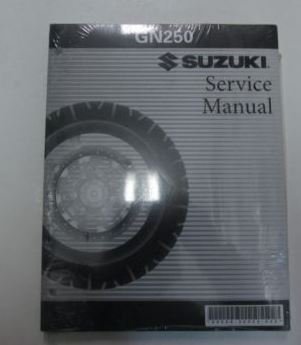
Image 1.1: Front cover of the Suzuki GN250 Service Repair Workshop Manual. This manual is an essential resource for detailed repair and maintenance procedures for the 1985-1988 Suzuki GN250 motorcycle models.
2. Safety Precautions
Always prioritize safety when performing any service or repair work on your motorcycle. Failure to follow safety guidelines can result in serious injury or damage to the vehicle.
- Read the Manual: Thoroughly read and understand all instructions before beginning any procedure.
- Personal Protective Equipment (PPE): Always wear appropriate safety gear, including safety glasses, gloves, and sturdy footwear.
- Ventilation: Ensure adequate ventilation when working with fuels, solvents, or exhaust fumes.
- Fire Hazards: Keep fire extinguishers readily available and avoid open flames near fuel or battery areas.
- Battery Safety: Disconnect the battery's negative terminal before working on the electrical system. Be aware of corrosive battery acid.
- Hot Components: Allow the engine and exhaust system to cool down before servicing to prevent burns.
- Lifting and Support: Use appropriate lifting equipment and secure stands to support the motorcycle safely.
- Torque Specifications: Always use a torque wrench to tighten fasteners to the specified values to prevent damage or component failure.
3. Preparation for Service
Before commencing any repair or maintenance task, proper preparation is essential for efficiency and safety.
3.1 Required Tools and Equipment
Ensure you have all necessary tools, including standard metric wrenches, sockets, screwdrivers, pliers, a torque wrench, and specialized Suzuki tools if required for specific procedures. Refer to the relevant section for a list of specialized tools.
3.2 Workspace Setup
Work in a clean, well-lit, and organized area. Use a sturdy workbench and ensure adequate space around the motorcycle. Protect painted surfaces and components from scratches or damage.
3.3 Parts and Consumables
Gather all necessary replacement parts, fluids (engine oil, brake fluid, coolant), and consumables (gaskets, seals, O-rings) before starting the work. Use genuine Suzuki parts or equivalent quality components.
4. Routine Maintenance Procedures
Regular maintenance is crucial for the performance and longevity of your GN250. This section outlines routine checks and service intervals.
4.1 Service Schedule
| Item | Interval (km/miles or months) | Action |
|---|---|---|
| Engine Oil | 3,000 km / 1,800 miles or 6 months | Inspect, Change |
| Oil Filter | 6,000 km / 3,600 miles or 12 months | Replace |
| Spark Plug | 6,000 km / 3,600 miles or 12 months | Inspect, Clean, Adjust Gap, Replace if necessary |
| Air Cleaner | 3,000 km / 1,800 miles or 6 months | Inspect, Clean |
| Brakes (Front/Rear) | Every 1,000 km / 600 miles or monthly | Inspect fluid level, pad wear, operation |
| Drive Chain | Every 500 km / 300 miles or weekly | Inspect slack, lubricate |
4.2 General Repair Procedures
This manual provides step-by-step instructions for various repair tasks. Each procedure includes detailed descriptions, often accompanied by illustrations and exploded diagrams to aid understanding. Pay close attention to torque specifications and reassembly sequences.
5. Engine Service and Repair
This section covers all aspects of the GN250 engine, including removal, disassembly, inspection, repair, and reassembly.
5.1 Engine Removal and Installation
Detailed steps for safely removing the engine from the frame and reinstalling it, including disconnection of all hoses, cables, and electrical connectors.
5.2 Cylinder Head and Valves
Instructions for inspecting and servicing the cylinder head, valves, valve guides, and valve seats. Includes procedures for valve clearance adjustment.
5.3 Cylinder, Piston, and Connecting Rod
Guidance on inspecting cylinder wear, piston condition, piston rings, and connecting rod bearings. Includes specifications for component clearances.
5.4 Crankshaft and Transmission
Procedures for inspecting the crankshaft, main bearings, and all transmission components. Includes assembly and disassembly sequences for the gearbox.
6. Chassis Service and Repair
This section details the maintenance and repair of the motorcycle's frame, suspension, wheels, and braking system.
6.1 Front Suspension
Instructions for fork disassembly, inspection of fork tubes and seals, fluid replacement, and reassembly. Includes recommended fork oil levels.
6.2 Rear Suspension
Procedures for inspecting the rear shock absorber, swingarm, and pivot bearings. Includes lubrication points and torque specifications.
6.3 Brakes
Comprehensive guide to inspecting brake pads, discs, calipers, master cylinders, and brake lines. Includes brake fluid replacement and bleeding procedures.
6.4 Wheels and Tires
Instructions for wheel removal, tire inspection, bearing replacement, and wheel balancing. Includes recommended tire pressures.
7. Electrical System
This section provides information on the GN250's electrical components, wiring diagrams, and diagnostic procedures.
7.1 Wiring Diagrams
Detailed wiring diagrams are provided to assist in tracing circuits and identifying components. Always refer to the specific diagram for your model year.
7.2 Charging System
Procedures for testing the alternator, rectifier/regulator, and battery. Includes voltage and current specifications.
7.3 Ignition System
Instructions for inspecting and testing the ignition coil, CDI unit, and spark plug. Includes timing adjustment procedures.
7.4 Lighting and Signaling
Guidance on troubleshooting and replacing bulbs, switches, and relays for headlights, taillights, turn signals, and horn.
8. Troubleshooting Guide
This section provides a systematic approach to diagnosing common problems encountered with the Suzuki GN250.
8.1 Engine Starting Issues
- Engine cranks but won't start: Check fuel supply, spark, compression.
- Engine starts but stalls: Inspect idle speed, carburetor settings, air leaks.
8.2 Poor Engine Performance
- Lack of power: Verify fuel delivery, air filter condition, valve clearance, ignition timing.
- Excessive smoke: Diagnose oil burning (blue smoke), rich mixture (black smoke), or coolant leak (white smoke).
8.3 Braking System Problems
- Spongy brakes: Bleed brake system, check for air in lines, inspect master cylinder.
- Poor braking performance: Inspect pad wear, disc condition, caliper function.
9. Technical Specifications
This section provides key technical data and specifications for the Suzuki GN250.
| Category | Item | Specification |
|---|---|---|
| Engine | Type | 4-stroke, single cylinder, SOHC, air-cooled |
| Displacement | 249 cm³ (15.2 cu. in) | |
| Bore x Stroke | 72.0 mm x 61.2 mm | |
| Fuel System | Carburetor | Mikuni BS34SS |
| Fuel Tank Capacity | 10.0 L (2.6 US gal) | |
| Electrical | Ignition System | CDI |
| Battery | 12V, 8Ah | |
| Dimensions | Overall Length | 2075 mm (81.7 in) |
| Wheelbase | 1350 mm (53.1 in) |
Note: All specifications are subject to change without notice. Refer to the specific model year section within the manual for precise values.
10. Support and Additional Resources
For further assistance or genuine replacement parts, please contact an authorized Suzuki dealer or refer to the official Suzuki website.
- Authorized Suzuki Dealers: Locate your nearest dealer for professional service and genuine parts.
- Official Suzuki Website: Visit www.globalsuzuki.com for general information and updates (Note: Specific vintage model support may vary).
- Technical Inquiries: For highly specific technical questions not covered in this manual, consult a certified Suzuki mechanic.


