
1. Introduction
This manual provides essential information for the proper use, installation, and maintenance of your AMKI PMMA Fiber Optic Cable. This product is designed to transmit visible light from an external light source, making it ideal for various decorative and lighting applications such as star ceilings, light curtains, and DIY models. The fiber itself does not emit light; it acts as a light guide.
Please read this manual thoroughly before using the product to ensure optimal performance and safety.
2. Product Features
- Light Transmission: Efficiently transmits visible light from a connected light source.
- Material Quality: Made from PMMA (Polymethyl Methacrylate) plastic, offering a nice transparent surface.
- Flexibility: Features excellent toughness and can be bent to create various shapes and designs.
- Uniformity: Ensures excellent fiber diameter uniform distribution for consistent light output.
- Safety: No UV or IR energy, virtually no heat, and no electrical hazard, making it safe for various environments.
- Durability: Waterproof and designed for a wide allowable working temperature range of -50°C to +70°C.
- Customization: The fiber optic cable can be cut to any desired length, with the ends continuing to glow when connected to a light source.
- Ease of Use: Simple to install and requires minimal maintenance.
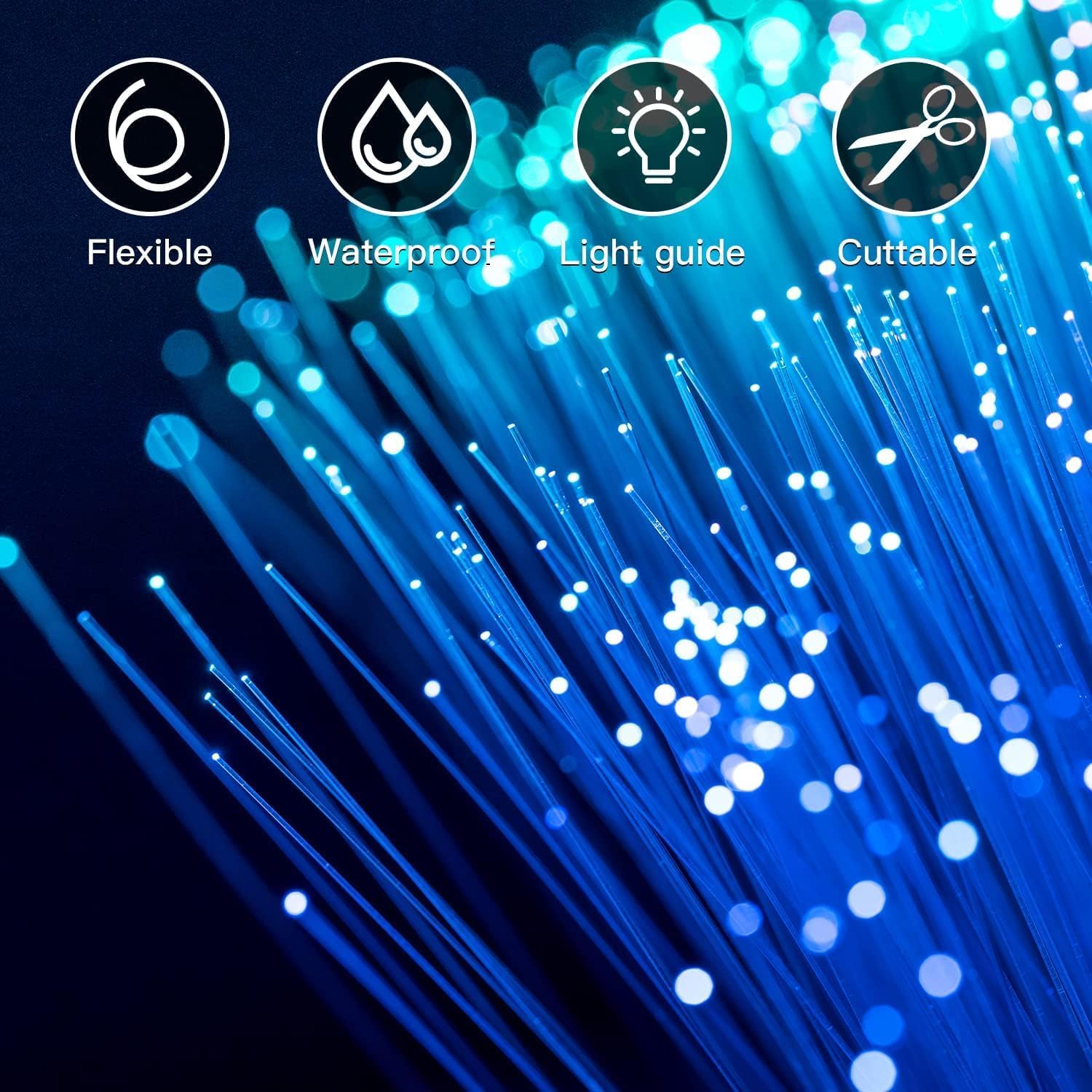
Image: Key features of the AMKI PMMA Fiber Optic Cable, highlighting its flexibility, waterproof nature, light guiding capability, and ease of cutting.
3. Specifications
| Parameter | Value |
| Diameter | 1mm (0.04 inches) |
| Length | 200 meters (656 feet) |
| Material | PMMA Plastic |
| Type | End Glow Fiber Optic Cable |
| Allowable Bending Radius | 8 times the diameter |
| Working Temperature Range | -50°C to +70°C |
| Light Reduction | 250dB/km |
| Wavelength Range | 390-760nm |
| Numerical Aperture | 0.5 |
| Clad Refractive Index | 1.402 |
| Storage Temperature | 20°C to 50°C |
| Item Weight | 9.9 ounces (0.62 lbs) |
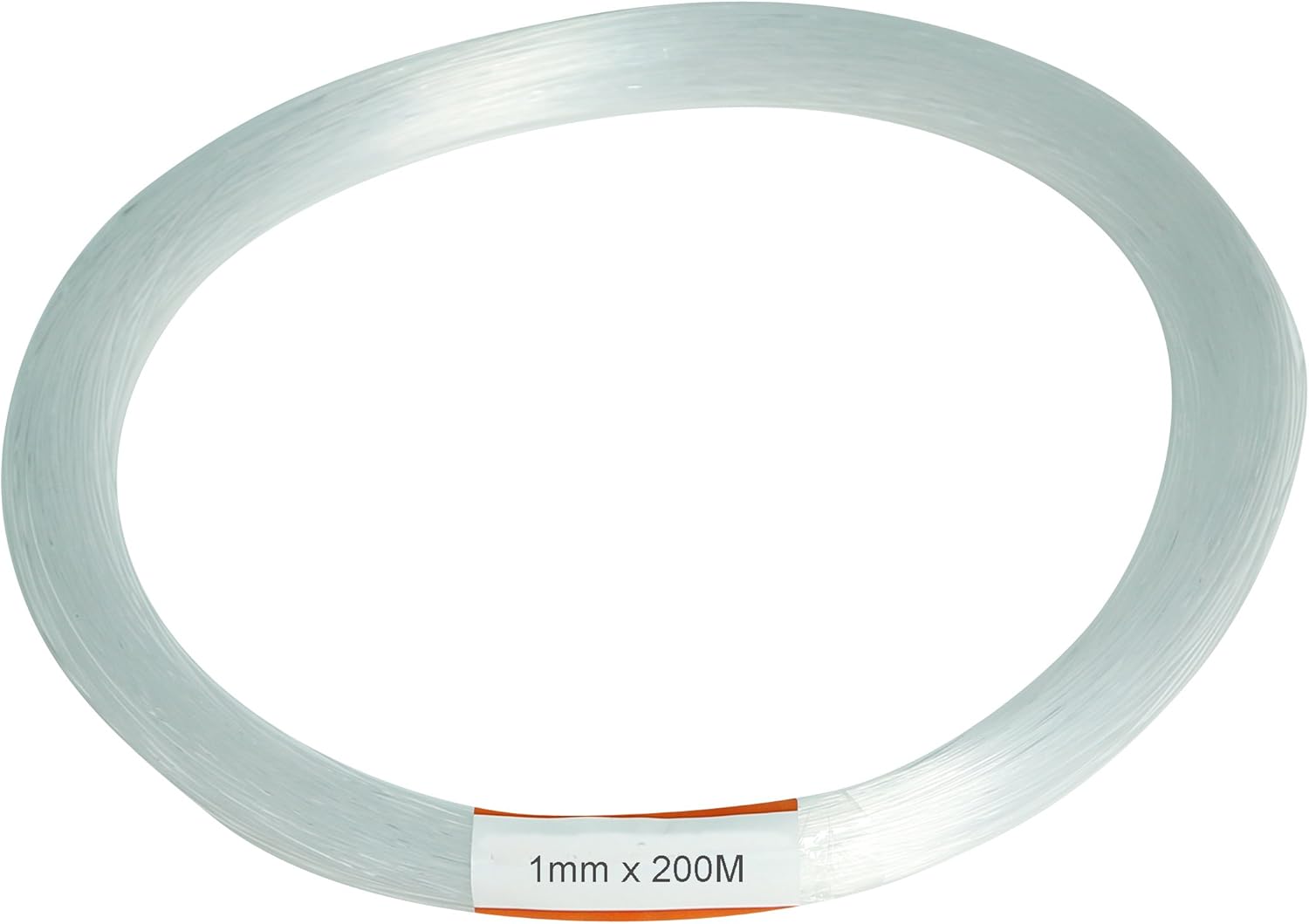
Image: A coiled roll of AMKI 1mm diameter, 200-meter length PMMA fiber optic cable.
4. Setup and Installation
The AMKI PMMA Fiber Optic Cable is a light-transmitting medium and does not generate light on its own. It requires an external light source to function. Compatible light sources include LED light boxes and LED projectors.
4.1 Connecting to a Light Source
- Ensure your light source (e.g., LED illuminator) is powered off before connecting.
- Gather the ends of the fiber optic cables you intend to connect to the light source.
- Insert the fiber ends into the designated port(s) of your light source. Ensure a snug fit for optimal light transfer.
- If using multiple fibers, distribute them evenly within the light source's connector to achieve balanced illumination.
4.2 Cutting the Fiber
The fiber optic cable can be cut to your desired length. For best results and maximum light output, use a sharp, clean cutting tool (e.g., a sharp knife or specialized fiber optic cutter) to ensure a flat and smooth end surface. A rough or uneven cut can reduce light transmission.
4.3 Installation for Applications
The flexibility of the PMMA fiber allows for creative installations. Common applications include:
- Star Ceilings: Drill small holes in a ceiling panel, insert individual fiber strands, and secure them. The ends will glow, creating a starry effect.
- Decorative Lighting: Weave the fiber through objects, create light curtains, or integrate into art installations.
- DIY Models: Use the fiber to add intricate lighting details to models and displays.

Image: An example of fiber optic cables installed in a ceiling to create a starry night effect, with a close-up showing the individual glowing fiber ends.

Image: Examples of diverse star ceiling patterns created using fiber optic cables, showcasing spirals, planetary designs, and other artistic configurations.

Image: A grand fiber optic chandelier and an expansive starry ceiling installation, demonstrating large-scale applications of the fiber optic cable.
5. Operating Instructions
Once the AMKI PMMA Fiber Optic Cable is properly connected to a compatible light source, operation is straightforward:
- Power on your external light source.
- Light will travel through the fiber optic strands and emit from the cut ends, creating a glowing effect.
- The color and intensity of the light emitted by the fiber ends will depend on the capabilities and settings of your connected light source.
- The fiber can be gently manipulated and shaped during operation, provided the bending radius limits are respected.

Image: Bundles of fiber optic cables glowing in a spectrum of colors, illustrating the visual effects achievable with a color-changing light source.
6. Maintenance
The AMKI PMMA Fiber Optic Cable is designed for low maintenance. Follow these guidelines to ensure its longevity and optimal performance:
- Cleaning: Keep the ends of the fiber optic cables clean. Dust or debris on the cut surfaces can obstruct light transmission. Use a soft, lint-free cloth to gently wipe the ends if necessary.
- Bending: Avoid bending the fiber beyond its allowable bending radius (8 times its diameter) to prevent damage to the core and maintain light conductivity.
- Storage: When not in use, store the fiber optic cable within the recommended temperature range of 20°C to 50°C. Avoid extreme temperatures.
- Protection: Protect the fiber from physical abrasion or sharp objects that could scratch or cut the outer cladding.
7. Troubleshooting
If you encounter issues with your AMKI PMMA Fiber Optic Cable, consider the following troubleshooting steps:
7.1 No Light Emission
- Check Light Source: Ensure your external light source is properly connected, powered on, and functioning correctly.
- Fiber Connection: Verify that the fiber optic cable ends are securely inserted into the light source's connector.
- Kinks or Damage: Inspect the entire length of the fiber for any severe kinks, sharp bends, or physical damage that could impede light transmission.
7.2 Dim or Uneven Light
- Clean Ends: Ensure the cut ends of the fiber optic cables are clean and free from dust or debris. A dirty end can significantly reduce light output.
- Cut Quality: If recently cut, check if the fiber ends are flat and smooth. Rough cuts can scatter light. Re-cut if necessary using a sharp tool.
- Light Source Intensity: Confirm that your light source is set to an appropriate brightness level.
- Fiber Distribution: If using multiple fibers with one light source, ensure they are evenly distributed within the connector to prevent some fibers from receiving less light.
8. Warranty and Support
Specific warranty details for the AMKI PMMA Fiber Optic Cable are not provided in the product information. For any warranty claims, technical support, or further assistance, please refer to the retailer or the official AMKI brand website where the product was purchased.