1. Product Overview
The Membrane Solutions 75 GPD Reverse Osmosis (RO) Membrane Element is a high-performance replacement filter designed for undersink home drinking water filtration systems. It utilizes advanced Thin Film Composite (TFC) technology to effectively remove a wide range of impurities from your water, ensuring clean and safe drinking water for your household.

Image 1.1: The Membrane Solutions 75 GPD RO Membrane Element, a blue cylindrical filter with white end caps.
2. Specifications
| Attribute | Detail |
|---|---|
| Material | Polyamide Thin-Film Composite (TFC) |
| Product Dimensions | 1.75"D x 1.75"W x 11.75"H |
| Item Weight | 6.4 Ounces |
| Flow Rate | 75 Gallons Per Day (GPD) |
| Salt Rejection Rate | 97% stabilized |
| Filtration Micron Rating | 0.0001 Micron |
| External Testing Certification | NSF/ANSI 58 standards |
| Life Expectancy | 24 to 36 months (average) |
| Compatible Housing Size | Standard 1812/2012 residential-style RO membrane housings (2-inch internal diameter) |
3. Features and Benefits
- Material Safety: Made from 100% food-grade Thin Film Composite (TFC) material, tested by an independent third-party to meet NSF/ANSI 58 standards, ensuring safe and clean drinking water.
- Healthy Drinking: Achieves a high 97% stabilized salt rejection rate. Reduces over 99% of hundreds of impurities through the 0.0001-micron TFC membrane layer, including heavy metals (fluoride, calcium, magnesium, lead, colloids, chromium, nitrates), organic materials, and harmful minerals.
- Universal Membrane Size: Industry-standard element size (11.75 x 1.75-inch) designed to fit standard 1812/2012 residential-style RO membrane housings utilizing a 2-inch internal diameter.
- Long-Life: The membrane element, shipped dry in an original sealed package, has a life expectancy between 24 to 36 months, depending on feedwater quality, temperature, and incoming water pressure.

Image 3.1: Certification Assurance. This RO membrane is tested and certified by NSF International against NSF/ANSI Standard 58 for materials requirements, ensuring reliable quality.

Image 3.2: Illustrates the 97% stabilized salt rejection rate, highlighting the effectiveness of the Thin Film Composite (TFC) technology in removing contaminants.

Image 3.3: Depicts the high-density graded RO membrane, capable of removing up to 99% of over 1000 contaminants down to 0.0001 micron, including lead and other harmful substances.
4. Compatibility
This Reverse Osmosis membrane is designed for wide compatibility with most standard undersink RO membrane housings. It is suitable for most Reverse Osmosis Water Filtration Systems.
Compatible with standard membranes including but not limited to AXEON TF-1812-75, Dow Filmtec TW30-1812-75 (BW60-1812-75), FS-TFC TFC-1812-75, GE TFM-75, Geekpure GP-TW-1812-75G, MC7.
Also compatible with systems like iSpring RCC7, RCC7AK, RCC7P, RCC7P-AK, APEC ROES-50, ROES-PH75, ROES-PHUV75, Express Water RO5DX, ROALK5D, FS-TFC FS-RO-100G-A, Aquatic Life RO System, and Olympia OROS-50.
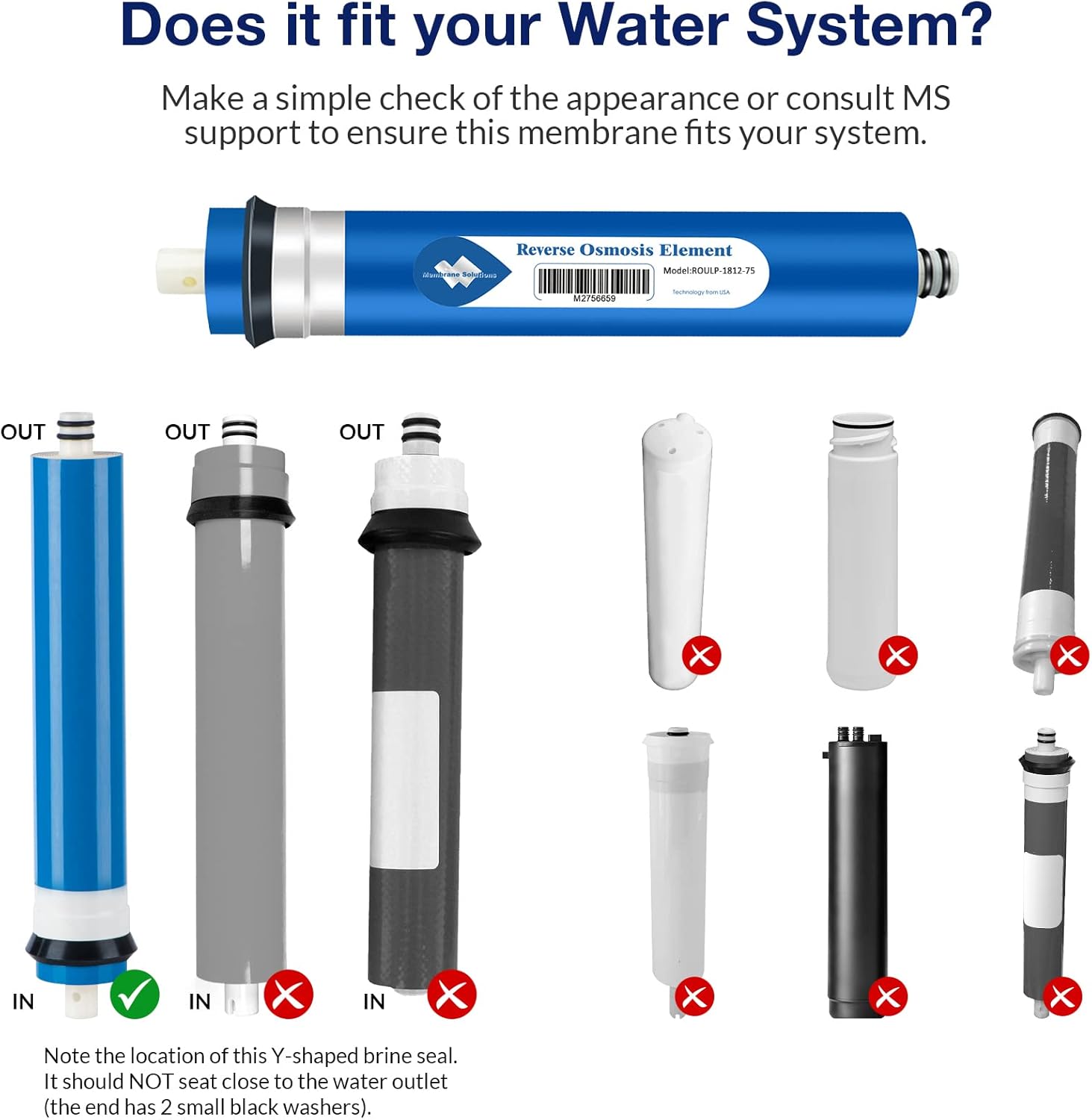
Image 4.1: Visual guide to check if the membrane fits your water system. Note the location of the Y-shaped brine seal; it should not seat close to the water outlet (the end has 2 small black washers).

Image 4.2: Illustrates the wide compatibility of the Membrane Solutions RO membrane with various standard undersink RO membrane housings and systems.
5. Installation (Easy Swap)
Replacing your RO membrane is a straightforward process. Follow these steps for a quick and easy swap:

Image 5.1: Step-by-step guide for replacing the RO membrane.
- Step 1: Remove Tubing. Remove the tubing from the quick-connect fitting on the membrane housing cap. Use a wrench to twist off the housing cap in a counter-clockwise direction.
- Step 2: Pull Out Old Membrane. Pull out the old membrane. Use scissors or pliers to apply leverage if necessary.
- Step 3: Insert New Membrane. Insert the new membrane into the housing. Make sure the O-ring is properly seated on the end of the membrane housing.
- Step 4: Tighten Cap. Place the housing cap back on and tighten it securely.
6. Operating Instructions
After installing a new RO membrane, it is crucial to perform an initial flush to ensure optimal performance and safety.
- Initial Flush: Flush the new membrane for 30 minutes when used for the first time. This helps to rinse out any manufacturing residues and prepare the membrane for effective filtration.
- Discard First Permeate: The first full tank of permeate (filtered water) must be discarded. Do not use this initial permeate for drinking water or food preparation. This is recommended to meet NSF/ANSI 58 Standard.
- Keep Moist: Keep elements moist at all times after initial wetting.
7. Maintenance
Regular maintenance of your RO membrane ensures consistent water quality and extends the life of your filtration system.
- Replacement Frequency: It is recommended to change the filter once a year for better water quality. The membrane lifespan will vary based upon local water conditions, temperature, incoming water pressure, and household usage. The typical life expectancy is between 24 to 36 months.
- Prolonged Shutdowns: To prevent biological growth during prolonged system shutdowns, it is recommended that membrane elements be immersed in a preservative solution. Rinse out the preservative before use.
- Chlorine Exposure: The membrane shows some resistance to short-term attack by chlorine (hypochlorite). Continuous exposure, however, may damage the membrane and should be avoided.

Image 7.1: Visual reminder for flushing a new membrane for 30 minutes and the recommended change interval of 12-36 months.
8. Troubleshooting
If you experience issues with your water filtration system after membrane replacement, consider the following:
- Low Water Flow: Check for proper installation of the membrane and ensure all connections are secure. Verify that pre-filters (sediment, carbon) are not clogged and have been replaced as recommended.
- Poor Water Quality (High TDS): Ensure the membrane is correctly seated and not damaged. Check the integrity of the O-rings. Verify that the system's pressure is within the recommended range.
- Leaks: Inspect all connections and fittings for proper sealing. Ensure the membrane housing cap is tightened correctly.
For more complex issues or if problems persist, refer to your specific RO water filtration system's manual or contact Membrane Solutions customer support.
9. Official Product Video
Video 9.1: An official video from Membrane Solutions showcasing their 50 GPD to 500 GPD RO Membranes, highlighting their features and applications.
10. Warranty and Support
Membrane Solutions is committed to providing high-quality products and excellent customer service.
- On-Demand Support: Assistance is available from our experts, ready to answer any of your questions about your RO membrane.
- American-Based Customer Support: Customer support is available for the life of the product.
For any concerns or questions, please reach out to Membrane Solutions customer support.
11. Important Information
It is recommended that systems using these elements rinse the elements for 24 hours, prior to first use, to meet NSF/ANSI 58 Standard. The first full tank of permeate must be discarded. Do not use this initial permeate for drinking water or food preparation. Keep elements moist at all times after initial wetting. To prevent biological growth during prolonged system shutdowns, it is recommended that membrane elements be immersed in a preservative solution. Rinse out the preservative before use. The membrane shows some resistance to short-term attack by chlorine (hypochlorite). Continuous exposure, however, may damage the membrane and should be avoided.
Disclaimer: This product is a generic item that is designed to replace the original part. Any brand names or logos are the registered trademarks of their respective owners. Any use of any brand name or model designation for this product is made solely for purposes of demonstrating compatibility.


