
1. Introduction
This manual provides instructions for the safe and effective use of your Extol Craft 417310 Solar Car Battery Charger. This device is designed for trickle charging 12V lead-acid batteries in various vehicles, including cars, commercial vehicles, campers, and boats. It helps prevent battery self-discharge during extended periods of inactivity, ensuring your vehicle remains ready to start.
2. Safety Instructions
- Read all instructions thoroughly before using the charger.
- Do not expose the solar panel to extreme temperatures, direct impact, or corrosive substances.
- Ensure proper ventilation when charging batteries to prevent gas buildup.
- Keep the charger out of reach of children and pets.
- Do not attempt to open, disassemble, or modify the charger. This will void the warranty and may cause damage or injury.
- Use this charger only with 12V lead-acid batteries. Do not use with other battery types.
- Avoid short-circuiting the output terminals.
- Disconnect the charger from the vehicle's cigarette lighter socket before performing any maintenance on the vehicle.
3. Product Overview
The Extol Craft 417310 Solar Car Battery Charger is a compact unit designed for convenient battery maintenance. It features a solar panel for energy collection and a connection cable with a 12V cigarette lighter plug for easy vehicle integration. An LED indicator provides visual feedback on the charging status.
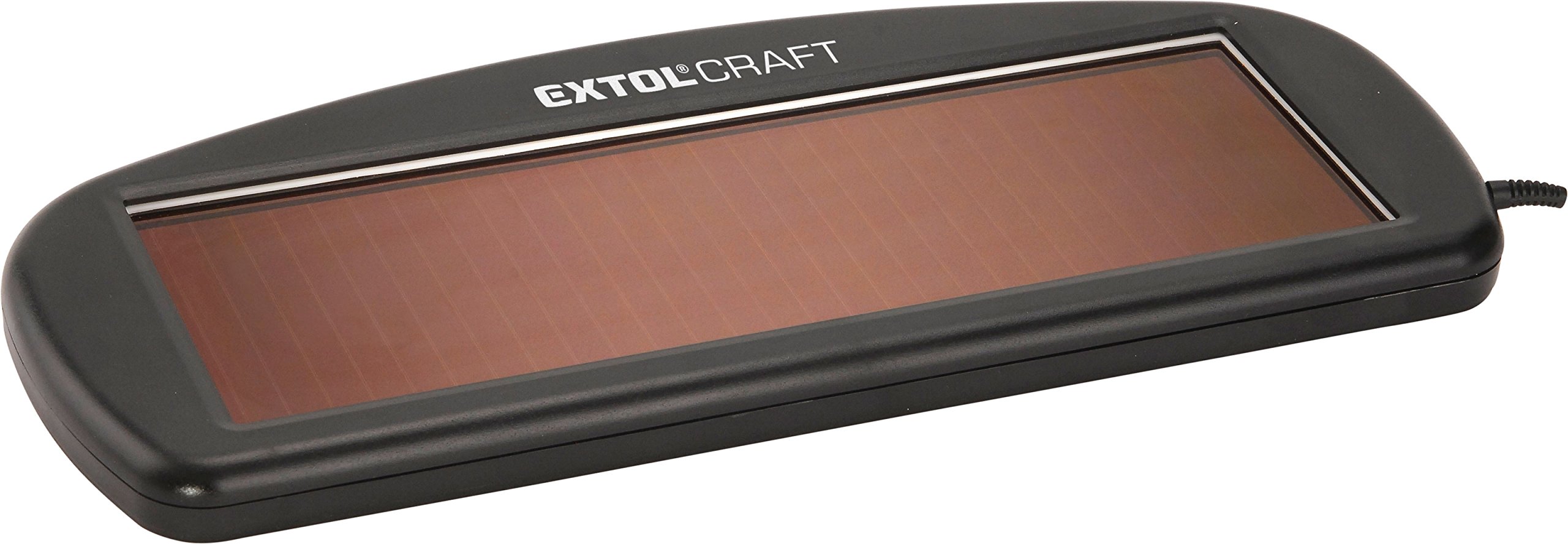
This image displays the Extol Craft 417310 Solar Car Battery Charger. It is a rectangular, dark-colored unit with a large solar panel surface. The brand name 'EXTOL CRAFT' is visible at the top center of the unit. A cable extends from the right side, indicating the connection point.
4. Specifications
| Manufacturer | Extol |
| Model Number | 417310 |
| Product Dimensions | 34.85 x 4.25 x 21.25 cm |
| Weight | 860 g |
| Color | Black |
| Power Source | DC (Solar) |
| Voltage | 25 Volt (Output for charging 12V batteries) |
| Wattage | 1.5 watt |
| Intended Use | Trickle charging 12V lead-acid batteries |
| Features | Voltage display via LED, charges via 12V cigarette lighter socket |
5. Setup
- Ensure your vehicle's engine is off and the ignition is in the 'OFF' position.
- Locate a suitable position for the solar panel where it can receive maximum direct sunlight. This could be on the dashboard, attached to a window using suction cups (if provided), or placed on the vehicle's exterior. Ensure it is securely positioned to prevent movement.
- Connect the charger's plug into the vehicle's 12V cigarette lighter socket.
- Verify that the LED indicator on the charger illuminates. This indicates that the charger is receiving power from the solar panel and is attempting to supply power to the battery.
6. Operating Instructions
The Extol Craft 417310 is designed for continuous, long-term connection to prevent battery self-discharge. It provides a trickle charge, meaning it supplies a low current to maintain the battery's charge level without overcharging. This is ideal for vehicles stored for extended periods.
- Once connected and exposed to sufficient sunlight, the charger will automatically begin to supply power to the battery.
- The LED indicator provides a visual confirmation of the charging status. If the LED is off, check for sufficient sunlight or connection issues.
- For optimal performance, ensure the solar panel is clean and free from obstructions (e.g., leaves, snow, dirt) that could block sunlight.
- The charger is not intended for rapidly charging a deeply discharged battery but rather for maintaining a healthy battery's charge over time.
7. Maintenance
- Cleaning: Regularly clean the solar panel surface with a soft, damp cloth to ensure maximum light absorption. Do not use abrasive cleaners, solvents, or harsh chemicals, as these can damage the panel.
- Inspection: Periodically inspect the connection cable and the 12V plug for any signs of wear, cuts, or damage. If any damage is observed, discontinue use immediately and replace the unit.
- Storage: When not in use for extended periods, store the charger in a dry, cool place, away from direct sunlight and extreme temperatures.
8. Troubleshooting
- Problem: Charger LED does not light up.
Possible Cause 1: Insufficient sunlight.
Solution: Move the solar panel to a location with direct, strong sunlight. Overcast conditions or indoor placement will significantly reduce output.
Possible Cause 2: Vehicle's 12V socket is not powered when the engine is off.
Solution: Some vehicles' cigarette lighter sockets are only active when the ignition is on. Check your vehicle's manual. If this is the case, the charger will only work when the ignition is on, which defeats the purpose of trickle charging a parked vehicle. Consider alternative connection methods if available for your vehicle (e.g., direct battery connection with an appropriate adapter, if compatible and safe).
Possible Cause 3: Faulty connection or damaged cable.
Solution: Ensure the plug is fully inserted into the socket. Inspect the cable for any visible damage. If damaged, the unit must be replaced. - Problem: Battery still drains despite using the charger.
Possible Cause 1: Excessive parasitic drain from vehicle systems.
Solution: The 1.5W solar charger is designed for trickle charging to compensate for natural battery self-discharge. If there is a significant electrical drain from vehicle systems (e.g., alarm, GPS tracker, aftermarket electronics), the charger's output may not be sufficient to counteract it. Consult a mechanic to identify and resolve parasitic drains.
Possible Cause 2: Severely discharged or faulty battery.
Solution: This solar charger is not intended for charging a completely flat battery. It maintains an already charged battery. If your battery is severely discharged or old, it may need a full charge from a conventional charger or replacement. Have your battery tested by a professional.
9. Warranty and Support
For warranty information, technical support, or service inquiries, please refer to the documentation provided with your purchase or contact Extol customer service directly. Specific warranty terms and contact details can typically be found on the manufacturer's website or in your sales receipt.


