
1. Introduction
This manual provides essential information for the proper use and maintenance of the Cylewet V-156-1C25 Micro Limit Switch. This product is a high-precision, momentary, SPDT (Single Pole Double Throw) snap action switch, suitable for various AC and DC control circuit applications, including Arduino projects. The package includes 6 units of the V-156-1C25 Micro Limit Switch.

Image 1.1: A pack of six Cylewet V-156-1C25 Micro Limit Switches, showing their compact design and long hinge roller actuators.
2. Product Overview
The V-156-1C25 Micro Limit Switch is designed to detect the presence or absence of an object by mechanical contact. Its snap-action mechanism ensures rapid changeover of contacts, making it ideal for precise control applications. Each switch features a long hinge roller actuator and SPDT contacts.
Key Features:
- Material: Durable plastic and metal construction.
- Color: Red, black, and silver components.
- Contact Type: SPDT (Single Pole Double Throw) with Normally Open (NO) and Normally Closed (NC) terminals.
- Actuator: Long hinge roller for versatile activation.
- High Precision: Designed for accurate and repeatable operation.
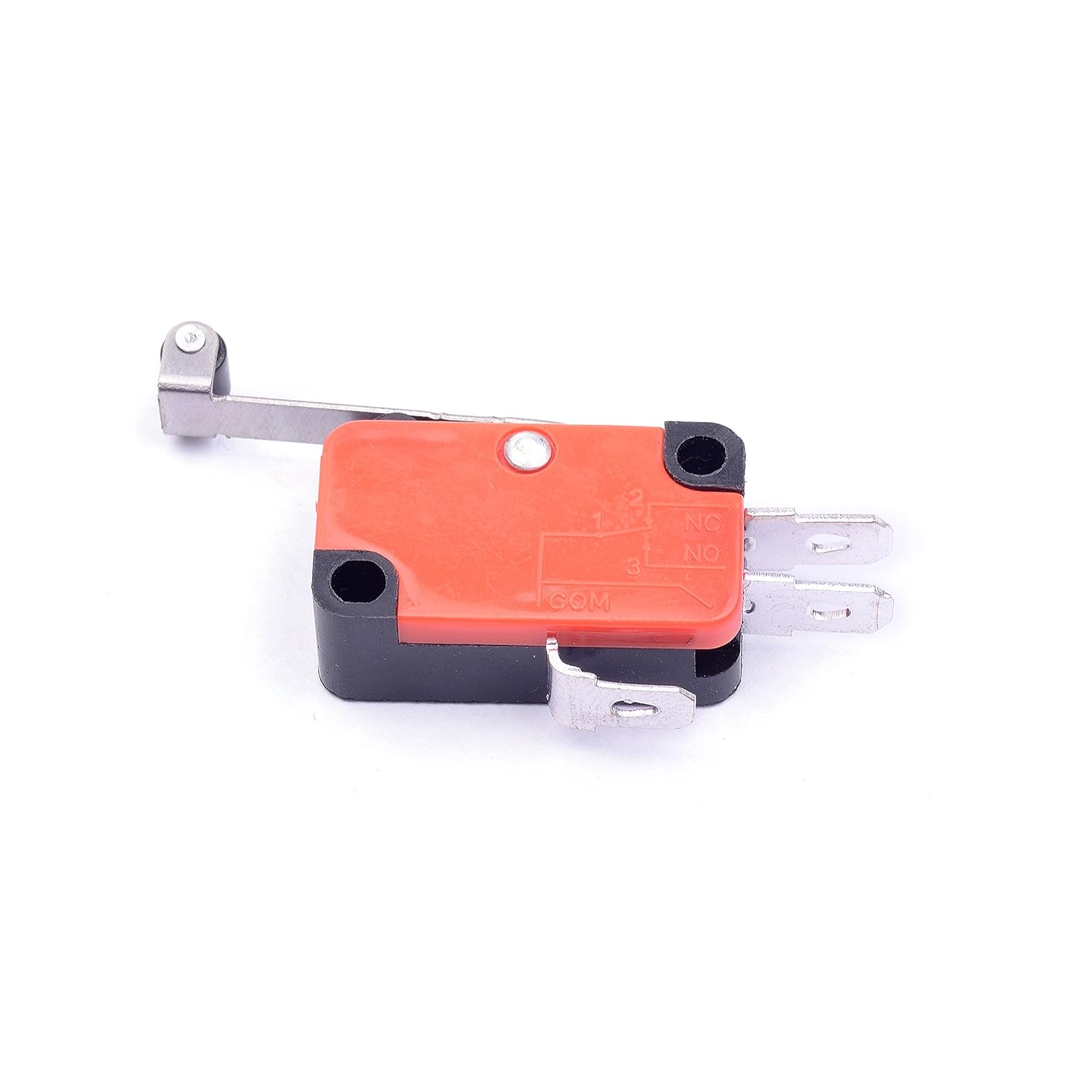
Image 2.1: A detailed view of one micro limit switch, highlighting the common (COM), normally closed (NC), and normally open (NO) terminals for wiring.
3. Setup and Wiring
Proper wiring is crucial for the correct operation of the micro limit switch. The switch has three terminals: Common (COM), Normally Open (NO), and Normally Closed (NC).
Terminal Identification:
- COM (Common): This is the input terminal for the circuit.
- NC (Normally Closed): This terminal is connected to COM when the switch is in its unactuated (rest) state. The circuit is closed.
- NO (Normally Open): This terminal is disconnected from COM when the switch is in its unactuated (rest) state. The circuit is open.
Wiring Instructions:
- Identify the COM, NC, and NO terminals on the switch. Refer to Image 2.1 for visual guidance.
- Connect the power source or signal input to the COM terminal.
- For a circuit that should be ON when the switch is NOT pressed, connect your load to the NC terminal.
- For a circuit that should be ON when the switch IS pressed, connect your load to the NO terminal.
- Ensure all connections are secure and insulated to prevent short circuits.
The terminals are approximately 0.187 inches (4.75mm) wide, suitable for standard quick-disconnect terminals or soldering.
4. Operating Principles
The V-156-1C25 is a momentary snap-action switch. This means that the contacts rapidly change state once the actuator reaches a specific point, and they return to their original state once the actuator is released.
Actuation:
- The long hinge roller actuator is designed to be pressed or moved by a mechanical part.
- When the actuator is depressed, the internal mechanism causes the COM terminal to disconnect from NC and connect to NO.
- When the actuator is released, the internal spring returns the contacts to their original state (COM connected to NC, disconnected from NO).
Applications:
These switches are versatile and can be used in a wide range of applications, including:
- Position sensing in robotics and automation.
- Door interlocks and safety mechanisms.
- End-stop detection in 3D printers and CNC machines.
- General purpose ON/OFF control in electronic projects.
5. Maintenance
The Cylewet V-156-1C25 Micro Limit Switch is designed for durability and requires minimal maintenance.
- Cleaning: Keep the switch free from dust, dirt, and debris. Use a soft, dry cloth for cleaning. Avoid using liquid cleaners directly on the switch.
- Inspection: Periodically inspect the actuator and terminals for any signs of wear, damage, or corrosion.
- Mounting: Ensure the switch is securely mounted to prevent movement or vibration that could affect its operation or lead to premature wear.
- Environment: Operate the switch within its specified temperature and humidity ranges to ensure optimal performance and longevity.
6. Troubleshooting
If you encounter issues with your micro limit switch, consider the following troubleshooting steps:
Common Issues and Solutions:
- Switch Not Activating:
- Check if the mechanical part is making sufficient contact with the roller actuator.
- Ensure the actuator's travel distance is adequate to trigger the internal mechanism.
- Intermittent Operation:
- Verify that all wiring connections are secure and free from corrosion.
- Check for loose mounting of the switch.
- Inspect the actuator for any binding or obstruction.
- No Electrical Continuity:
- Use a multimeter to test continuity between COM and NC (unactuated) and COM and NO (actuated).
- Ensure the switch is receiving the correct voltage and current within its rated limits.
- Physical Damage:
- If the switch housing or actuator is visibly damaged, replace the unit.
7. Specifications
Detailed technical specifications for the Cylewet V-156-1C25 Micro Limit Switch:
| Attribute | Value |
|---|---|
| Model Number | CYT1046 |
| Material | Plastic and Metal |
| Color | Red, Black, Silver |
| Operation Mode | Manual |
| Contact Type | Normally Open (NO), Normally Closed (NC) |
| Terminal Type | SPDT (Single Pole Double Throw) |
| Actuator Type | Long Hinge Roller |
| Current Rating | 15 Amps (AC 125V), 7.5 Amps (AC 250V) |
| Operating Voltage (AC) | 125 Volts, 250 Volts |
| Operating Voltage (DC) | 0.6 Amps (DC 125V), 0.3 Amps (DC 250V) |
| Mounting Type | Surface Mount |
| Circuit Type | Parallel |
| Package Dimensions | 4.96 x 4.61 x 0.59 inches |
| Item Weight | 0.01 ounces (per switch, approximate) |

Image 7.1: Technical drawing illustrating the dimensions and contact layout of the micro limit switch.
8. Warranty and Support
Cylewet products are manufactured to high standards. For any issues or support inquiries regarding your V-156-1C25 Micro Limit Switches, please refer to the retailer or point of purchase for their specific return and warranty policies. Keep your purchase receipt as proof of purchase.
For general technical assistance, you may consult online resources or communities dedicated to electronics and Arduino projects, as these switches are widely used and well-documented.