Introduction
This manual provides comprehensive instructions for the installation and proper use of your Docooler 10pcs Nylon Bungee Deck Loops with Screws. These components are designed to enhance the rigging capabilities of your boat or kayak, allowing for secure attachment points for bungee cords, paddles, fishing rods, and other gear. Please read these instructions carefully before installation and use to ensure optimal performance and safety.
Product Components
Your Docooler Bungee Deck Loops kit includes the following items:
- 10 x Nylon Pad Eyes (Black)
- 20 x Screws (Stainless Steel or Zinc)

Image: The complete kit showing 10 black nylon pad eyes and 20 silver screws.
Specifications
| Feature | Detail |
|---|---|
| Brand | Docooler |
| Material (Pad Eye) | Nylon |
| Material (Fastener) | Stainless Steel or Zinc |
| Product Dimensions (L x W) | 1.85" x 0.51" (4.7cm x 1.3cm) |
| Number of Pieces | 10 (Pad Eyes) |
| Fastener Type | Rivet (Tri-grip) |
| Load Capacity | 150 pounds |
Installation Instructions
Follow these steps to properly install the Docooler Nylon Bungee Deck Loops on your kayak or boat.
- Step 1: Prepare Components
Insert the provided screws through the holes of the nylon pad eye. Ensure the waterproof rubber gasket rings (if included with your specific rivets) are properly seated to prevent water intrusion. The tri-grip rivets are designed to expand on the blind side for a secure hold.
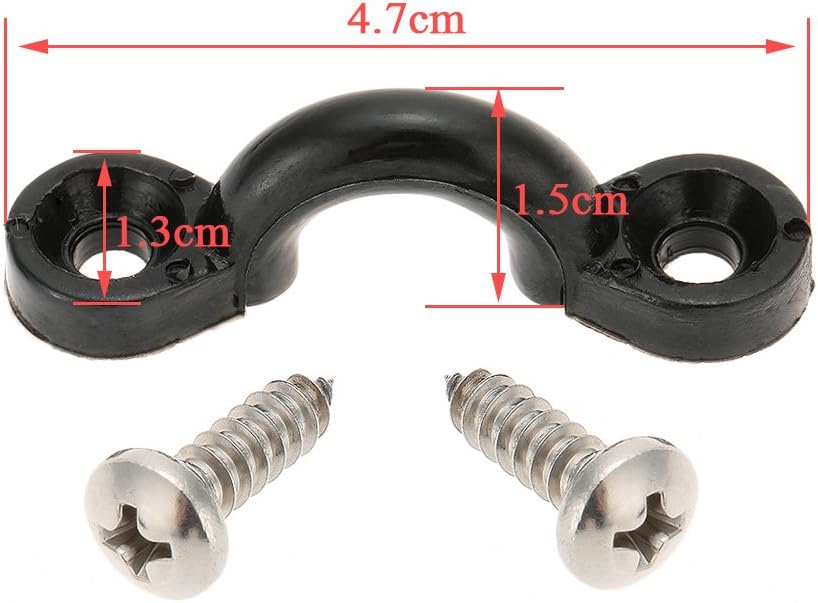
Image: A close-up view of a single black nylon pad eye with a silver screw inserted, demonstrating how the components fit together.
- Step 2: Mark and Drill Holes
Determine the desired location for each deck loop. Mark the two screw hole positions on the surface of your kayak or boat. Using an appropriate drill bit size for the rivets (typically 3/16 inch or 4.8mm, verify with rivet size), carefully drill pilot holes at the marked locations. Ensure the holes are clean and free of debris.
- Step 3: Secure Pad Eye with Rivet Tool
Place the assembled pad eye over the drilled holes. Insert the tri-grip rivets into the holes. Use a rivet gun to secure the rivets. The blind side of the rivet will split into three directions, creating a strong and stable anchor point. Apply sealant around the base of the pad eye and into the holes before riveting for enhanced waterproofing, especially in marine environments.

Image: A person demonstrating the installation of a deck loop onto a yellow surface using a rivet gun, showing the process of securing the pad eye.

Image: A close-up view illustrating how the tri-grip rivet expands on the blind side to create a secure hold, with arrows indicating the three-way split.
- Step 4: Repeat for All Pad Eyes
Repeat the above steps for all remaining pad eyes, ensuring consistent spacing and alignment as needed for your rigging setup.
Installation Video Guide
Video: This video demonstrates the assembly of the pad eye with the rivet and the process of installing it onto a surface using a rivet tool. It highlights the tri-grip rivet's function in securing the components.
Usage Guidelines
Once installed, the Docooler Nylon Bungee Deck Loops provide versatile attachment points for various rigging needs:
- Bungee Cord Attachment: Thread bungee cords through the loops to create secure storage areas for gear, coolers, or dry bags.
- Paddle Holders: Use the loops in conjunction with bungee cords to create simple and effective paddle holders on the deck of your kayak.
- Fishing Rod Leashes: Attach leashes to the loops to prevent fishing rods from being lost overboard.
- General Tie-Downs: Secure any items that need to be fastened while on the water.

Image: A kayak deck showing multiple black nylon deck loops with bungee cords threaded through them, demonstrating their use for securing items. An orange foam block is also visible, secured by the cords.
Maintenance
To ensure the longevity and continued performance of your deck loops, consider the following maintenance tips:
- Regular Cleaning: Rinse the deck loops with fresh water after each use, especially after exposure to saltwater, to prevent corrosion of the screws and degradation of the nylon.
- Inspection: Periodically inspect the pad eyes and screws for any signs of wear, cracking, or loosening. Ensure the rivets remain securely fastened.
- Storage: While durable, prolonged exposure to extreme UV radiation can affect nylon. Store your kayak or boat in a shaded area or use a cover when not in use.
Troubleshooting
If you encounter any issues with your Docooler Nylon Bungee Deck Loops, consider the following:
- Loose Pad Eye: If a pad eye becomes loose, it may indicate that the rivet was not properly set or has failed. Re-riveting with a new rivet of the correct size may be necessary. Ensure the surface material is strong enough to support the rivet.
- Water Leakage: If water is leaking through the rivet holes, it suggests an issue with the sealant application or the integrity of the rivet. Remove the rivet, clean the area, apply a marine-grade sealant generously, and re-install a new rivet.
- Damaged Pad Eye: In case of physical damage to a nylon pad eye, it should be replaced immediately to maintain structural integrity and safety.
Warranty and Support
For information regarding warranty coverage or technical support for your Docooler Nylon Bungee Deck Loops, please refer to the product packaging or contact Docooler customer service directly through their official channels. Keep your purchase receipt as proof of purchase.


