National Geographic Dual LED Kids Microscope
Model: NGMICROSCOPE - Instruction Manual
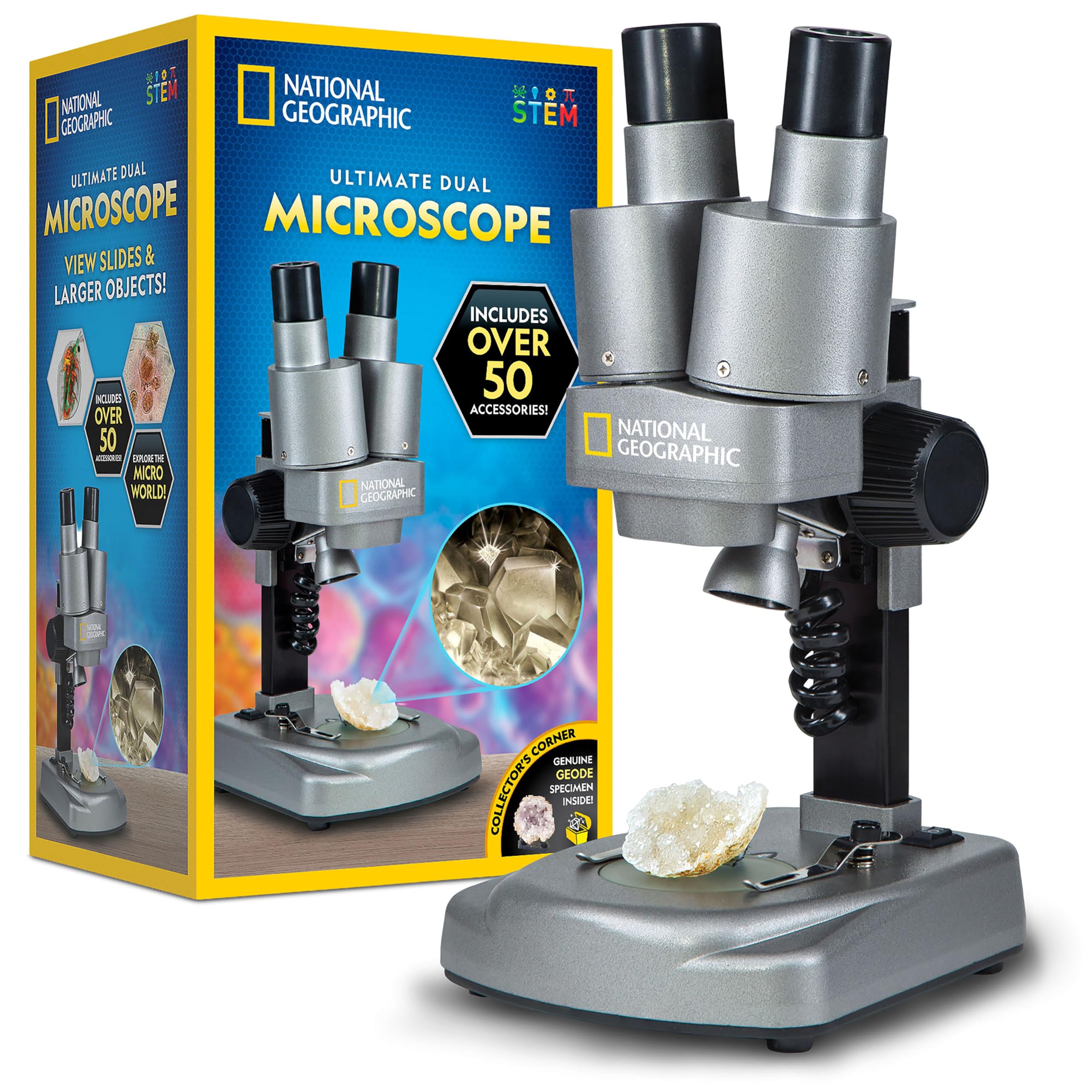
Image: The National Geographic Dual LED Kids Microscope, a silver-colored microscope with dual eyepieces, positioned on a desk with various accessories.
Introduction
The National Geographic Dual LED Kids Microscope is designed to introduce young scientists to the fascinating microscopic world. This kit provides both 20x and 50x magnification, dual LED illumination, and a comprehensive set of accessories to encourage hands-on scientific exploration. It is an ideal tool for observing biological specimens on slides and examining 3D objects in intricate detail.

Image: Two children, one looking intently through the microscope and the other smiling, indicating engagement and discovery.
Safety Information
WARNING: CHOKING HAZARD -- Small parts. Not for children under 3 years.
Adult supervision is recommended for all experiments involving sharp objects or small parts. Ensure proper handling of all components to prevent injury or damage.
What's in the Box
- Microscope (Silver) with Ultra Bright Illumination
- 2 Optical Lenses with 20x & 50x Magnification
- 10 Prepared Slides
- 10 Blank Slides & 10 Slide Covers
- Brine Shrimp Eggs (5g) & Hatching Station
- Petri Dish for Experiments
- Mini Geode to Examine
- Tweezers & Eye Dropper
- 23-Slide Storage Container
- Full Color Learning Guide
- Microscope Dust Cover

Image: A flat lay of all components included in the National Geographic Dual LED Kids Microscope kit, showcasing the microscope, slides, tools, and learning guide.
Setup
Battery Installation
The microscope requires 2 AA batteries (not included). To install:
- Remove the ocular lenses before turning the microscope over.
- Unscrew the battery compartment cover on the base of the microscope.
- Insert 2 AA batteries, ensuring correct polarity.
- Replace the cover and screw it securely.
Video: A demonstration of how to install batteries into the National Geographic Dual LED Student Microscope, followed by instructions on using the microscope's features.
Initial Slide Setup
To begin observation, place a prepared or blank slide onto the stage. Secure the slide using the slide-holding clips. Ensure the clips are covering the stage securely before proceeding.
Operating Instructions
Adjusting Ocular Lenses
The dual ocular lenses can be swiveled to comfortably fit the user's eye spacing. Adjust them until you see a single, clear image.
Focusing
Use the focusing knob located on the side of the microscope to bring your specimen into clear view. Turn the knob slowly until the image is sharp.
Using Illumination
The microscope features dual LED lights. Use the ON/OFF switch on the base to activate the bottom light for viewing transparent specimens on slides. For opaque, 3D objects, use the top light to illuminate the specimen from above.

Image: The National Geographic Dual LED Kids Microscope illuminating a geode with its top light, highlighting the intricate details of the crystal structure.
Preparing Specimens
The kit includes blank slides and cover slips for creating your own specimens. For best results, aim for the thinnest possible sample.
Thin Slicing for Viewing
For very thin specimens, an adult should assist in carefully cutting a thin, even slice of the material using a razor blade or sharp knife. This ensures light can pass through the sample for clear viewing.
Video: A demonstration of how to prepare a thin specimen slice from a radish using a razor blade and tweezers, and then how to create a wet mount slide.
Wet Mount Slides
For wet mount slides, place a drop or two of water (or other suitable liquid) in the center of a blank slide using the included eye dropper. Carefully place your specimen flat on the droplet using tweezers. Then, gently lower a cover slip over the specimen, touching one edge to the slide first and gradually lowering the rest to avoid air bubbles.
Maintenance
To ensure the longevity and optimal performance of your microscope, keep it clean and protected. Use the provided dust cover when not in use to prevent dust accumulation on the lenses and other components. Clean lenses with a soft, lint-free cloth designed for optical surfaces.
Troubleshooting
If you encounter issues such as blurry images or non-functional lights, first check the battery installation and ensure they are fresh. Refer to the focusing and illumination sections of this manual. For persistent issues, please contact customer support.
Specifications
| Feature | Detail |
|---|---|
| Product Dimensions | 7.25 x 5.7 x 12.5 inches |
| Item Weight | 2 pounds |
| Model Number | NGMICROSCOPE |
| Magnification | 20x and 50x (interchangeable ocular lenses) |
| Light Source Type | Dual LED (top and bottom) |
| Material | Glass (lenses) |
| Color | Silver |
| Power Source | Battery Powered (2 AA batteries) |
| Recommended Age | 8 years and up |

Image: A visual representation of the 20x and 50x magnification capabilities of the microscope, showing a comparison of an earthworm cross-section at different magnifications.
Warranty & Support
For warranty information or customer support, please refer to the contact details provided in the product packaging or visit the official Blue Marble website. Keep your purchase receipt for any warranty claims.


