
1. Introduction
This manual provides essential information for the safe and effective use, installation, and maintenance of your Stens Hi-Lift Blade, model 330-872. Please read all instructions carefully before attempting any installation or operation. Proper installation and maintenance are crucial for optimal performance and safety.
It is important to verify that this part fits your specific equipment before purchasing and installation. Refer to the compatibility section for details.
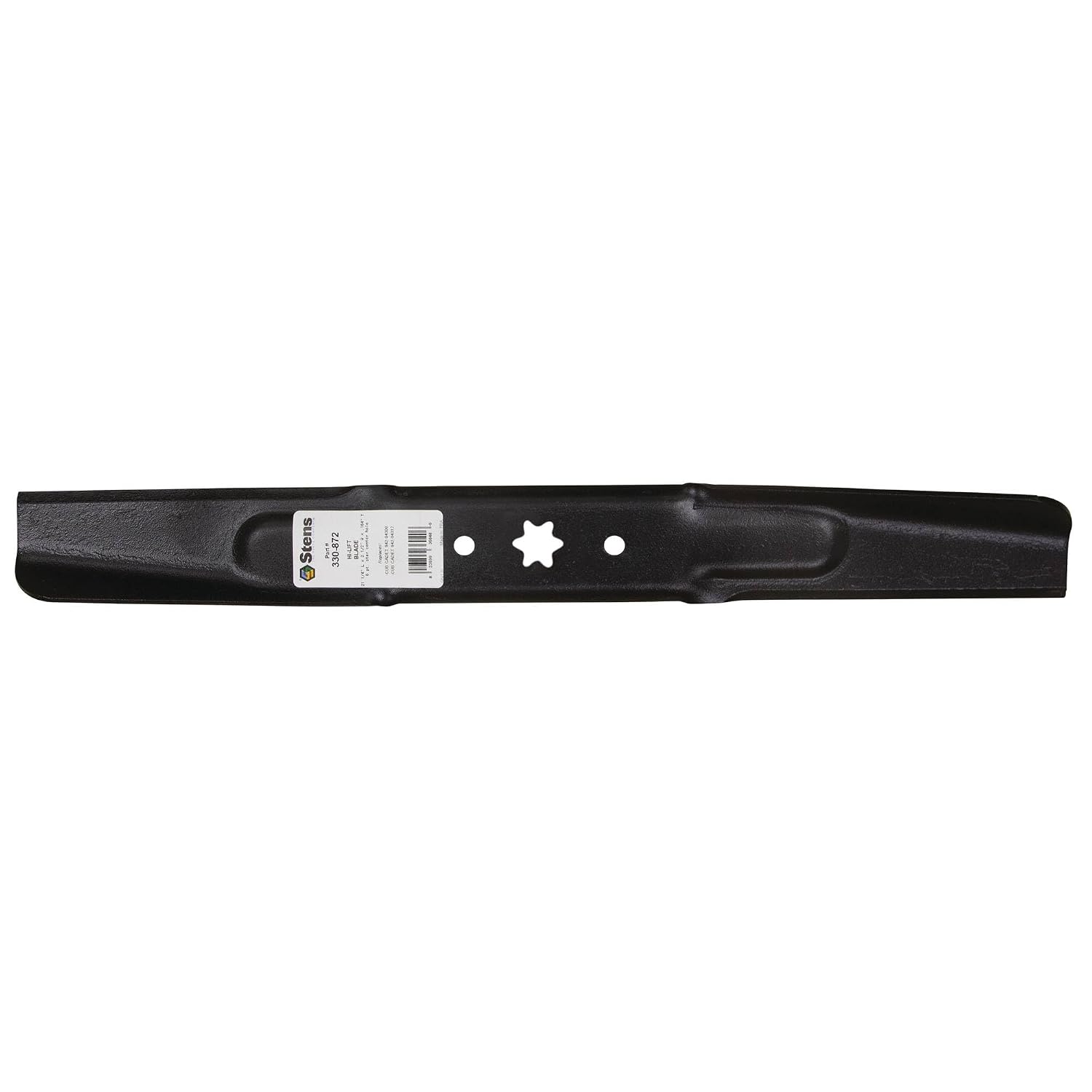
Image 1: Front view of the Stens Hi-Lift Blade 330-872, showing its overall shape and center star hole.
2. Safety Information
- Always wear appropriate personal protective equipment (PPE), including safety glasses and heavy-duty gloves, when handling mower blades.
- Ensure the engine is off and the spark plug wire is disconnected before performing any maintenance or blade replacement.
- Never attempt to sharpen or modify blades while they are attached to the mower.
- Inspect blades regularly for damage, cracks, or excessive wear. Replace damaged blades immediately.
- Keep hands and feet clear of the blade area at all times.
- Refer to your mower's owner's manual for specific safety precautions and procedures.
3. Compatibility
The Stens Hi-Lift Blade 330-872 is designed as a replacement for various lawn mower models. Please cross-reference the OEM numbers and compatible models below to ensure proper fitment for your equipment.
Replaces OEM Numbers:
- Cub Cadet: 490-110-M108, 742-04308, 742-04312, 742-0656, 942-04308, 942-04308A, 942-04312, 942-04312A, 942-0656, OCC-742-04312, OEM-742-04308
- MTD: 490-110-M108, 742-04308, 742-0656, 942-04308, 942-04308A, 942-0656, OEM-742-04308
- Troy-Bilt: 490-110-M108, 742-04308, 742-0656, 942-04308, 942-04308A, 942-0656, OEM-742-04308
Compatible With/Replacement For:
- Craftsman: 247.28980
- Cub Cadet: RZT42 (2011 and newer models; requires 2 blades for a 42" deck)
4. Specifications
| Specification | Value |
|---|---|
| Description | Hi-Lift Blade |
| Length | 21 1/4 inches |
| Center Hole | 6 pt. star |
| Width | 2 1/2 inches |
| Thickness | 0.164 inches |
| Material | Alloy Steel |
| Item Weight | 2.22 Pounds |
| Product Dimensions | 24.25 x 5 x 5 inches |
| UPC | 023899360406 |

Image 2: Close-up view of the Stens Hi-Lift Blade 330-872, highlighting the 6-point star center hole and blade edge.
5. Blade Types and Their Uses
Stens offers a variety of mower blades designed for different cutting needs. Understanding the characteristics of each type can help you achieve the best results for your lawn.
Video 1: An informational video from Stens discussing various types of mower blades, including mulching, hi-lift, and low-lift blades, and their specific applications.
5.1 Toothed/Mulching Blades
These blades feature teeth along the cutting edge, designed to produce finer clippings. They are ideal for creating a manicured lawn appearance by finely shredding grass clippings, which can then be returned to the lawn as natural fertilizer.

Image 3: A Stens mulching blade with a toothed edge, designed for finer grass clippings.
5.2 Notched/Rolled Hi-Lift Blades (This Product)
Hi-Lift blades, such as the Stens 330-872, are characterized by a more aggressive angle on the trailing edge, creating a higher vacuum effect. This lift helps to stand the grass up for a clean, even cut and efficiently propels clippings into a bagger. They are particularly effective for lawns with fine grass and for bagging applications.

Image 4: Angled view of the Stens Hi-Lift Blade 330-872, showing the upward curve that creates lift for bagging.
5.3 Flat/Low-Lift Blades
Flat or low-lift blades have a less aggressive angle, producing less lift. These blades are suitable for dry, sandy, or coastal lawns as they minimize the amount of sand or debris thrown up, which can harm the mower deck. Some low-lift blades are reversible, offering extended blade life.
6. Setup and Installation
Replacing mower blades requires careful attention to safety and proper procedure. Always consult your mower's owner's manual for specific instructions and torque specifications.
Required Tools:
- Socket wrench or impact wrench
- Blade removal tool or wooden block for safety
- Torque wrench
- Heavy-duty gloves
- Safety glasses
Installation Steps:
- Prepare the Mower: Ensure the mower engine is off, cool, and the spark plug wire is disconnected to prevent accidental starting. If applicable, engage the parking brake.
- Access the Blades: Safely lift the mower deck or tilt the mower to access the underside. Use jack stands or a secure lift to support the mower.
- Remove Old Blades: Use a blade removal tool or a wooden block to secure the blade from turning. Loosen the blade bolt(s) using a socket or impact wrench. Remove the old blade and any washers or spacers, noting their orientation.
- Clean the Area: Clean any grass clippings or debris from the blade mounting area on the spindle.
- Install New Blades: Position the new Stens Hi-Lift Blade 330-872 onto the spindle, ensuring the cutting edge is facing the correct direction (usually towards the deck's rotation). The 6-point star center hole should align perfectly with the spindle. Reinstall any washers or spacers in their original orientation.
- Tighten Blade Bolts: Hand-tighten the blade bolt(s), then use a torque wrench to tighten them to the manufacturer's specified torque. Refer to your mower's manual for the correct torque setting. Overtightening or undertightening can cause damage or safety hazards.
- Verify Installation: Ensure the blade is securely fastened and spins freely without wobbling.
- Reconnect Spark Plug: Once all blades are installed and checked, reconnect the spark plug wire.
7. Operating Instructions
Proper operation of your lawn mower with new blades ensures a clean cut and extends blade life.
- Mowing Height: Adjust your mower's cutting height to suit your grass type and desired lawn appearance. Avoid cutting more than one-third of the grass blade length at a time.
- Mowing Speed: Operate the mower at a consistent, moderate speed. Excessive speed can lead to an uneven cut and increased wear on the blades.
- Overlap Passes: Overlap each mowing pass slightly to ensure complete coverage and avoid missed strips of grass.
- Avoid Obstacles: Be mindful of rocks, branches, and other debris that can damage blades. Clear the mowing area before starting.
- Wet Grass: Avoid mowing wet grass if possible. Wet grass can clump, clog the deck, and lead to an uneven cut.
8. Maintenance
Regular maintenance of your Stens Hi-Lift Blade 330-872 will ensure optimal cutting performance and longevity.
8.1 Cleaning
- After each use, clean grass clippings and debris from the underside of the mower deck and the blades. Built-up grass can reduce cutting efficiency and lead to rust.
- Always disconnect the spark plug wire before cleaning.
8.2 Sharpening
- Blades should be sharpened regularly, typically after every 20-25 hours of use, or when you notice a ragged cut.
- Use a file or grinding wheel to sharpen the cutting edge, maintaining the original blade angle.
- Ensure the blade remains balanced after sharpening. An unbalanced blade can cause excessive vibration and damage to the mower.
8.3 Replacement
- Replace blades if they are bent, cracked, severely worn, or have significant nicks that cannot be sharpened out.
- Always replace blades with genuine Stens replacement parts or equivalent specifications to ensure compatibility and performance.
9. Troubleshooting
Addressing common issues can help maintain your mower's performance.
9.1 Uneven Cut or Ragged Grass
- Cause: Dull or bent blades, incorrect blade installation, uneven tire pressure, or mowing too fast.
- Solution: Sharpen or replace blades, ensure blades are installed correctly and torqued to specification, check tire pressure, reduce mowing speed.
9.2 Excessive Vibration
- Cause: Unbalanced blade (after sharpening or impact), bent blade, loose blade bolt.
- Solution: Check blade balance, replace bent blades, ensure blade bolts are tightened to the correct torque.
9.3 Poor Bagging Performance
- Cause: Dull blades, clogged deck, mowing wet grass, or using the wrong type of blade for bagging (Hi-Lift blades are generally best for bagging).
- Solution: Sharpen or replace blades, clean the mower deck, avoid mowing wet grass, ensure you are using appropriate Hi-Lift blades.
10. Warranty and Support
For information regarding product warranty, returns, or technical support, please refer to the official Stens website or contact their customer service directly. Keep your purchase receipt as proof of purchase.
Stens Official Website: Visit the Stens Store on Amazon


