
Introduction
This manual provides essential information for the proper installation, operation, and maintenance of your NGK Standard Spark Plug, model NGK-BR9ES (5722). NGK spark plugs are engineered to deliver reliable ignition and optimal engine performance. Adhering to the guidelines in this manual will help ensure the longevity and efficiency of your spark plug and engine.
Setup and Installation
Proper installation is critical for the performance and lifespan of your spark plug. Always refer to your vehicle or equipment manufacturer's service manual for specific instructions and torque specifications.
Required Tools:
- Spark plug socket (correct size for NGK-BR9ES)
- Torque wrench
- Spark plug gapping tool
- Anti-seize compound (optional, for threads)
- Dielectric grease (for spark plug boot)
Installation Steps:
- Preparation: Ensure the engine is cool before beginning work. Disconnect the negative terminal of the battery if working on a vehicle.
- Remove Old Plugs: Carefully remove the spark plug wires or coil-on-plug units. Use a spark plug socket to loosen and remove the old spark plugs. Inspect them for signs of wear or fouling.
- Inspect New Plug: Visually inspect the new NGK spark plug for any damage.
- Check Gap: Using a spark plug gapping tool, verify that the gap between the center and ground electrodes matches the specification provided by your engine manufacturer. Adjust if necessary by carefully bending the ground electrode. Do not bend the center electrode.
- Thread Installation: Apply a small amount of anti-seize compound to the spark plug threads (optional, but recommended for aluminum heads). Carefully thread the new spark plug into the cylinder head by hand to prevent cross-threading.
- Torque: Once hand-tight, use a torque wrench to tighten the spark plug to the manufacturer's specified torque setting. Overtightening can damage the spark plug or cylinder head; undertightening can lead to poor heat transfer and misfires.
- Reconnect: Apply a small amount of dielectric grease inside the spark plug boot and firmly reattach the spark plug wire or coil-on-plug unit. Ensure a secure connection.
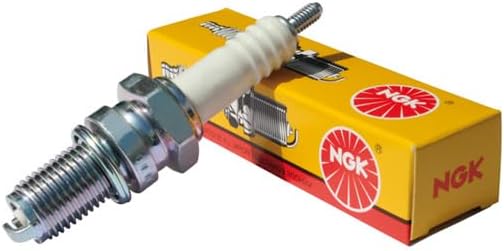
Image: NGK Standard Spark Plug next to its yellow and red packaging box. This image shows an NGK Standard Spark Plug, model 5722, positioned beside its distinctive yellow and red packaging box. The spark plug features a metallic threaded base, a hexagonal section for a wrench, and a white ceramic insulator leading to the terminal. The packaging box prominently displays the 'NGK' logo.
Operation
The NGK Standard Spark Plug functions as a critical component in the internal combustion engine's ignition system. It creates an electrical spark that ignites the air-fuel mixture in the combustion chamber, initiating the power stroke. Proper operation relies on correct installation, appropriate heat range for the engine, and regular maintenance.
Maintenance
Regular inspection and timely replacement of spark plugs are essential for maintaining engine performance and fuel efficiency.
Inspection Intervals:
- Consult your vehicle or equipment service manual for recommended inspection and replacement intervals. These typically range from 30,000 to 100,000 miles, depending on the spark plug type and engine.
- For high-performance or heavily used engines, more frequent checks may be necessary.
Signs of Wear or Fouling:
When inspecting, look for:
- Worn Electrodes: Rounded or eroded center and ground electrodes.
- Fouling: Deposits on the insulator tip or electrodes (e.g., carbon, oil, or ash).
- Cracked Insulator: Any cracks in the ceramic insulator.
- Discoloration: Abnormal coloration of the insulator tip (e.g., black, white, or green).
If any of these signs are present, or if the spark plug has reached its recommended service life, replacement is advised.
Troubleshooting
Issues related to spark plugs can manifest in various engine performance problems. Here are common symptoms and potential spark plug related causes:
| Symptom | Possible Spark Plug Related Cause | Action |
|---|---|---|
| Engine Misfire / Rough Idle | Fouled, worn, or incorrectly gapped spark plug. | Inspect and replace spark plug(s). Correct gap. |
| Reduced Fuel Economy | Worn or inefficient spark plugs leading to incomplete combustion. | Replace all spark plugs. |
| Hard Starting | Weak or no spark due to worn or fouled plugs. | Inspect and replace spark plug(s). Check ignition system. |
| Engine Hesitation / Lack of Power | Poor spark delivery from worn or damaged plugs. | Replace spark plugs. Verify correct heat range. |
If troubleshooting does not resolve the issue, consult a qualified mechanic or refer to your engine's service manual for further diagnosis.
Specifications
Key specifications for the NGK Standard Spark Plug, Model NGK-BR9ES (5722):
| Specification | Detail |
|---|---|
| Brand | NGK |
| Model Number | NGK-BR9ES |
| Item Weight | 1.06 ounces |
| Manufacturer | Boating Accessories |
| ASIN | B01A5ST4RG |
| Date First Available | July 28, 2015 |
Warranty and Support
NGK spark plugs are manufactured to high-quality standards. For specific warranty information, please refer to the official NGK website or contact NGK customer support directly. Keep your purchase receipt as proof of purchase.
For technical assistance or further inquiries, please visit the official NGK website or contact their customer service department. Always provide the model number (NGK-BR9ES) and any relevant engine details when seeking support.

