
Introduction
The Zildjian L80 Low Volume Cymbal Set (LV348) offers a revolutionary drumming experience, providing up to 80% less volume than traditional cymbals while retaining an authentic feel. This set is designed for various applications where reduced sound output is desired, such as practice sessions, drum lessons, or low-volume live performances. This manual provides comprehensive guidance on the proper use and care of your cymbals to ensure optimal performance and longevity.
Key Features
- Up to 80% quieter than traditional cymbals.
- Authentic Zildjian cymbal feel and response.
- Articulate and responsive with sticks, brushes, and mallets.
- Ideal for practice spaces, drum lessons, and low-volume gigs.
- Helps prevent ear fatigue during extended practice sessions.
Product Overview

Figure 1: The Zildjian L80 Low Volume Cymbal Set (LV348), showcasing the 13" HiHats, 14" Crash, and 18" Crash Ride cymbals alongside their product packaging.

Figure 2: An illustrative diagram detailing the components of the L80 Low Volume Cymbal Pack, specifically the 13" Hi-Hat, 14" Crash, and 18" Crash Ride cymbals.

Figure 3: The 13" L80 Low Volume HiHats, designed to be 80% quieter than traditional hi-hats while maintaining authentic feel.

Figure 4: The 14" L80 Low Volume Crash cymbal, offering reduced volume for practice and quiet performance settings.
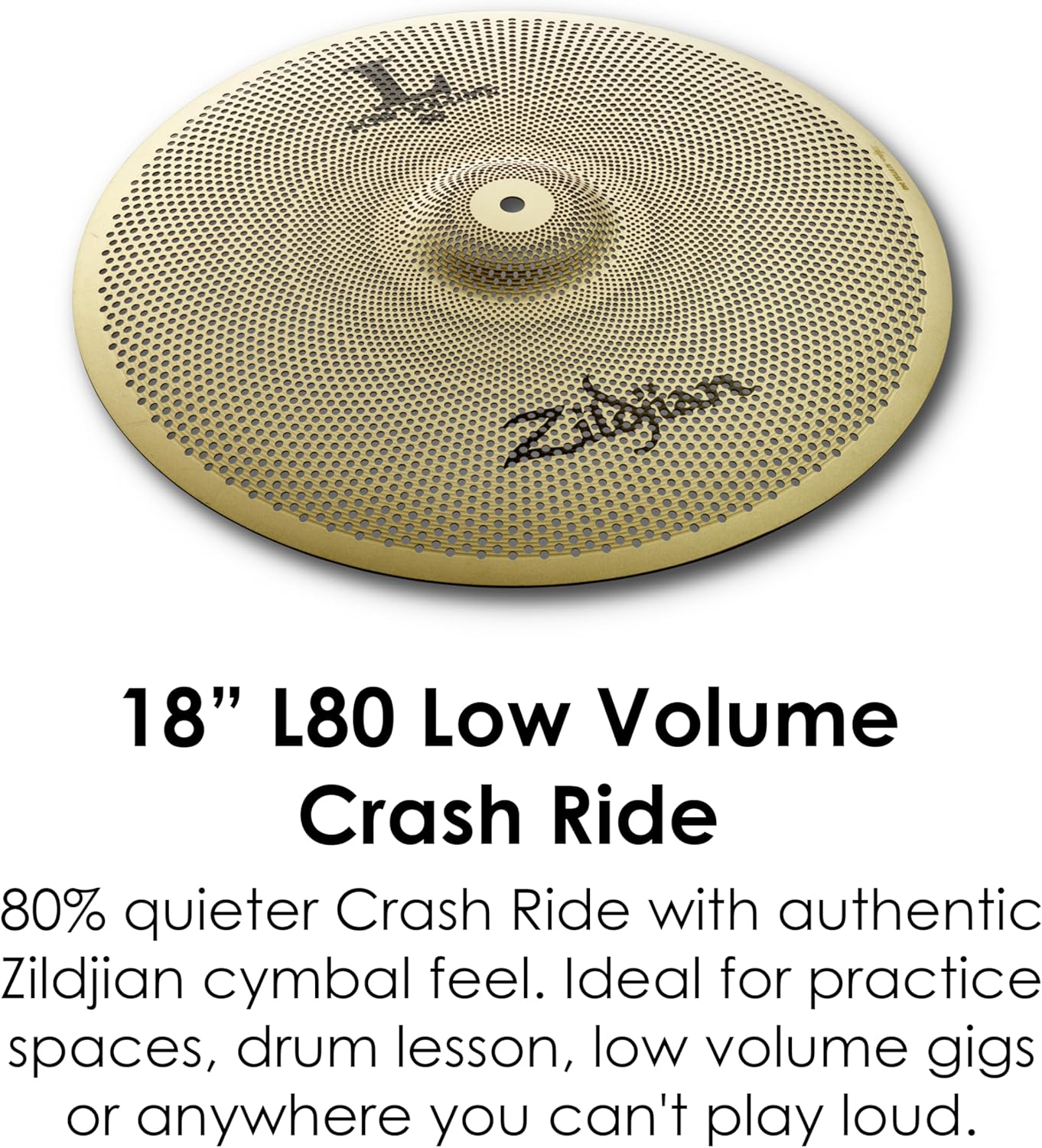
Figure 5: The 18" L80 Low Volume Crash Ride cymbal, providing versatility as both a crash and a ride with significantly reduced sound output.
Setup
The Zildjian L80 Low Volume Cymbals are designed to be mounted on standard cymbal stands and hi-hat stands.
Mounting Hi-Hats
- Place the bottom 13" Hi-Hat cymbal onto the hi-hat stand's clutch seat, ensuring it rests flat.
- Attach the top 13" Hi-Hat cymbal to the hi-hat clutch mechanism. Adjust the clutch to allow for proper opening and closing of the hi-hats.
- Secure the hi-hat clutch to the hi-hat rod, setting the desired height and angle for comfortable playing.
Mounting Crash and Crash Ride Cymbals
- Place the 14" Crash and 18" Crash Ride cymbals onto individual cymbal stands.
- Ensure that the cymbal sleeves are present on the stand's post to protect the cymbal's center hole.
- Use felt washers above and below the cymbal to prevent metal-on-metal contact and allow the cymbal to vibrate freely.
- Secure the cymbal with a wing nut, tightening it just enough to keep the cymbal in place without restricting its movement. Over-tightening can damage the cymbal.
Operating
Zildjian L80 Low Volume Cymbals are played using standard drumsticks, brushes, or mallets, similar to traditional cymbals. Their unique perforated design significantly reduces acoustic volume while maintaining the feel and response of a traditional cymbal.
Playing Techniques
- Hi-Hats: Utilize various techniques such as closed, open, foot chick, and splash to explore the full range of sounds. The L80 Hi-Hats offer clear articulation for intricate patterns.
- Crash: Strike the 14" Crash cymbal with a glancing blow to produce a quick, controlled accent. The reduced volume makes it suitable for smaller spaces.
- Crash Ride: The 18" Crash Ride can function as both a ride cymbal for rhythmic patterns and a crash cymbal for accents. Experiment with different stick placements (bow, bell, edge) to discover its tonal variations.
Volume Control
While inherently quiet, the volume can still be influenced by playing dynamics. Practice controlling your stick force to achieve desired volume levels for different musical contexts.
Maintenance
Proper maintenance ensures the longevity and optimal performance of your Zildjian L80 Low Volume Cymbals.
Cleaning
- Wipe cymbals regularly with a soft, dry cloth to remove fingerprints, dust, and light smudges.
- For more stubborn marks, use a damp cloth with a small amount of mild soap and water. Immediately dry the cymbal thoroughly after cleaning to prevent water spots or oxidation.
- Avoid abrasive cleaners, polishes, or solvents, as these can damage the matte finish and the unique perforations.
Storage
- Store cymbals in a cymbal bag or case when not in use to protect them from dust, scratches, and environmental changes.
- Avoid storing cymbals in extreme temperatures or humidity, which can affect their material integrity.
Inspection
- Periodically inspect cymbals for any signs of wear, such as cracks around the bell hole or along the edge. While L80 cymbals are durable, excessive force or improper mounting can lead to damage.
- Ensure all mounting hardware (sleeves, felts, wing nuts) is in good condition to prevent damage to the cymbals.
Troubleshooting
This section addresses common issues you might encounter with your Zildjian L80 Low Volume Cymbals.
Common Issues and Solutions
| Issue | Possible Cause | Solution |
|---|---|---|
| Unusual or rattling sound | Loose mounting hardware; debris in perforations. | Check that wing nuts are snug (but not overtightened) and felts are properly seated. Inspect perforations for any foreign objects and remove them carefully. |
| Cymbal not sustaining properly | Over-tightened wing nut; worn felts or sleeves. | Loosen the wing nut slightly to allow the cymbal to vibrate. Replace worn cymbal sleeves and felts to ensure proper movement. |
| Excessive stick wear | Aggressive playing; using sticks with sharp tips. | Adjust playing technique to reduce impact force. Consider using nylon-tipped sticks, which may show less wear than wood-tipped sticks on perforated cymbals. |
Specifications
| Attribute | Detail |
|---|---|
| Model Name | LV348 |
| Included Components | 13" HiHats, 14" Crash, 18" Crash Ride |
| Material | Bronze |
| Finish Type | Matte |
| Color | Metallic Silver |
| Item Weight | 7.94 pounds (3.61 Kilograms) |
| Product Dimensions (L x W x H) | 20.47 x 20.08 x 1.97 inches |
| Manufacturer | Avedis Zildjian Company |
| UPC | 642388314418 |
Warranty and Support
For information regarding product warranty, please refer to the official Zildjian website or contact Zildjian customer support directly.
Zildjian Official Website: zildjian.com
Customer Support: Please consult the Zildjian website for contact information, including phone numbers and email addresses for technical support and service inquiries.

