
1. Introduction
This manual provides essential information for the safe and effective use of your ANSMANN 9V 300mAh NiMH rechargeable batteries. These batteries are designed for devices requiring high power consumption and feature a low self-discharge rate, making them suitable for a wide range of applications.
Key features include:
- Low Self-Discharge: Retains approximately 80% of its initial capacity after one year, significantly reducing the need for frequent recharging.
- High Cycle Stability: Can be recharged up to 1000 times, offering a long operational lifespan.
- Pre-Charged: Ready for immediate use upon purchase.
- Wide Temperature Range: Operates effectively in temperatures from -20°C to +50°C.
- No Memory Effect: Can be charged at any time without reducing capacity.
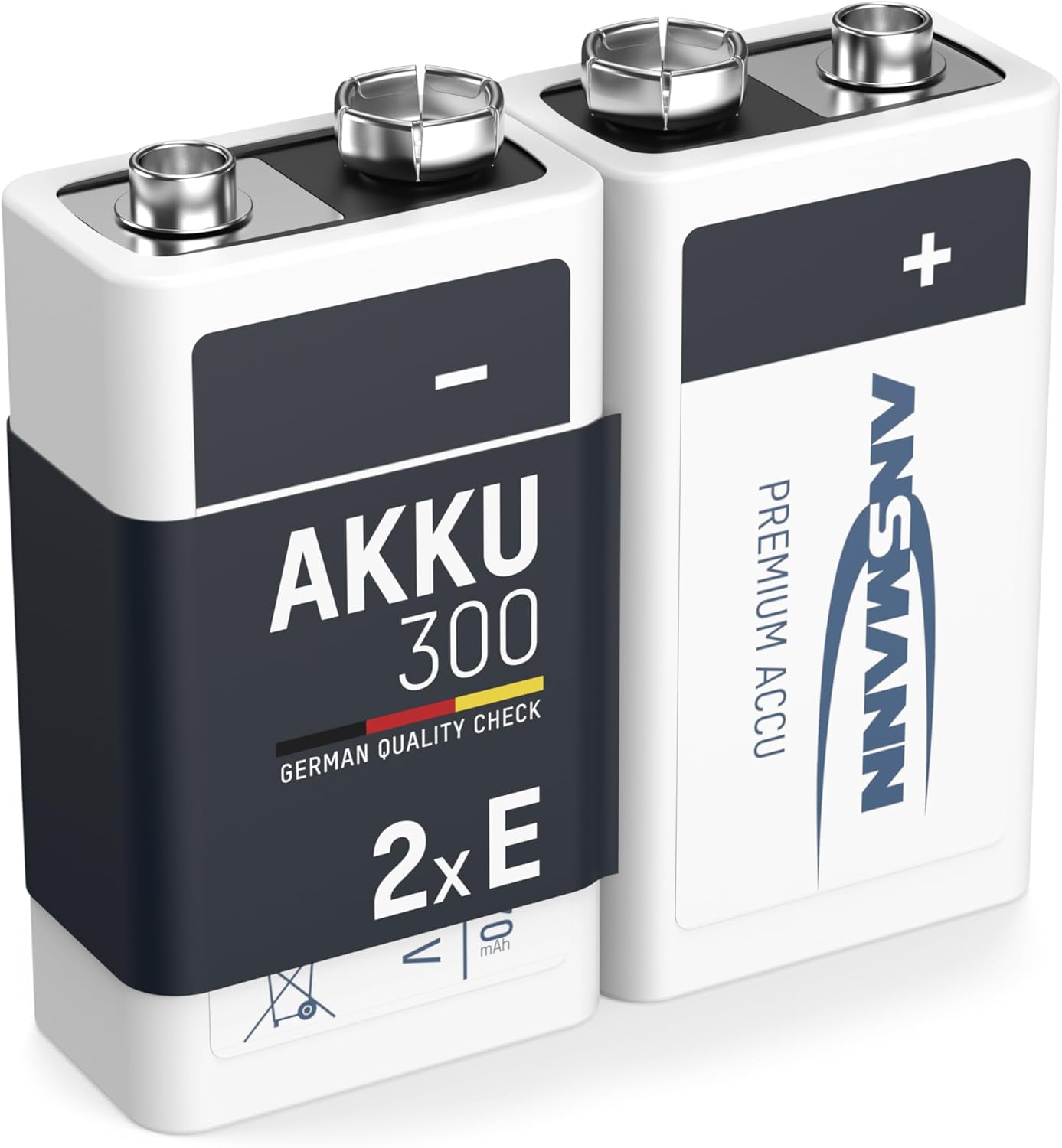
This image displays two ANSMANN 9V 300mAh NiMH rechargeable batteries, highlighting their design and key branding.
2. Setup
2.1 Initial Use
ANSMANN maxE 9V rechargeable batteries are supplied pre-charged and are ready for immediate use. However, for optimal performance and to ensure full capacity, it is recommended to fully charge the batteries before their first extended use.
2.2 Charging
Use a compatible NiMH battery charger designed for 9V batteries. Ensure the charger is appropriate for the battery's chemistry (NiMH) and voltage (8.4V nominal). Follow the instructions provided with your battery charger for safe and effective charging.
- Insert the batteries into the charger, observing correct polarity (+/-).
- Connect the charger to a power source.
- Charging times will vary depending on the charger model and the battery's state of charge.
- The batteries can be charged with a high charging current, allowing for relatively short charging times.
3. Operating Instructions
3.1 Device Compatibility
These 9V NiMH rechargeable batteries are suitable for a wide range of electronic devices that typically use disposable 9V alkaline batteries. Common applications include:
- Remote controls
- Toys and modeling equipment
- Wireless microphones and audio equipment
- Smoke detectors and alarms
- Medical equipment
- Flashlights and portable lighting
- Test and measurement devices (e.g., multimeters)

This image showcases the versatility of ANSMANN 9V batteries, demonstrating their suitability for a range of everyday electronic devices including toys, camera flash units, and wireless computer mice.
3.2 Insertion into Devices
Always ensure correct polarity when inserting batteries into a device. Match the positive (+) and negative (-) terminals of the battery with the corresponding markings in the device's battery compartment. Incorrect insertion can damage both the battery and the device.
4. Maintenance and Care
4.1 Charging Practices
- Recharge batteries when they show signs of depletion to maintain optimal performance.
- Avoid overcharging by using a smart charger that automatically stops charging when batteries are full.
- Due to the minimal memory effect of NiMH technology, batteries can be recharged even if not fully discharged.
4.2 Storage
Store batteries in a cool, dry place away from direct sunlight and extreme temperatures. For long-term storage, it is advisable to store them with a partial charge (around 50%). The low self-discharge characteristic of these batteries ensures they retain charge well during storage.
4.3 Safety Guidelines
Observe the following safety guidelines to prevent damage or injury:
- Do not short-circuit the battery terminals.
- Do not expose batteries to fire or extreme heat.
- Do not disassemble, crush, or puncture batteries.
- Do not mix new and old batteries, or batteries of different types or brands.
- Keep batteries out of reach of children.
- Dispose of depleted batteries according to local regulations for rechargeable batteries.

This image displays a series of universal safety icons related to rechargeable batteries. These icons typically warn against improper handling such as disassembling, short-circuiting, exposing to fire, mixing with other battery types, or disposing of in regular waste.
5. Troubleshooting
5.1 Battery Not Charging
- Check Charger: Ensure the charger is functioning correctly and is compatible with NiMH 9V batteries.
- Check Connections: Verify that the batteries are inserted correctly into the charger with proper polarity.
- Battery Condition: If a battery has been deeply discharged for an extended period, some chargers may struggle to initiate charging. Try a refresh or recondition cycle if your charger has this feature.
5.2 Reduced Operating Time
- Full Charge: Ensure batteries are fully charged before use.
- Device Power Consumption: Some devices consume more power than others. Operating time will vary significantly based on the device.
- Battery Age: Over time and after many charge cycles, the capacity of rechargeable batteries can gradually decrease.
- Temperature: Extreme cold can temporarily reduce battery performance and capacity.

This image visually represents the ANSMANN 9V battery's ability to perform reliably across a wide temperature range, from -20°C to +50°C, ensuring consistent power in various environmental conditions.
5.3 Corrosion on Battery Terminals
- Clean Terminals: If minor corrosion is present, gently clean the battery terminals and device contacts with a dry cloth or a cotton swab dipped in rubbing alcohol.
- Proper Storage: Ensure batteries are stored in a dry environment. Avoid storing them in humid conditions or in devices for very long periods without use, especially if the device is prone to moisture.
- Discontinue Use: If corrosion is significant or appears to be leaking, discontinue use and dispose of the battery safely.
6. Specifications
| Feature | Detail |
|---|---|
| Battery Type | NiMH Rechargeable |
| Nominal Voltage | 8.4V |
| Capacity (Minimum) | 270 mAh |
| Cell Size | 9V Block (E-Type) |
| Maximum Charge Cycles | Up to 1000 |
| Low Self-Discharge | Yes (approx. 80% capacity after 1 year) |
| Memory Effect | Minimal to None |
| Operating Temperature | -20°C to +50°C |
| Product Dimensions | 3.27 x 0.67 x 4.84 inches (approx. 26.5 x 17.5 x 48.5 mm) |
| Item Weight | 1.83 ounces per battery |
| Model Number | 5035453-590-1 |

This image illustrates the physical size of the ANSMANN 9V battery in comparison to other common battery types (AAA, AA, C, D), providing its dimensions as 26.5 x 17.5 x 48.5 mm.
7. Warranty and Support
7.1 Manufacturer Warranty
ANSMANN offers a 2-year Manufacturer Warranty for these rechargeable batteries. This warranty covers defects in materials and workmanship under normal use. Please retain your proof of purchase for warranty claims.
7.2 Customer Support
For technical assistance, warranty claims, or further inquiries, please contact ANSMANN customer support through their official website or the retailer from whom the product was purchased. Provide your product model number (5035453-590-1) and details of your issue for efficient support.
You can visit the official Ansmann store for more information: Ansmann Store