Introduction
This manual provides essential information for the safe and effective operation, maintenance, and troubleshooting of your Skil 9071 7-inch 1300W Variable Speed Polisher. Please read these instructions carefully before using the tool and keep them for future reference. Proper use and care will ensure optimal performance and extend the life of your polisher.

Image: The Skil 9071 polisher, a powerful tool designed for various polishing applications.
General Safety Instructions
Always follow basic safety precautions when using electric tools to reduce the risk of fire, electric shock, and personal injury. Keep this manual handy for reference.
Work Area Safety
- Keep the work area clean and well-lit. Cluttered or dark areas invite accidents.
- Do not operate power tools in explosive atmospheres, such as in the presence of flammable liquids, gases, or dust. Power tools create sparks which may ignite the dust or fumes.
- Keep children and bystanders away while operating a power tool. Distractions can cause you to lose control.
Electrical Safety
- Power tool plugs must match the outlet. Never modify the plug in any way.
- Avoid body contact with earthed or grounded surfaces, such as pipes, radiators, ranges, and refrigerators. There is an increased risk of electric shock if your body is earthed or grounded.
- Do not expose power tools to rain or wet conditions. Water entering a power tool will increase the risk of electric shock.
- Do not abuse the cord. Never use the cord for carrying, pulling, or unplugging the power tool. Keep cord away from heat, oil, sharp edges, or moving parts. Damaged or entangled cords increase the risk of electric shock.
Personal Safety
- Stay alert, watch what you are doing, and use common sense when operating a power tool. Do not use a power tool while you are tired or under the influence of drugs, alcohol, or medication.
- Use personal protective equipment. Always wear eye protection. Protective equipment such as dust masks, non-skid safety shoes, hard hats, or hearing protection used for appropriate conditions will reduce personal injuries.
- Prevent unintentional starting. Ensure the switch is in the off-position before connecting to power source, picking up, or carrying the tool.
- Remove any adjusting key or wrench before turning the power tool on. A wrench or a key left attached to a rotating part of the power tool may result in personal injury.
- Dress properly. Do not wear loose clothing or jewelry. Keep your hair and clothing away from moving parts. Loose clothes, jewelry, or long hair can be caught in moving parts.
Package Contents
Verify that all items listed below are included in your package. If any parts are missing or damaged, contact your retailer.
- Skil 9071 Angle Polisher
- D-Auxiliary Handle
- Auxiliary Handle (Side Handle)
- Wool Bonnet
- Rubber Disc (Backing Pad)
- Hex Wrench
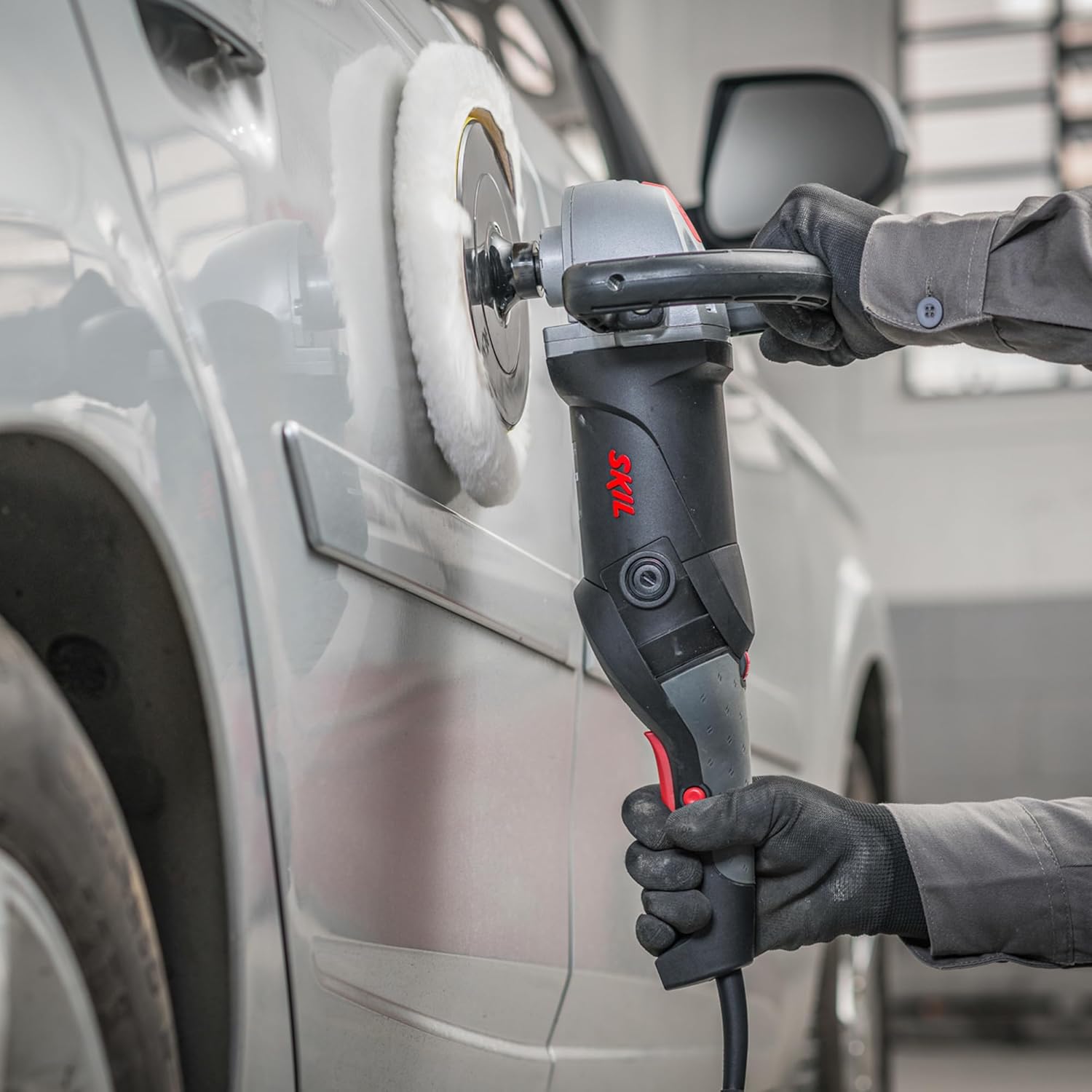
Image: The Skil 9071 polisher shown with its D-handle, rubber disc, wool bonnet, and hex wrench.
Setup
Before operating the polisher, ensure it is properly assembled and all accessories are securely attached.
1. Attaching the Auxiliary Handle
- Identify the D-Auxiliary Handle and the mounting points on the polisher body.
- Align the handle with the screw holes on the polisher.
- Use the provided screws and hex wrench to securely fasten the handle. Ensure it is tight and does not wobble.

Image: The D-handle securely attached to the polisher, providing enhanced grip and control.
2. Attaching the Rubber Disc and Wool Bonnet
- Ensure the polisher is unplugged from the power source.
- Attach the rubber disc (backing pad) to the polisher spindle. It typically screws on or uses a quick-release mechanism.
- Place the wool bonnet over the rubber disc, ensuring it is centered and securely held, usually by an elastic band or hook-and-loop fastening.

Image: A wool bonnet attached to the polisher's backing pad, ready for use.
Operating Instructions
Familiarize yourself with the polisher's controls and features before beginning any work.
1. Powering On/Off
- To turn the polisher ON, press and hold the main trigger switch.
- To turn the polisher OFF, release the trigger switch.
- For continuous operation, press the trigger switch and then engage the lock-on button (if present) to keep the tool running without holding the trigger. To disengage, press the trigger again.
2. Variable Speed Control
- The Skil 9071 features 6 variable speed levels, ranging from 600 to 3000 RPM.
- Adjust the speed dial according to the material being polished and the desired finish. Lower speeds are generally used for spreading compounds and finishing, while higher speeds are for cutting and correcting.
3. Soft Start System
- The polisher is equipped with a soft start system, which gradually increases the speed upon startup. This reduces torque reaction and provides smoother control, preventing splashes of polishing compound.
4. Polishing Techniques
- Apply a small amount of polishing compound directly to the surface or the bonnet.
- Start the polisher at a low speed before making contact with the surface to spread the compound evenly.
- Maintain even pressure and move the polisher in overlapping passes. Avoid excessive pressure, which can cause swirl marks or burn the surface.
- Regularly check the surface for desired results and adjust speed as needed.

Image: The Skil polisher in action, being used to polish a vehicle surface.
Maintenance
Regular maintenance ensures the longevity and safe operation of your polisher.
1. Cleaning
- Always unplug the tool before cleaning.
- Clean the tool's ventilation openings regularly to prevent dust buildup, which can lead to overheating. Use a soft brush or compressed air.
- Wipe the exterior of the tool with a soft, damp cloth. Do not use harsh chemicals or abrasive cleaners.
- Clean polishing bonnets and pads thoroughly after each use according to their specific cleaning instructions.
2. Storage
- Store the polisher in a dry, secure location out of reach of children.
- Protect the power cord from damage during storage.
Troubleshooting
This section addresses common issues you might encounter with your polisher.
| Problem | Possible Cause | Solution |
|---|---|---|
| Polisher does not start. | No power supply; damaged cord; faulty switch. | Check power outlet and cord. Ensure switch is fully engaged. If problem persists, seek professional service. |
| Excessive vibration or noise. | Loose accessories; damaged backing pad or bonnet; internal component issue. | Ensure all accessories are securely attached. Inspect backing pad and bonnet for damage and replace if necessary. If internal, seek professional service. |
| Tool overheats. | Blocked ventilation openings; continuous heavy use; motor overload. | Clean ventilation openings. Allow tool to cool down. Reduce load or duration of use. |
| Poor polishing results (e.g., swirl marks). | Incorrect speed setting; improper technique; worn or dirty bonnet/pad; incorrect compound. | Adjust speed. Review polishing techniques. Clean or replace bonnet/pad. Use appropriate polishing compound. |
Specifications
| Brand | Skil |
| Model Number | F0129071AA |
| Power Source | Corded Electric |
| Maximum Power | 1300 Watts |
| Voltage | 127 Volts |
| Amperage | 5.9 Amperes (Capacity: 10.2 Amperes) |
| Speed | 600 - 3000 RPM (Variable Speed) |
| Disc Size | 7 inches (180mm) |
| Product Weight | 3.27 Kilograms |
| Cable Length | 200 Centimeters |
| Dimensions (L x W x H) | 46 x 8.5 x 15.5 cm |
| Material | Elastomer, Metal, Polyamide |
| Color | Black/Grey |
| Special Features | Soft Start System, Wide Trigger, 6 Variable Speed Levels |
Warranty and Support
For warranty information, technical support, or service inquiries, please refer to the warranty card included with your product or visit the official Skil website. Keep your purchase receipt as proof of purchase for warranty claims.
Manufacturer: Bosch


