
Bosch 66106
BOSCH 66106 Original Equipment Fuel Pump Module Assembly
Instruction Manual
Introduction
This manual provides essential information for the proper installation, operation, and maintenance of your Bosch 66106 Original Equipment Fuel Pump Module Assembly. Designed to meet original equipment specifications, this fuel pump ensures optimal performance and reliability for your vehicle's fuel system.
The Bosch 66106 features innovative Turbine Pump technology, which significantly reduces fuel pulsation, noise, and common hot-start issues. It is engineered for durability, operating effectively in extreme temperatures and low fuel conditions.
Safety Information
WARNING: This product contains chemicals known to the State of California to cause cancer and birth defects or other reproductive harm. Always handle with care and follow all safety guidelines.
- Always disconnect the vehicle's battery before beginning any work on the fuel system.
- Ensure adequate ventilation when working with fuel.
- Wear appropriate personal protective equipment, including safety glasses and gloves.
- Keep open flames, sparks, and other ignition sources away from the work area.
- Refer to your vehicle's service manual for specific procedures and torque specifications.
- Fuel system components are under pressure; relieve pressure before disconnecting lines.
Product Overview
The Bosch 66106 Fuel Pump Module Assembly is a complete unit designed for direct replacement in compatible vehicles. It includes the fuel pump, fuel level sender, and necessary connections, ensuring a comprehensive solution for fuel delivery.

Figure 1: Front view of the Bosch 66106 Fuel Pump Module Assembly, showing the main pump housing, fuel level float arm, and electrical connections.

Figure 2: Side view of the Bosch 66106 Fuel Pump Module Assembly, highlighting the integrated fuel strainer at the bottom of the unit.
Installation Instructions
The Bosch 66106 Fuel Pump Module Assembly is designed for straightforward installation. However, due to the complexity of automotive fuel systems, professional installation is recommended if you are not experienced with such repairs.
- Preparation: Park the vehicle on a level surface and engage the parking brake. Disconnect the negative terminal of the battery. Relieve fuel system pressure according to your vehicle's service manual.
- Access: Locate and access the fuel pump module. This typically involves removing the rear seat or accessing it from underneath the vehicle, depending on the make and model.
- Removal of Old Unit: Disconnect electrical connectors and fuel lines from the old fuel pump module. Carefully remove the retaining ring or bolts securing the module. Extract the old fuel pump module from the fuel tank.
- Inspection: Inspect the fuel tank for any debris or contamination. Clean if necessary.
- Installation of New Unit: Ensure the new fuel strainer (included) is properly attached to the Bosch 66106 module. Carefully insert the new fuel pump module into the fuel tank, ensuring the float arm moves freely.
- Securement: Secure the module with the retaining ring or bolts, tightening to the manufacturer's specified torque.
- Connections: Reconnect fuel lines and electrical connectors. Ensure all connections are secure and free of leaks.
- Final Steps: Reconnect the vehicle's battery. Turn the ignition to the "ON" position (without starting the engine) several times to prime the fuel system. Check for any fuel leaks. Start the engine and verify proper operation.
Note: The included fuel strainer is crucial for preventing dirt and debris from entering the pump, which is a primary cause of premature pump failure. Always use the new strainer provided.
Operating Principles
The Bosch 66106 Fuel Pump Module Assembly utilizes advanced Turbine Pump technology to deliver fuel efficiently and quietly. This design offers several advantages over older pump types:
- Reduced Pulsation: The turbine design minimizes fuel pressure fluctuations, leading to smoother engine operation.
- Quiet Operation: The innovative design virtually eliminates the noise often associated with fuel pumps.
- Improved Hot-Start Performance: Enhanced design prevents issues that can arise during hot engine starts.
- Durability: Engineered to withstand extreme temperatures and maintain performance even under low fuel conditions, extending service life.
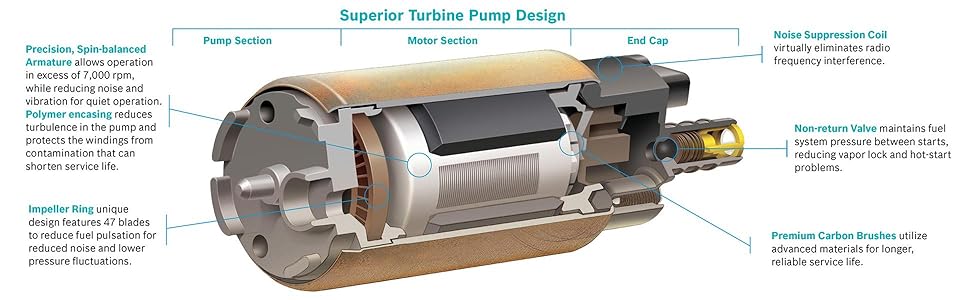
Figure 3: Cross-sectional diagram illustrating the internal components and superior design of the Bosch Turbine Pump, highlighting features like the precision, spin-balanced armature, polymer encasing, non-return valve, impeller ring, and premium carbon brushes for optimal performance and longevity.
Maintenance
The Bosch 66106 Fuel Pump Module Assembly is designed for long-term, reliable operation with minimal maintenance. The most critical aspect of maintaining its performance is ensuring a clean fuel supply.
- Fuel Strainer: The integrated fuel strainer is designed to protect the pump from contaminants. It is recommended to replace the fuel strainer whenever the fuel pump is replaced.
- Fuel Filter: Regularly check and replace your vehicle's in-line fuel filter according to the vehicle manufacturer's recommendations. A clogged fuel filter can put undue strain on the fuel pump.
- Fuel Quality: Use high-quality fuel to minimize sediment and contaminants in the fuel tank.
- Avoid Running on Low Fuel: Consistently running the vehicle with very low fuel levels can expose the fuel pump to air and increase its operating temperature, potentially shortening its lifespan.
Troubleshooting
If you experience issues with your vehicle's fuel system after installing the Bosch 66106, consider the following common troubleshooting steps:
- Engine Cranks but Won't Start:
- Check for proper electrical connection to the fuel pump.
- Verify that the fuel pump fuse or relay is functional.
- Ensure there is fuel in the tank.
- Listen for the fuel pump priming sound when the ignition is turned to "ON."
- Engine Stalling or Poor Performance:
- Inspect fuel lines for kinks or obstructions.
- Check for proper fuel pressure using a fuel pressure gauge.
- Ensure the fuel filter is not clogged.
- Fuel Leaks:
- Re-check all fuel line connections and the sealing O-ring/gasket for the fuel pump module.
- Ensure the retaining ring or bolts are properly tightened.
If troubleshooting steps do not resolve the issue, it is recommended to consult a qualified automotive technician.
Specifications
| Brand | Bosch |
| Model Number | 66106 |
| Fit Type | Vehicle Specific Fit |
| Vehicle Service Type | Truck |
| Item Dimensions (L x W x H) | 18.27 x 10.28 x 10.63 inches |
| Material | Metal |
| Item Weight | 4 Pounds |
| Style | Gerotor (referring to pump type) |
| Specification Met | OE (Original Equipment) |
| Auto Part Position | Rear |
| Gas Type | Gasoline |
| Operation Mode | Mechanical |
| UPC | 077212172290 |
| OEM Part Number | 68030875AD |
Warranty and Support
Bosch Original Equipment Fuel Pumps are rigorously "end-of-line" function tested to ensure the highest quality and performance. Bosch stands behind its products with a Limited Lifetime Warranty, reflecting confidence in their durability and reliability.
For technical assistance, warranty claims, or further information, please visit the official Bosch Automotive website or contact their customer support. Always provide your product model number (66106) and any relevant purchase details when seeking support.
You can find more information and support resources at the Bosch Store on Amazon.
Ask a question about this manual
Ask about setup, troubleshooting, compatibility, parts, safety, or missing instructions. Manuals+ will review the question and use this page’s manual context to help answer it.