1. Introduction
This manual provides comprehensive instructions for the Monoprice MS-WN513N2 Wireless N300 4-Port Broadband Router. This device is designed to provide a high-speed wireless network connection for your home or small office, offering reliable internet access and advanced security features. Please read this manual thoroughly before operating the device.
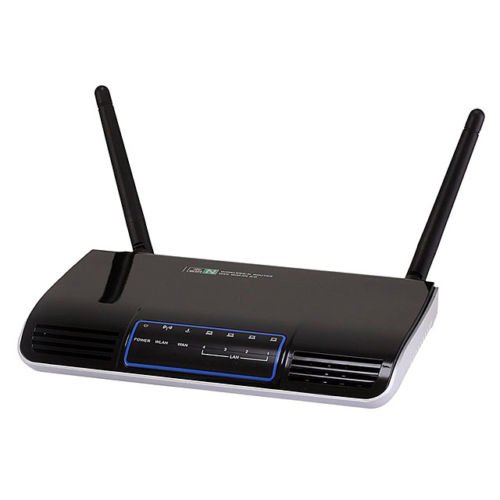
Image 1.1: Front view of the Monoprice MS-WN513N2 Wireless N300 Router. The router is black with indicator lights on the front panel.
2. Features
The Monoprice MS-WN513N2 router offers a range of features to enhance your network experience:
- Wireless N300 Performance: Complies with 802.11b/g/n standards, offering wireless transmission speeds up to 300 Mbps.
- 4-Port Broadband Router: Includes four (4) LAN ports for wired connections.
- Advanced Security: Supports 64-bit/128-bit WEP, WPA/WPA2, and WPA-PSK/WPA2-PSK authentication.
- IPv6 Support: Compatible with Internet Protocol Version 6.
- Quality of Service (QoS): Bandwidth control for prioritizing network traffic.
- WPS (Wi-Fi Protected Setup): Simplifies wireless security configuration.
- Multiple Operating Modes: Can be configured as a Gateway, Wireless Bridge, or Wireless ISP (WISP).
- Dynamic DNS (DDNS): Supports dynamic domain name system configuration.
- UPnP Support: Universal Plug and Play for easy device discovery.
- Firewall: Integrated firewall for network protection.
- Automatic MDI/MDIX: Automatic cable detection for Ethernet ports.
3. Package Contents
Please verify that all items are present in your package:
- Monoprice MS-WN513N2 Wireless N300 Router
- Power Adapter (DC 5V)
- Ethernet Cable
- Quick Installation Guide (if included)
4. Physical Overview
4.1 Front Panel Indicators
The front panel features LED indicators that provide status information:
- Power LED: Indicates if the router is powered on.
- WAN LED: Indicates connection status to the internet.
- LAN LEDs (1-4): Indicate activity on the respective wired LAN ports.
- WLAN LED: Indicates wireless network activity.
4.2 Rear Panel Ports and Buttons
The rear panel contains all physical connection points:
- DC 5V Power Port: Connects to the included power adapter.
- WAN Port: Connects to your modem or internet service provider's network.
- LAN Ports (1-4): Connect to wired devices such as computers, gaming consoles, or switches.
- WPS Button: Initiates Wi-Fi Protected Setup for easy wireless connection.
- Reset Hole: Used to restore the router to factory default settings. Insert a paperclip and hold for 5-10 seconds.
- Antenna Ports: Two (2) ports for connecting the external antennas.
5. Setup
5.1 Hardware Connection
- Connect Antennas: Screw the two external antennas onto the antenna ports on the rear panel.
- Connect Modem: Connect one end of an Ethernet cable to your modem's LAN port and the other end to the WAN port of the router.
- Connect Power: Connect the power adapter to the router's DC 5V Power Port and plug the adapter into a power outlet.
- Power On: Wait for the router to power on. The Power LED should illuminate. Allow a few minutes for the router to boot up and establish a connection.
- Connect Computer (Optional): For initial configuration, it is recommended to connect a computer directly to one of the router's LAN ports using an Ethernet cable.
5.2 Initial Configuration (Web Interface)
- Access Router: Open a web browser on a connected computer. In the address bar, type the router's default IP address (commonly
192.168.1.1or192.168.0.1) and press Enter. Refer to the label on the bottom of your router for the exact IP address and default login credentials. - Login: Enter the default username and password (e.g.,
adminfor both). - Run Setup Wizard: The router's web interface will typically present a Quick Setup Wizard. Follow the on-screen prompts to configure your internet connection type (e.g., PPPoE, Dynamic IP, Static IP) and basic wireless settings (SSID, password).
- Change Default Credentials: For security, it is highly recommended to change the default login username and password for the router's web interface.
6. Operating
6.1 Wireless Network Configuration
To configure your wireless network:
- Navigate to the Wireless Settings section in the web interface.
- SSID: Change the default Wireless Network Name (SSID) to a unique name.
- Security Mode: Select WPA2-PSK as the recommended security mode.
- Password: Set a strong, unique password (at least 8 characters, including letters, numbers, and symbols).
- Channel: The router can automatically select the best 2.4 GHz channel. You can also manually select a fixed channel (e.g., 1, 6, or 11) to avoid interference.
- Save your changes.
6.2 Security Settings
The router provides various security features:
- Firewall: The built-in firewall helps protect your network from external threats. Ensure it is enabled.
- MAC Filtering: You can restrict network access to specific devices based on their MAC addresses.
- Parental Control: Some routers offer features to block specific websites or limit internet access times for certain devices.
- WPS: Use the WPS button for quick, secure connections with WPS-compatible devices.
6.3 Advanced Features
Explore the advanced settings in the web interface for more control:
- Quality of Service (QoS): Prioritize bandwidth for applications like gaming or video streaming.
- Port Forwarding: Configure specific ports to allow external access to devices on your local network (e.g., for gaming servers).
- Dynamic DNS (DDNS): If you have a dynamic public IP address, DDNS allows you to access your network using a consistent domain name.
- IPv6: Configure IPv6 settings if your ISP supports it.
- Operation Mode: Change the router's mode to Wireless Bridge or WISP if needed for specific network setups.
7. Maintenance
7.1 Firmware Updates
Periodically check the Monoprice website for firmware updates. Firmware updates can improve performance, add new features, and fix security vulnerabilities. Follow the instructions provided with the firmware update carefully to avoid damaging the device.
7.2 Resetting the Router
If you forget your login password or experience persistent issues, you can restore the router to its factory default settings:
- With the router powered on, locate the Reset Hole on the rear panel.
- Use a paperclip or a thin, pointed object to press and hold the reset button inside the hole for approximately 5-10 seconds.
- Release the button when the router's LEDs flash or restart.
- The router will reboot with factory default settings. You will need to reconfigure it using the web interface.
8. Troubleshooting
Here are solutions to common issues:
- No Internet Access:
- Check if the WAN LED is lit. If not, ensure the Ethernet cable from the modem is securely connected to the router's WAN port.
- Restart your modem and router.
- Verify your internet connection settings in the router's web interface.
- Cannot Access Web Interface:
- Ensure your computer is connected to the router via Ethernet or Wi-Fi.
- Verify the router's IP address. Try
192.168.1.1or192.168.0.1. - Clear your browser's cache or try a different browser.
- If you forgot the password, perform a factory reset.
- Slow Wireless Speed:
- Ensure your devices support 802.11n for optimal speeds.
- Check for interference from other 2.4 GHz devices (cordless phones, microwaves). Try changing the wireless channel.
- Ensure the router is centrally located and not obstructed.
- Update your device's wireless adapter drivers.
- Wireless Connection Drops:
- Check for signal strength and interference.
- Ensure the router's firmware is up to date.
- Verify that the wireless security settings are correctly configured.
9. Specifications
| Feature | Specification |
|---|---|
| Model | MS-WN513N2 |
| Wireless Standards | IEEE 802.11n (Draft 2.0), IEEE 802.11g, IEEE 802.11b |
| Wireless Signal Rates (802.11n) | Up to 300 Mbps (270, 243, 216, 162, 135, 130, 108, 81, 65, 54, 40.5, 27, 13.5 Mbps) |
| Wireless Signal Rates (802.11g) | 54, 48, 36, 24, 18, 12, 9, 6 Mbps |
| Wireless Signal Rates (802.11b) | 11, 5.5, 2, 1 Mbps |
| Frequency Range | 2.4 - 2.4835 GHz |
| Wireless Transmit Power | Up to 20 dBm |
| Modulation Technology | DBPSK, DQPSK, CCK, OFDM, 16-QAM, 64-QAM |
| Ports | 4x LAN Ports, 1x WAN Port, 2x Antenna Ports, 1x DC 5V Power Port |
| Buttons | WPS Button, Reset Hole |
| Security | 64/128-bit WEP, WPA/WPA2, WPA-PSK/WPA2-PSK |
| Power Supply | DC 5V |
| Supported Protocols | IPv6, PPPoE |
10. Warranty and Support
For warranty information and technical support, please refer to the official Monoprice website or contact Monoprice customer service directly. Keep your purchase receipt for warranty claims.
Monoprice Website: www.monoprice.com


