1. Introduction
This document serves as a comprehensive operating and parts manual for the Niagara Shear Series 1, covering models 12, 13, 14, 15, 16, 18, 110, 1R4, 1R6, 1R8, and 1R10. It provides essential information for safe operation, proper maintenance, and identification of components. For detailed diagrams and specific instructions, always refer to the original printed manual.
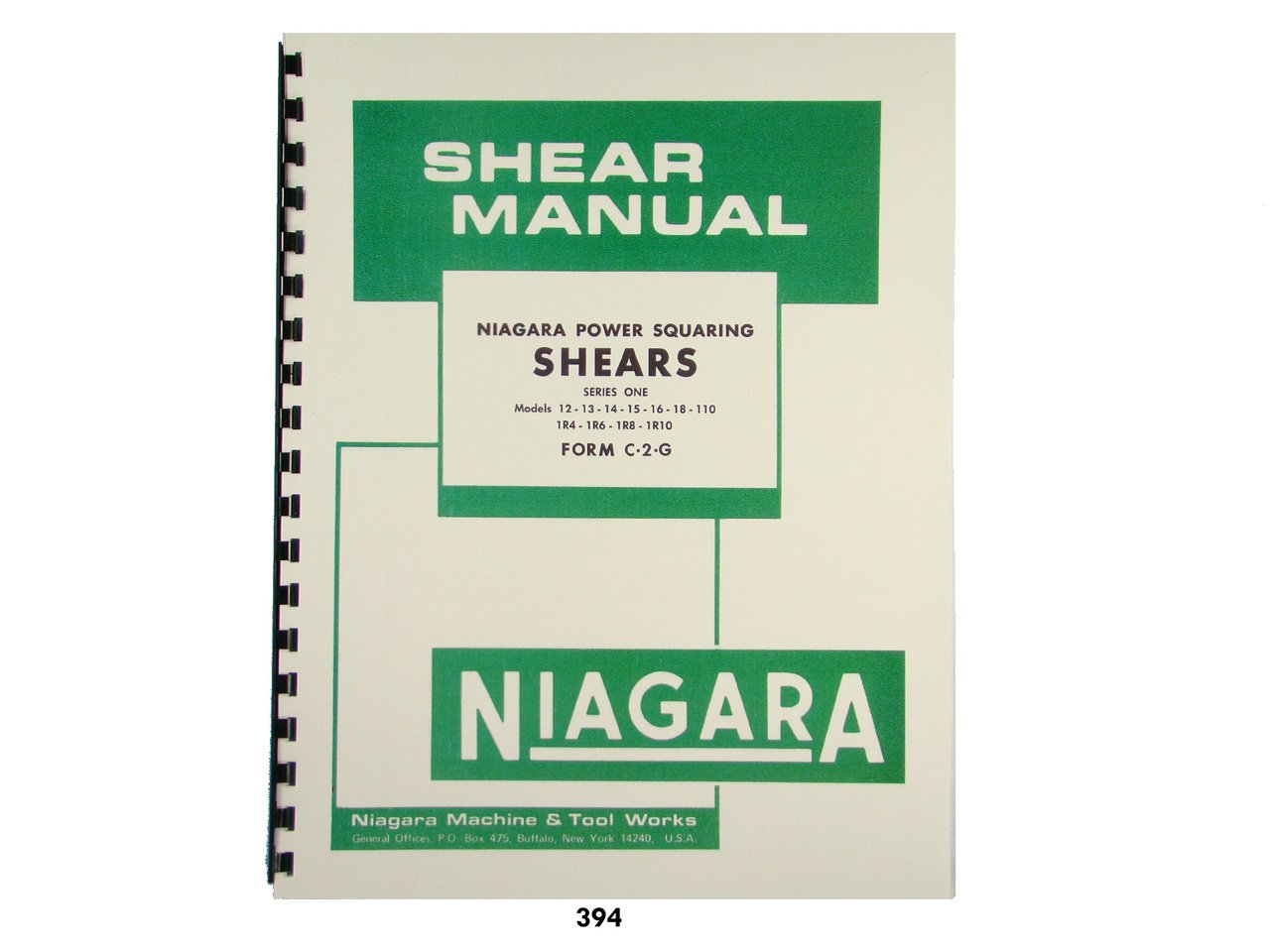
Image: Front cover of the Niagara Shear Series 1 Operating and Parts Manual, showing the title and model numbers.
2. Setup and Assembly
Proper setup and assembly are crucial for the safe and efficient operation of your Niagara Shear. Refer to the original manual for detailed diagrams and step-by-step instructions.
2.1 Unpacking
Carefully unpack all components. Inspect for any shipping damage. Ensure all parts listed in the packing manifest are present before proceeding with assembly.
2.2 Installation and Assembly
Position the shear on a stable, level surface capable of supporting its weight. Secure it according to local safety regulations and manufacturer guidelines. Assemble any detached components following the specific instructions provided in the full manual. Pay close attention to all fastening points and torque specifications to ensure structural integrity.
3. Operation
This section outlines the general operating procedures for the Niagara Shear. Always consult the complete manual for detailed instructions specific to your model and for critical safety warnings.
3.1 Safety Precautions
- Always wear appropriate personal protective equipment (PPE), including safety glasses and gloves.
- Ensure all guards are in place and functional before operation. Never bypass safety devices.
- Never operate the shear with damaged or missing parts. Report any malfunctions immediately.
- Disconnect power before performing any adjustments, maintenance, or clearing jams.
- Keep hands and clothing clear of moving parts during operation.
3.2 Basic Controls
Familiarize yourself with the main power switch, emergency stop button, and control levers or pedals. Understand their function and location before attempting to operate the machine. Test the emergency stop function periodically.
3.3 Operating Procedures
- Power On: Engage the main power switch. Observe any indicator lights.
- Material Placement: Carefully position the material to be cut, ensuring it is properly aligned against the back gauge and secured.
- Cutting Cycle: Initiate the cutting cycle using the designated control (e.g., foot pedal, hand lever). Ensure the area is clear.
- Material Removal: Once the cut is complete, safely remove the cut material and scrap.
- Power Off: Disengage the main power switch after use or before leaving the machine unattended.
4. Maintenance
Regular maintenance is essential to ensure the longevity, optimal performance, and safety of your Niagara Shear. Refer to the original manual for a complete maintenance schedule and detailed procedures.
4.1 Lubrication
Follow the lubrication schedule provided in the full manual. Use only recommended lubricants and apply them to all designated points. Proper lubrication prevents premature wear, reduces friction, and ensures smooth operation of moving parts.
4.2 Cleaning
Keep the shear clean from debris, metal shavings, and dust. Regularly clean blades, work surfaces, and surrounding areas. A clean machine operates more efficiently and safely.
4.3 Parts List and Diagrams
For detailed parts identification, exploded diagrams, and ordering information for replacement components, consult the comprehensive parts list found in the original Niagara Shear manual. This resource is critical for proper repair and maintenance.
5. Troubleshooting
This section provides general guidance for common operational issues. For complex problems, repairs, or issues not covered here, contact a qualified service technician or refer to the detailed troubleshooting guide in the original manual.
- Machine Fails to Start:
Possible Causes: No power supply, emergency stop engaged, safety interlocks not satisfied.
Solutions: Check power connection, reset emergency stop, ensure all guards are closed. - Poor Cut Quality (Ragged Edges, Burrs):
Possible Causes: Dull blades, incorrect blade gap, improper material clamping.
Solutions: Inspect blades for sharpness and replace if necessary. Adjust blade gap according to material thickness (refer to manual). Ensure material is securely clamped. - Unusual Noise or Vibration:
Possible Causes: Loose components, lack of lubrication, worn bearings or gears.
Solutions: Inspect for loose fasteners and tighten. Check lubrication points and apply lubricant. If noise persists, professional inspection may be required.
6. Specifications
The following specifications are general details related to the manual itself. For precise technical specifications pertaining to specific Niagara Shear models (12, 13, 14, 15, 16, 18, 110, 1R4, 1R6, 1R8, 1R10), please consult the original Niagara Shear manual.
| Feature | Detail |
|---|---|
| Publisher | Niagara |
| Publication Date | January 1, 1960 |
| Item Weight (Manual) | 0.01 ounces |
| ASIN | B00NGW94DI |