
NVIDIA VCQK4200-PB
NVIDIA Quadro K4200 Graphics Card User Manual
Model: VCQK4200-PB
1. Introduction
This manual provides comprehensive instructions for the installation, operation, maintenance, and troubleshooting of your NVIDIA Quadro K4200 graphics card. The Quadro K4200 is designed for professional workstations, offering high-performance 3D application capabilities and advanced display support. Please read this manual thoroughly before installing and using your graphics card.
2. Safety Information
Observe the following safety precautions to prevent damage to the product or injury to yourself:
- Always disconnect power from your computer before installing or removing any components.
- Wear an anti-static wrist strap to prevent electrostatic discharge (ESD) when handling the graphics card.
- Handle the card by its edges; avoid touching the gold connector pins or components on the board.
- Ensure proper ventilation within your computer case to prevent overheating.
- Do not expose the graphics card to moisture or extreme temperatures.
3. Package Contents
Verify that your package contains the following items:
- NVIDIA Quadro K4200 Graphics Card
- Driver CD (or link to download drivers)
- Quick Start Guide
- Display adapter cables (e.g., DVI to VGA, DisplayPort to DVI, if included)
4. Setup and Installation
4.1 Pre-installation Checklist
- Ensure your computer's power supply meets the minimum wattage requirements for the Quadro K4200.
- Confirm your motherboard has an available PCI Express 2.0 x16 slot.
- Backup important data before proceeding with hardware changes.
- Uninstall any previous graphics card drivers from your system.
4.2 Hardware Installation
- Power down your computer and disconnect all cables.
- Open your computer case.
- Locate an available PCI Express 2.0 x16 slot on your motherboard.
- Remove the metal bracket cover from the back of the computer case corresponding to the chosen slot.
- Carefully align the Quadro K4200 graphics card with the PCIe slot and press firmly until it is securely seated. Ensure the retention clip locks into place.
- Secure the graphics card to the computer case with a screw.
- Connect any necessary auxiliary power connectors from your power supply to the graphics card (if applicable). The Quadro K4200 typically requires a single 6-pin PCIe power connector.
- Close your computer case.

Figure 4.2.1: Side view of the NVIDIA Quadro K4200 graphics card, illustrating its form factor and branding. This view helps in identifying the card and understanding its physical dimensions for installation.
4.3 Driver Installation
- Reconnect all cables and power on your computer.
- If your operating system automatically installs a basic driver, proceed to download the latest official drivers.
- Visit the official NVIDIA website (www.nvidia.com/drivers) to download the most current drivers for the Quadro K4200 and your operating system.
- Run the downloaded driver installer and follow the on-screen instructions.
- Restart your computer after the driver installation is complete.
5. Operating Instructions
5.1 Connecting Displays
The NVIDIA Quadro K4200 supports multiple displays. Connect your monitors to the available ports on the graphics card. The card typically features DVI and DisplayPort outputs.
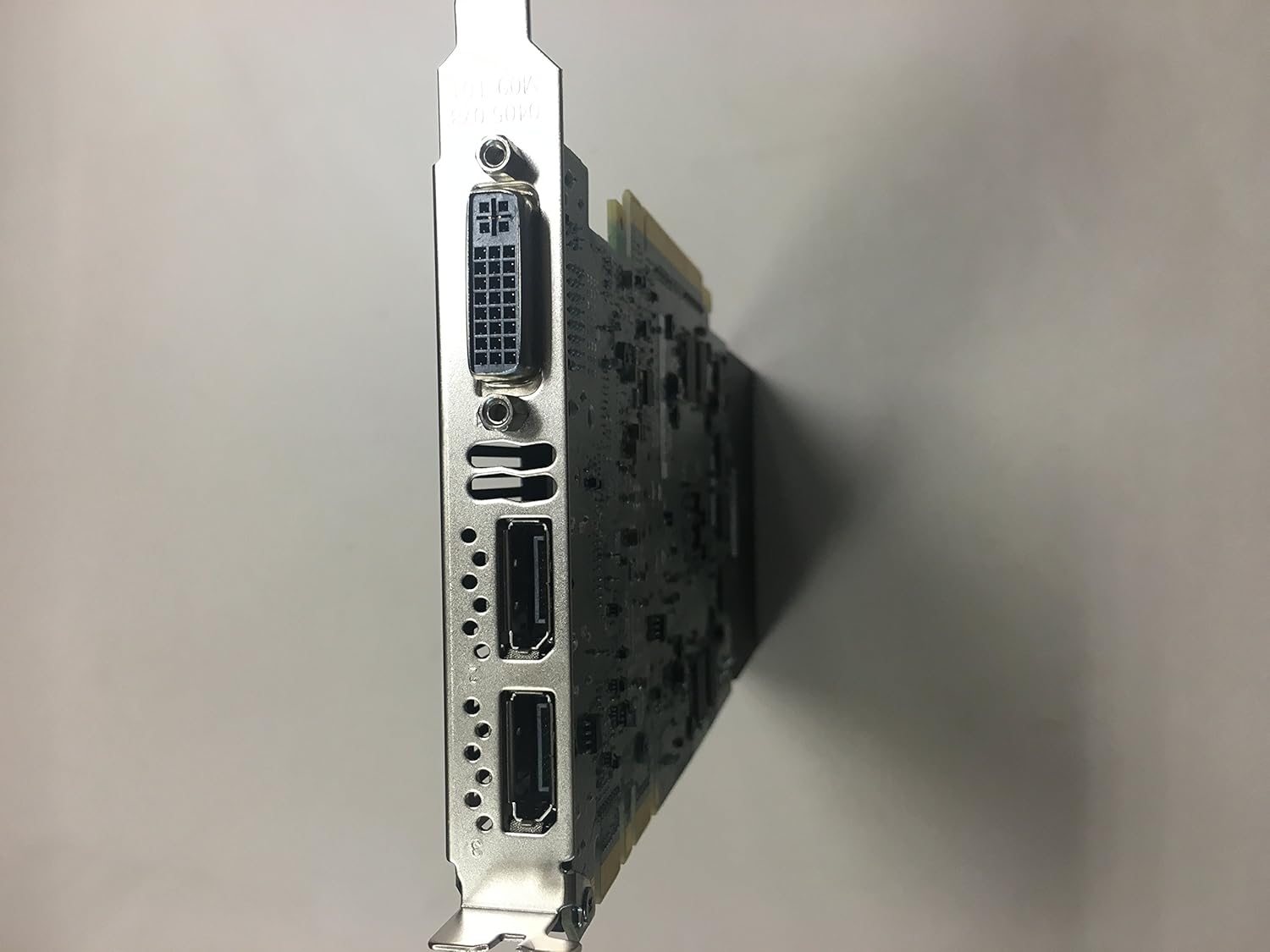
Figure 5.1.1: Rear view of the NVIDIA Quadro K4200 graphics card, highlighting the various display output ports. This image assists users in identifying and connecting their monitors correctly.
- DVI: Connect DVI-compatible monitors directly or use a DVI to VGA adapter for older VGA monitors.
- DisplayPort (DP): Connect DisplayPort-compatible monitors directly. Adapters for HDMI or DVI are also available if needed.
After connecting your displays, you can configure their arrangement and resolution through your operating system's display settings or the NVIDIA Control Panel.
5.2 NVIDIA Control Panel
The NVIDIA Control Panel provides advanced settings for your graphics card, including:
- Display resolution and refresh rate adjustments.
- Multiple display setup (e.g., extended desktop, clone mode).
- 3D settings for application-specific performance optimization.
- Color and video image quality adjustments.
Access the NVIDIA Control Panel by right-clicking on your desktop and selecting "NVIDIA Control Panel" or through your operating system's control panel/settings.
6. Maintenance
6.1 Cleaning
- Periodically clean dust from the graphics card's fan and heatsink to maintain optimal cooling performance.
- Use compressed air to gently blow away dust. Ensure the fan is held stationary to prevent damage while blowing air.
- Always power off and unplug your computer before cleaning.
6.2 Driver Updates
Regularly check the NVIDIA website for updated drivers. Driver updates often include performance improvements, bug fixes, and support for new software features.
7. Troubleshooting
| Problem | Possible Cause | Solution |
|---|---|---|
| No display on monitor. |
|
|
| Poor performance in applications. |
|
|
| Driver installation failure. |
|
|
8. Specifications
| Feature | Detail |
|---|---|
| Graphics Engine | NVIDIA Quadro K4200 |
| Memory | 4 GB GDDR5 |
| Bus Type | PCI Express 2.0 x16 |
| Video Output Interface | DVI, DisplayPort |
| Maximum Resolution | 3840x2160 |
| Number of Fans | 1 |
| Compatible Devices | Desktop |
| Item Weight | 7.2 ounces |
| Model Number | VCQK4200-PB |
9. Warranty and Support
9.1 Warranty Information
The NVIDIA Quadro K4200 graphics card comes with a limited 3-year warranty. Please retain your proof of purchase for warranty claims. For full warranty terms and conditions, refer to the documentation included with your product or visit the official NVIDIA website.
9.2 Technical Support
For technical assistance, driver downloads, or further product information, please visit the official NVIDIA support website:
Before contacting support, please ensure you have your product model number (VCQK4200-PB) and a detailed description of your issue ready.
Related documentsVCQK4200-PB


Ask a question about this manual
Ask about setup, troubleshooting, compatibility, parts, safety, or missing instructions. Manuals+ will review the question and use this page’s manual context to help answer it.