
Introduction
This manual provides comprehensive instructions for the installation, operation, and maintenance of your SEDEA 60 Composite Satellite Dish with Universal LNB. Please read these instructions carefully before proceeding with installation to ensure proper setup and optimal performance. This product is designed for robust performance, especially in harsh weather conditions and coastal environments.
Setup and Installation
Proper installation is crucial for receiving satellite signals. Follow these steps for secure and effective setup.
1. Unpacking and Component Check
- Carefully unpack all components from the box.
- Verify that all parts are present: satellite dish reflector, LNB, aluminum arm, mast fixation brackets, U-bolts, and 13mm flanged nuts with integrated lock washers.
- Inspect all components for any signs of damage during transit.
2. Assembling the Dish and LNB Arm
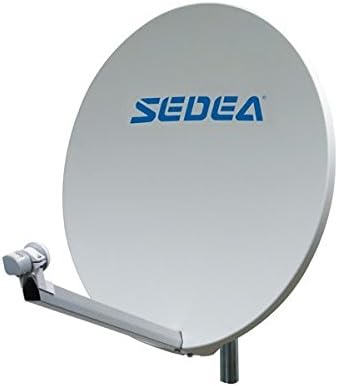
- Attach the aluminum arm to the satellite dish reflector. Ensure the cable routing channel within the arm is clear.
- Mount the universal LNB onto the end of the aluminum arm. The LNB has a 40 mm fixation diameter (plastic cover).
- Secure the LNB firmly but do not overtighten, as this may damage the LNB or its housing.
3. Mast Fixation
The dish is designed for mast fixation up to 60 mm in diameter. The galvanized fixation system ensures durability.
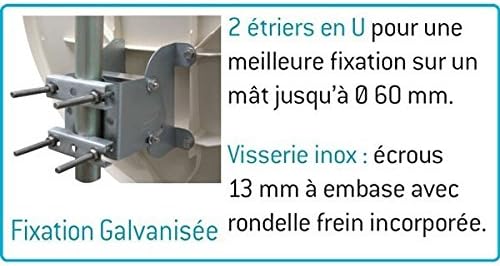
- Position the two galvanized fixation clamps on the mast at the desired height.
- Attach the dish assembly to these clamps.
- Use the two galvanized U-bolts and the 13mm flanged nuts with integrated lock washers to secure the dish to the mast. Tighten the nuts evenly to ensure a firm grip without deforming the mast.
4. Satellite Alignment
Accurate alignment is critical for signal reception. This step typically requires a satellite finder tool (not included) and knowledge of your local satellite coordinates (azimuth and elevation).
- Connect the LNB to your satellite receiver using a coaxial cable.
- Adjust the dish's elevation and azimuth angles according to the satellite you wish to receive. Make small, precise adjustments.
- Use the signal strength indicator on your satellite receiver or a satellite finder to optimize the signal.
- Once the optimal signal is achieved, carefully tighten all adjustment bolts to lock the dish in position.
Operating Instructions
Once installed and aligned, the SEDEA satellite dish operates passively, receiving signals from the targeted satellite. The LNB converts these signals for your satellite receiver.
- Ensure your satellite receiver is correctly connected to the LNB and powered on.
- Select the desired satellite channels via your receiver's interface.
- No direct operation is required for the dish itself after initial setup.
Maintenance
Regular maintenance ensures longevity and consistent performance of your satellite dish.
- Cleaning: Periodically clean the dish reflector surface with a soft cloth and mild detergent to remove dirt, dust, or debris that may accumulate and affect signal quality. Avoid abrasive cleaners.
- Inspection: Annually inspect all mounting hardware, including bolts and brackets, for tightness and signs of corrosion. Re-tighten any loose connections.
- Obstructions: Ensure no new obstructions (e.g., growing trees, new buildings) block the line of sight between the dish and the satellite.
- LNB Check: Verify the LNB is securely in place and its plastic cover is intact to protect against weather elements.
Troubleshooting
If you experience issues with signal reception, consider the following common problems and solutions:
| Problem | Possible Cause | Solution |
|---|---|---|
| No Signal / Weak Signal | Dish misalignment, cable issue, LNB fault, obstruction. | Re-align the dish using a satellite finder. Check all cable connections for tightness and damage. Ensure no objects block the signal path. Test with a known good LNB if available. |
| Intermittent Signal | Loose connections, weather interference, minor misalignment. | Check and tighten all cable connections. Wait for severe weather to pass. Fine-tune dish alignment. |
| Poor Picture Quality | Suboptimal signal strength, LNB noise factor. | Optimize dish alignment for maximum signal strength. Ensure LNB is correctly positioned. |
Specifications
Key technical specifications for the SEDEA 60 Composite Satellite Dish and Universal LNB.

- Brand: SEDEA
- Model: PARABOLE SATELLITE 60 COMPOSITE + LNB 1 TV
- Antenna Type: Satellite Dish
- Reflector Material: Composite
- Color: Silver
- Dish Dimensions (HxL): 60 x 60 cm
- Weight: 4.2 kg
- Gain: 36.2 dB at 11.3 GHz
- Mast Fixation Diameter: Up to 60 mm
- LNB Type: Universal Single Output
- LNB Input Frequencies: 10.70 to 12.75 GHz
- LNB Noise Factor: 0.3 dB
- LNB Oscillator Frequencies (O.L.):
- Low Band: 9750 MHz
- High Band: 10600 MHz
- LNB Fixation Diameter: 40 mm (plastic cover)
- Mounting Hardware: Galvanized clamps, U-bolts, 13mm flanged nuts with integrated lock washers.
- Special Features: Aluminum arm with integrated cable routing, suitable for harsh climatic conditions and coastal areas.
Warranty and Support
For warranty information and technical support, please refer to the documentation provided with your purchase or contact SEDEA customer service directly. Keep your proof of purchase for warranty claims.
For further assistance, you may visit the official SEDEA website or contact your retailer.
