
Marshall Excelsior MER403-48
Marshall Excelsior High Pressure Hose User Manual
Model: MER403-48
1. Introduction
This manual provides essential information for the safe and effective use of the Marshall Excelsior High Pressure Hose, Model MER403-48. Please read this manual thoroughly before installation and operation to ensure proper handling and to prevent potential hazards.
The MER403-48 hose is designed for high-pressure applications, rated up to 350 psig working pressure with a 400 lbs. pull test rating. It features a 1/4 inch hose I.D. and is compatible with high-pressure cylinders and regulators, utilizing a POL tank connection. The hose is constructed from flexible thermoplastic and is UL and CGA approved.
2. Safety Information
WARNING: An excess flow valve will not activate if there is a break or leak downstream of the valve that does not equal or exceed the closing flow of the valve or if the excess flow valve installed exceeds the flow capacity of the system. Refer to relevant safety guidelines for more information regarding the use of excess flow devices.
Proposition 65 Warning: This product contains a chemical known to the state of California to cause cancer and birth defects or reproductive harm. For more information, visit https://www.p65warnings.ca.gov/chemicals/lead-and-lead-compounds.
- Always inspect the hose for any signs of damage, wear, or leaks before each use.
- Ensure all connections are secure and properly sealed to prevent gas leaks.
- Do not expose the hose to open flames, excessive heat, or sharp objects.
- Use only with compatible high-pressure cylinders and regulators.
- Store the hose in a cool, dry place away from direct sunlight and corrosive materials.
3. Product Overview
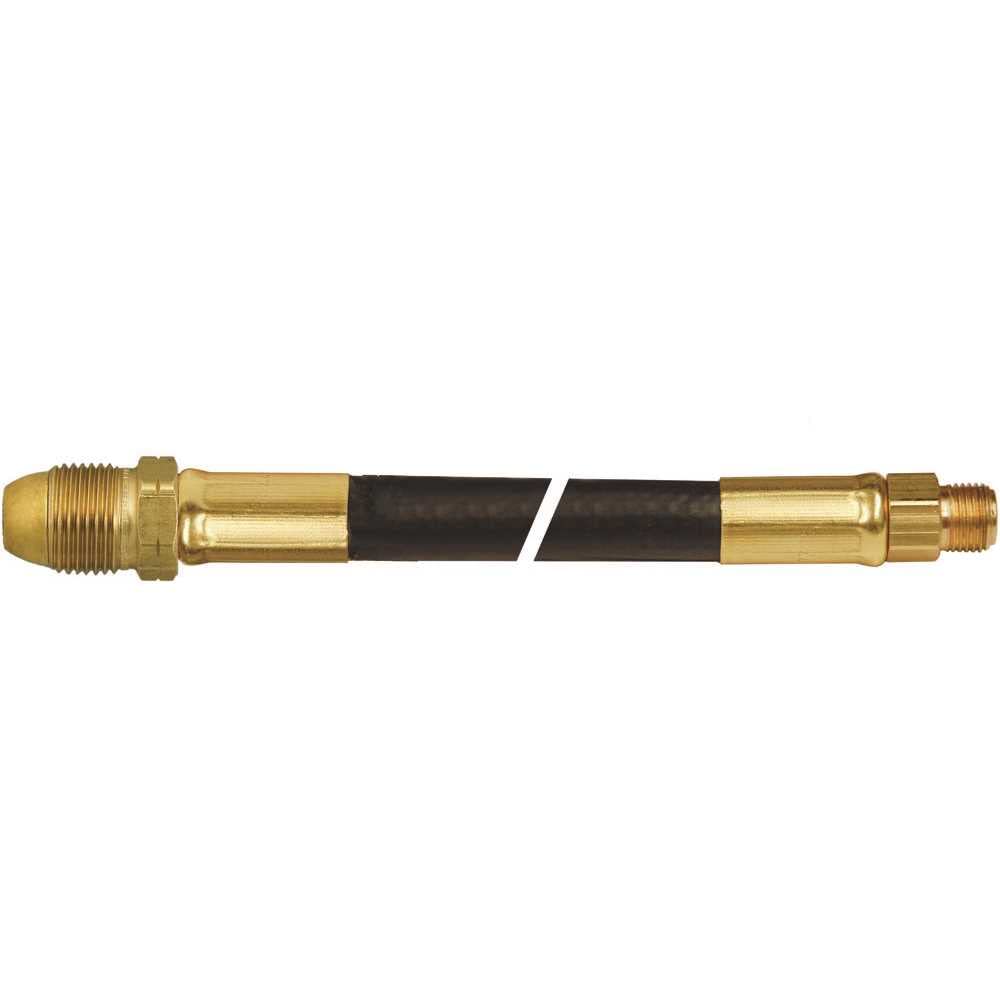
Figure 3.1: Marshall Excelsior High Pressure Hose, Model MER403-48. This image shows the black thermoplastic hose with brass ferrules and threaded POL connections on both ends.
The Marshall Excelsior High Pressure Hose, Model MER403-48, is an essential component for connecting high-pressure gas systems. It features a durable thermoplastic construction and robust brass fittings designed for secure and leak-free connections.
Key Features:
- Working Pressure: Rated up to 350 psig.
- Pull Test Rating: 400 lbs.
- Hose I.D.: 1/4 inch.
- Connections: Two fully crimped brass ferrules with POL (Prest-O-Lite) tank connections.
- Material: Flexible thermoplastic.
- Certifications: UL and CGA approved.
4. Setup and Installation
Follow these steps for proper installation of the high-pressure hose:
- Inspect Components: Before installation, carefully inspect the hose and its connections for any signs of damage, kinks, or debris. Ensure the threads on the POL connections are clean and free of obstructions.
- Prepare Connections: Ensure the high-pressure cylinder valve and the regulator inlet are clean and free of any foreign material.
- Connect to Cylinder: Thread one end of the hose (POL connection) onto the outlet valve of the high-pressure cylinder. Hand-tighten first, then use an appropriate wrench to secure the connection firmly. Do not overtighten.
- Connect to Regulator: Thread the other end of the hose onto the inlet of the regulator. Hand-tighten, then use a wrench to secure.
- Leak Test: After all connections are made, slowly open the cylinder valve. Apply a leak detection solution (soap and water mixture) to all connections. Bubbles indicate a leak. If a leak is detected, close the cylinder valve, re-tighten the connection, and re-test. Do not use the system if leaks persist.
- Secure Hose: Ensure the hose is routed in a way that prevents kinking, abrasion, or contact with hot surfaces. Avoid placing heavy objects on the hose.
Note: Always refer to the specific instructions for your high-pressure cylinder and regulator for additional connection guidelines.
5. Operating Instructions
The high-pressure hose acts as a conduit for gas. Its operation is integrated with the high-pressure cylinder and regulator system.
- System Activation: Once the hose is securely connected and leak-tested, slowly open the main valve on the high-pressure cylinder.
- Pressure Monitoring: Monitor the pressure gauges on your regulator to ensure the system is operating within safe limits.
- System Deactivation: To shut down the system, first close the main valve on the high-pressure cylinder. Allow the pressure in the hose and regulator to bleed off before disconnecting any components.
Important: Never attempt to disconnect the hose while the system is under pressure.
6. Maintenance
Regular maintenance ensures the longevity and safe operation of your Marshall Excelsior High Pressure Hose.
- Routine Inspection: Before each use, visually inspect the entire length of the hose for cuts, abrasions, bulges, kinks, or any other signs of damage. Check the brass ferrules and connections for corrosion or deformation.
- Cleaning: Clean the exterior of the hose with a damp cloth and mild soap if necessary. Avoid using harsh chemicals or solvents that could degrade the thermoplastic material.
- Storage: When not in use, store the hose in a clean, dry, and cool environment, away from direct sunlight, extreme temperatures, and corrosive substances. Avoid coiling the hose too tightly, which can cause kinks.
- Replacement: Replace the hose immediately if any damage is detected, or if it shows signs of excessive wear. Do not attempt to repair a damaged hose.
7. Troubleshooting
This section addresses common issues you might encounter with the high-pressure hose.
| Problem | Possible Cause | Solution |
|---|---|---|
| Gas Leak at Connection | Loose connection, damaged threads, worn O-ring (if applicable), debris in connection. | Close cylinder valve. Re-tighten connection. Inspect threads for damage; clean if necessary. Replace hose if threads are damaged or if O-ring is compromised. Perform leak test again. |
| Hose Kinked or Damaged | Improper routing, excessive bending, physical impact. | Immediately cease use. Replace the hose. Do not attempt to straighten or repair a damaged hose. |
| No Gas Flow Through Hose | Cylinder valve closed, regulator malfunction, hose blockage. | Ensure cylinder valve is fully open. Check regulator for proper function. Inspect hose for severe kinks or internal blockage (replace if suspected). |
If you encounter issues not listed here or if solutions do not resolve the problem, contact Marshall Excelsior customer support or a qualified technician.
8. Specifications
| Attribute | Value |
|---|---|
| Model Number | MER403-48 |
| Part Number | MER403-48 |
| Manufacturer | MEC (Marshall Excelsior Company) |
| Hose I.D. | 1/4 inch |
| Working Pressure | Up to 350 psig |
| Pull Test Rating | 400 lbs. |
| Connections | POL (Prest-O-Lite) |
| Material | Flexible Thermoplastic, Brass Ferrules |
| Certifications | UL, CGA Approved |
| Product Dimensions | 48"L x 0.25"W (Hose length: 48 inches) |
| Item Weight | 24 pounds (Note: This weight is as provided in product data and may include packaging or be an aggregate weight.) |
| UPC | 076335167695 |
9. Warranty and Support
Warranty Information:
Specific warranty details for Marshall Excelsior products are typically provided at the point of purchase or can be obtained directly from the manufacturer. Please retain your proof of purchase for warranty claims.
Customer Support:
For technical assistance, product inquiries, or to report issues, please contact Marshall Excelsior Company directly. Refer to their official website for the most current contact information.
Disclaimer: This manual is intended for informational purposes only. Marshall Excelsior Company reserves the right to make changes to product specifications and information without prior notice.
Ask a question about this manual
Ask about setup, troubleshooting, compatibility, parts, safety, or missing instructions. Manuals+ will review the question and use this page’s manual context to help answer it.