
1. Introduction
This manual provides essential information for the safe and effective use of the ClimaTek 90295 Aftermarket Replacement Relay. This component is designed as a direct replacement part for various HVAC and industrial applications. Please read this manual thoroughly before installation and operation to ensure proper function and safety.
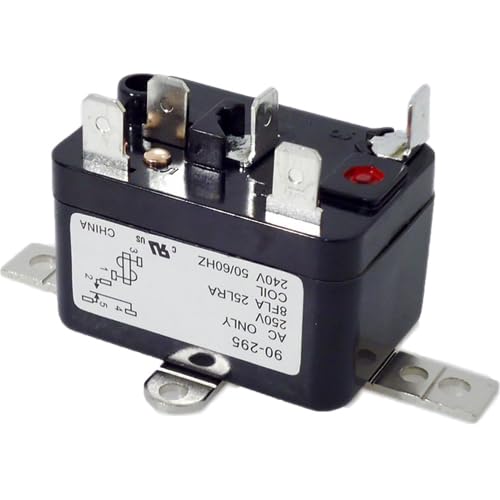
Figure 1: ClimaTek 90295 Aftermarket Replacement Relay. This image shows the compact black relay unit with its various terminals and a white label displaying model number 90-295, coil voltage (240V 50/60Hz), and a schematic diagram for connections.
2. Safety Information
WARNING: Electrical shock hazard. Installation and servicing should only be performed by qualified personnel. Disconnect power before installing or servicing this device.
- Always ensure the power supply is disconnected before handling the relay or any associated wiring.
- Verify that the replacement relay's specifications match the original component's requirements.
- Wear appropriate personal protective equipment (PPE), such as insulated gloves and safety glasses.
- Do not operate the relay if it appears damaged or has been exposed to moisture.
- Ensure all connections are secure and properly insulated to prevent short circuits.
3. Setup and Installation
The ClimaTek 90295 relay is designed for straightforward replacement in compatible systems. Follow these general steps for installation:
- Power Disconnection: Locate the main power supply to the equipment where the relay will be installed and turn it off. Verify power is off using a voltage tester.
- Access Old Relay: Open the equipment panel to gain access to the existing relay. Note the wiring configuration and take photos if necessary for reference.
- Remove Old Relay: Carefully disconnect all wires from the old relay. Unmount the old relay from its position.
- Mount New Relay: Securely mount the ClimaTek 90295 relay in the same location as the old one. Ensure it is stable and not subject to vibration.
- Wire Connections: Connect the wires to the new relay according to the original configuration or the wiring diagram provided on the relay's label. Ensure all connections are tight and correct.
- Secure Panel: Close and secure the equipment panel.
- Restore Power: Turn the main power supply back on.
- Test Operation: Test the equipment to ensure the new relay is functioning correctly.
Refer to the specific equipment's service manual for detailed wiring diagrams and installation procedures if available.
4. Operating Principles
A relay is an electrically operated switch. The ClimaTek 90295 relay uses an electromagnetic coil to operate a set of electrical contacts. When voltage is applied to the coil (240V AC, 50/60Hz for this model), it creates a magnetic field that pulls the armature, causing the contacts to open or close, thereby controlling a separate high-power circuit. This allows a low-power signal to control a high-power circuit, providing isolation and protection.
5. Maintenance
Relays are generally low-maintenance components. However, periodic inspection can help ensure longevity and reliable operation:
- Visual Inspection: Periodically inspect the relay for any signs of physical damage, discoloration (indicating overheating), or loose connections.
- Cleanliness: Ensure the area around the relay is free from dust, dirt, and debris, which can impede heat dissipation or cause electrical issues.
- Connection Integrity: Check that all wire connections to the relay terminals remain tight and secure. Loose connections can lead to arcing and premature failure.
- Environmental Conditions: Ensure the relay is operating within its specified environmental conditions (temperature, humidity) to prevent degradation.
6. Troubleshooting
If the equipment controlled by the relay is not functioning as expected, consider the following troubleshooting steps:
- No Power: Verify that power is supplied to the relay's coil and that the main power to the equipment is on. Check circuit breakers or fuses.
- Incorrect Wiring: Double-check all wiring connections against the equipment's schematic or the relay's label. Ensure correct polarity and terminal assignments.
- Coil Failure: If the relay coil is not energizing (no audible click or visible movement), it may be faulty. Test the coil resistance with a multimeter (power off).
- Contact Failure: If the coil energizes but the controlled circuit does not activate, the internal contacts may be stuck open or closed, or pitted. Test continuity across the contacts when the coil is energized (power off, use caution).
- Overload: Ensure the load connected to the relay contacts does not exceed the relay's maximum current rating. Overloading can cause contacts to weld or burn out.
- Environmental Factors: Extreme temperatures or humidity can affect relay performance. Ensure the operating environment is suitable.
If troubleshooting does not resolve the issue, consider replacing the relay or consulting a qualified technician.
7. Specifications
| Attribute | Value |
|---|---|
| Model Number | 90295 |
| Brand | ClimaTek |
| Product Dimensions | 6 x 6 x 6 inches |
| Item Weight | 4 ounces |
| Manufacturer | Universal |
| Country of Origin | USA |
| Coil Voltage | 240V AC, 50/60Hz (as per image label) |
| Contact Rating | 250V AC (as per image label) |
8. Warranty and Support
This ClimaTek aftermarket replacement part is designed to meet or exceed the performance of the original component. For specific warranty information, please refer to the terms and conditions provided by your point of purchase or contact the seller directly. For technical support or inquiries, please reach out to the manufacturer or authorized distributor.
Seller: North America HVAC
Brand Store: ClimaTek Store on Amazon