
1. Introduction
The NOYAFA NF-816L is an advanced underground wire locator designed for accurately tracing and locating buried or hidden cables. This device is ideal for identifying the path and breaks in various types of wires, including pet fences, electrical cables, network lines, and irrigation system wires. It features a rechargeable lithium battery and an integrated LED flashlight for convenience in diverse working conditions.
Important Safety Notes:
- Do not use this device on live circuits. Using the tester on energized cables can cause damage to the unit and pose a safety risk.
- This device is designed for locating non-energized cables only.
- The NF-816L is suitable for single-core or dual-core cables. It is not designed for multi-core cables or cable bundles.
2. Product Components
The NOYAFA NF-816L package typically includes the following components:
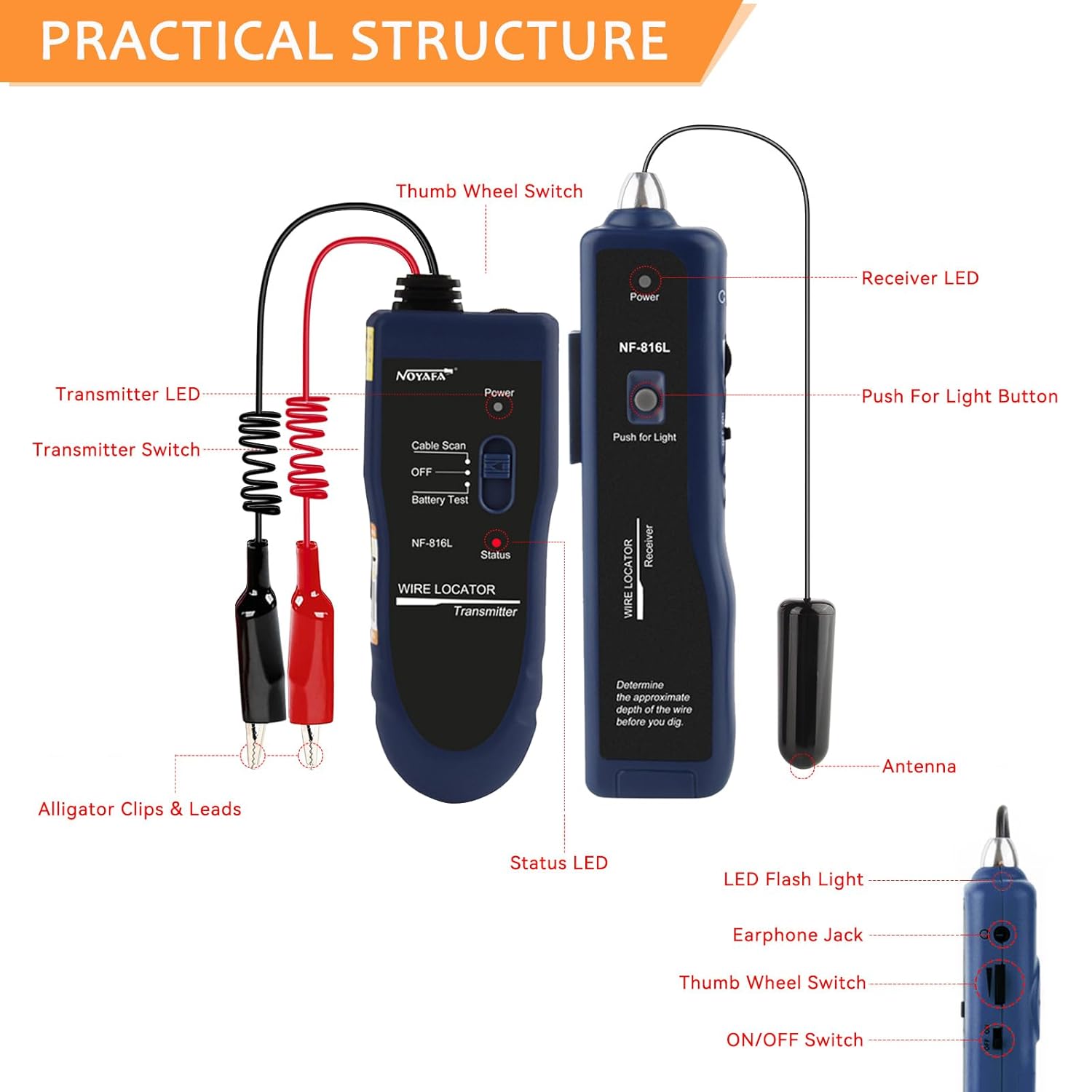
- Transmitter Unit: Connects to the wire being traced.
- Receiver Unit: Used to detect the signal from the transmitter.
- Alligator Clips and Leads: For connecting the transmitter to the wire and ground.
- Earphone: For clearer signal detection in noisy environments.
- Charging Cable: For recharging the built-in lithium batteries.
- Instruction Manual: This document.

3. Setup and Preparation
3.1 Charging the Device
The NF-816L features built-in rechargeable lithium batteries. Before first use, ensure both the transmitter and receiver units are fully charged using the provided Type-C charging cable.

3.2 Connecting the Transmitter
To prepare for tracing, connect the transmitter unit to the wire you intend to locate:
- Ensure the target wire is NOT energized. This is crucial for safety and to prevent damage to the device.
- Connect one of the alligator clips (typically red) from the transmitter to the wire you want to trace.
- Connect the other alligator clip (typically black) to a good ground source. This can be a metal stake driven into the ground, a metal water pipe, or another suitable grounding point. A proper ground connection is essential for effective tracing.

4. Operating Instructions
4.1 Basic Wire Tracing
- After connecting the transmitter, turn on both the transmitter and receiver units.
- Hold the receiver unit with the antenna pointing towards the ground, moving it slowly along the suspected path of the buried wire.
- Listen for the signal through the receiver's speaker or the optional earphone. The signal will be strongest directly over the wire.
- Adjust the sensitivity (thumb wheel switch) on the receiver as needed to refine the signal and pinpoint the wire's exact location. Higher sensitivity is for deeper wires or weaker signals; lower sensitivity helps narrow down the location.
- Mark the path of the wire as you trace it.

4.2 Locating Cable Breaks
To find a break in a wire:
- Follow the basic wire tracing procedure.
- As you move along the wire's path, pay close attention to the signal strength.
- A sudden drop or complete loss of signal indicates a potential break in the wire. Pinpoint the exact spot where the signal disappears.
4.3 Using the LED Flashlight
The receiver unit is equipped with an LED flashlight for use in low-light conditions. Press the "Push for Light" button on the receiver to activate or deactivate the flashlight.

5. Applications
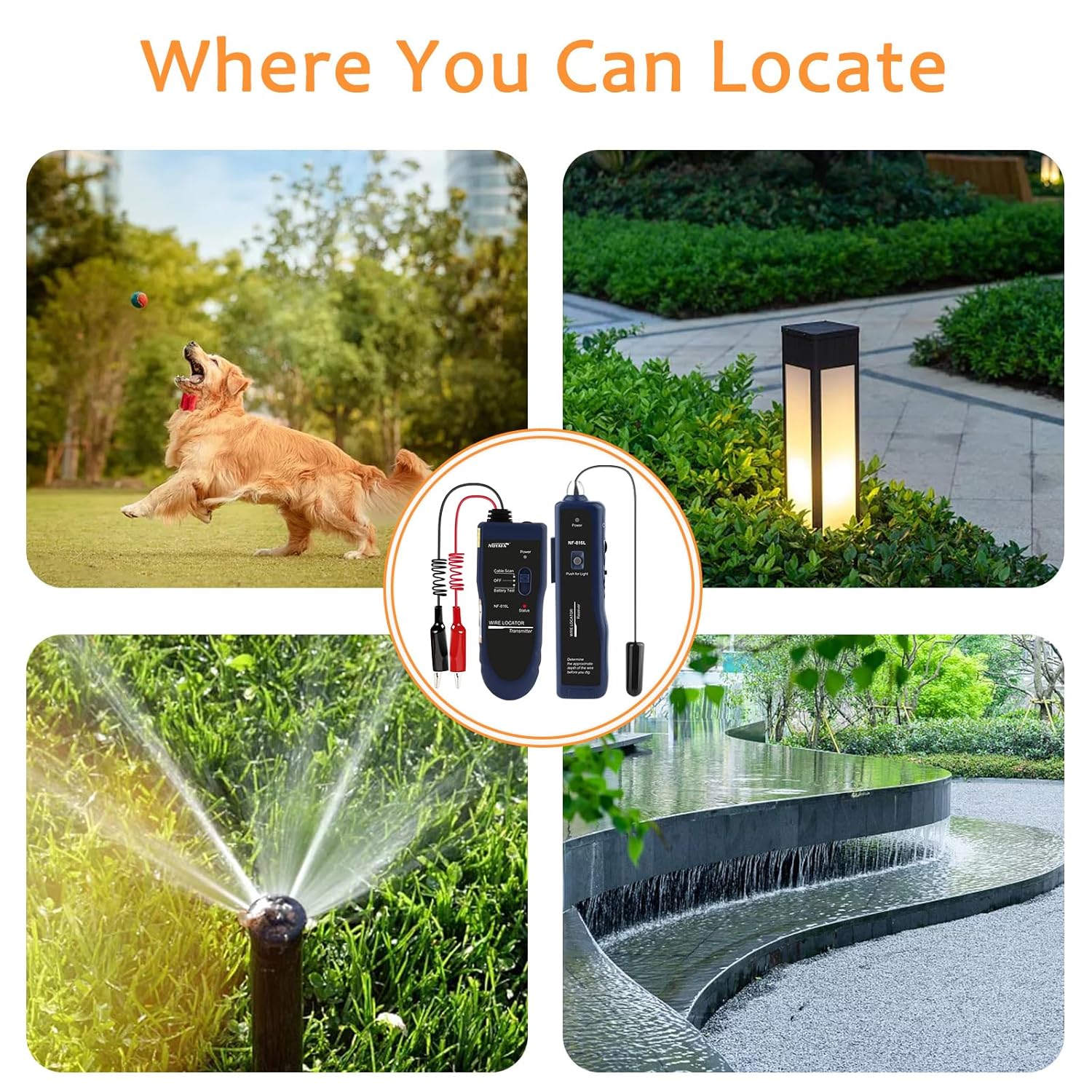
The NOYAFA NF-816L is versatile and can be used in various scenarios:
- Pet Fences: Locating buried wires for invisible pet containment systems.
- Electrical Wires: Tracing non-energized electrical lines in walls or underground.
- Network Cables: Identifying buried network or communication cables.
- Irrigation Systems: Locating buried sprinkler control wires.
- Outdoor Lighting: Tracing low-voltage landscape lighting wires.
- Metal Pipes: Can also be used to trace certain metal pipes.
6. Maintenance
- Cleaning: Wipe the units with a dry, soft cloth. Do not use abrasive cleaners or solvents.
- Storage: Store the device in a cool, dry place, away from direct sunlight and extreme temperatures.
- Battery Care: To prolong battery life, recharge the units regularly, even if not in frequent use. Avoid completely draining the battery for extended periods.
7. Troubleshooting
- No Signal or Weak Signal:
- Ensure both transmitter and receiver are powered on.
- Check battery levels and recharge if necessary.
- Verify that the target wire is not energized.
- Confirm proper connection of the transmitter to the wire and a good ground source.
- Adjust the sensitivity on the receiver.
- Environmental factors (e.g., very wet soil, metallic interference) can affect signal strength. Try moving slowly and adjusting sensitivity.
- Inaccurate Location:
- Ensure the ground connection is solid.
- Move the receiver slowly and methodically.
- Reduce receiver sensitivity to narrow down the signal peak.
- Be aware that detection depth and accuracy can be influenced by soil composition and moisture content.
- Device Not Powering On:
- Charge the unit fully.
- Ensure the power switch is in the 'ON' position.
8. Specifications
| Feature | Specification |
|---|---|
| Model | NF-816L |
| Brand | NOYAFA |
| Power Source | Rechargeable Lithium Battery |
| Max Detection Depth | 2.6 feet (0.8 meters) |
| Max Detection Length | 1000 feet (305 meters) |
| Applicable Wires | Single-core or dual-core cables (not multi-core) |
| Special Features | Built-in LED Flashlight, Type-C Charging |

9. Warranty and Support
9.1 Warranty Information
Specific warranty details for the NOYAFA NF-816L Underground Wire Locator may vary by region and retailer. Please refer to the warranty card included with your product or contact your point of purchase for detailed warranty terms and conditions.
9.2 Customer Support
For technical assistance, troubleshooting, or product inquiries, please contact NOYAFA customer support through their official website or the contact information provided with your product packaging. When contacting support, please have your model number (NF-816L) and purchase details ready.


