
Introduction
This manual contains essential information regarding the operation, maintenance, and safety of your 2013 Hyundai Sonata. Familiarizing yourself with its contents will ensure a safe and enjoyable driving experience, and help you maintain your vehicle's optimal performance and longevity. Please read this manual thoroughly before operating your vehicle.
For quick reference, key sections are organized to help you find information efficiently. Always refer to the specific sections for detailed instructions and warnings.
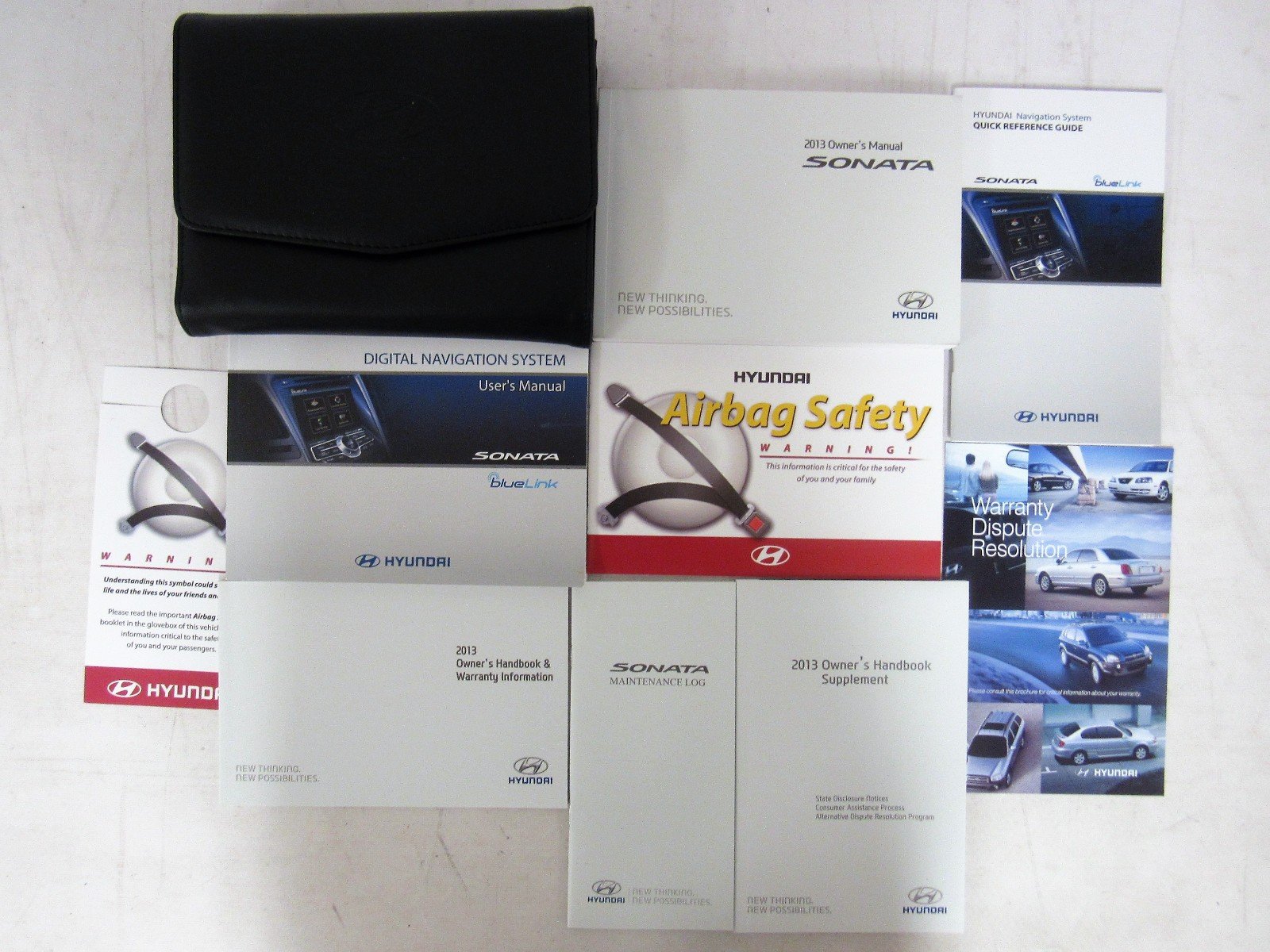
Image: The protective cover for the 2013 Hyundai Sonata Owner's Manual, featuring the Hyundai logo.

Image: The front cover of the 2013 Hyundai Sonata Owner's Manual, clearly labeled "2013 Owner's Manual SONATA" with the Hyundai logo.
Setup and Initial Familiarization
Before your first drive, it is recommended to familiarize yourself with the basic controls and features of your Hyundai Sonata. This section covers initial adjustments and checks.
Vehicle Entry and Seating
- Door Locks: Understand the operation of the remote keyless entry and manual door locks.
- Seat Adjustment: Adjust the driver's seat for optimal comfort and control, including fore/aft position, seatback angle, and height.
- Steering Wheel: Adjust the steering wheel tilt and telescopic position for a comfortable driving posture.
- Mirrors: Properly adjust the side mirrors and rearview mirror for clear visibility.
Dashboard and Controls
- Instrument Panel: Locate and understand the speedometer, tachometer, fuel gauge, and temperature gauge.
- Warning Lights: Familiarize yourself with the various warning and indicator lights on the dashboard.
- Lighting Controls: Learn to operate the headlights, turn signals, and interior lights.
- Wiper Controls: Understand the functions of the windshield wiper and washer system.
Operating Your Hyundai Sonata
This section provides detailed instructions for starting, driving, and stopping your vehicle, as well as operating its various systems.
Starting and Driving
- Engine Start/Stop: Procedures for starting and turning off the engine, including push-button start if equipped.
- Transmission: Operation of the automatic transmission, including shifting gears and parking.
- Braking System: Proper use of the foot brake and parking brake.
- Cruise Control: Instructions for setting and using the cruise control system.
Infotainment and Climate Control
- Audio System: Operating the radio, CD player, and auxiliary inputs.
- Navigation System: Instructions for using the integrated navigation system (if equipped).
- Bluetooth Connectivity: Pairing your mobile device for hands-free communication and audio streaming.
- Climate Control: Adjusting temperature, fan speed, and air distribution for heating and air conditioning.

Image: The cover of the Hyundai Navigation System Quick Reference Guide for the Sonata, indicating detailed instructions for the digital navigation system.
Vehicle Care and Maintenance
Regular maintenance is crucial for the safety, reliability, and longevity of your Hyundai Sonata. This section outlines recommended service schedules and procedures.
Scheduled Maintenance
- Service Intervals: Follow the recommended maintenance schedule for oil changes, tire rotations, and inspections.
- Fluid Checks: Regularly check engine oil, coolant, brake fluid, and windshield washer fluid levels.
- Tire Care: Maintain correct tire pressure, inspect for wear, and understand tire rotation guidelines.
- Battery Maintenance: Tips for prolonging battery life and checking terminals.
Cleaning and Protection
- Exterior Cleaning: Washing, waxing, and protecting the paint finish.
- Interior Cleaning: Care for upholstery, dashboard, and floor mats.

Image: A page from the 2013 Owner's Handbook, indicating sections for maintenance and warranty information.
Troubleshooting Common Issues
This section provides guidance on identifying and resolving minor issues you might encounter with your Hyundai Sonata. For more complex problems, consult a certified Hyundai service technician.
Warning Lights and Indicators
- Check Engine Light: What to do if the check engine light illuminates.
- Oil Pressure Warning: Steps to take if the oil pressure warning light comes on.
- Battery Charge Warning: Addressing issues indicated by the battery warning light.
- Tire Pressure Monitoring System (TPMS): Understanding TPMS warnings.
Minor Operational Problems
- Engine Not Starting: Common causes and troubleshooting steps.
- Brake Noise: Identifying and addressing unusual brake sounds.
- Electrical Issues: Troubleshooting problems with lights, power windows, or accessories.

Image: A safety warning page from the manual, emphasizing the importance of understanding airbag safety for occupants.
Specifications
This section provides technical specifications for the 2013 Hyundai Sonata. Please note that specifications may vary based on trim level and regional configurations.
| Category | Specification |
|---|---|
| Engine Type | Typically 2.4L GDI 4-cylinder or 2.0L Turbo GDI 4-cylinder |
| Transmission | 6-speed automatic with SHIFTRONIC® |
| Fuel Tank Capacity | Approximately 18.5 gallons (70 liters) |
| Overall Length | Approximately 189.8 inches (4820 mm) |
| Overall Width | Approximately 72.2 inches (1835 mm) |
| Overall Height | Approximately 57.9 inches (1470 mm) |
| Curb Weight | Varies by trim, typically 3,199 - 3,450 lbs (1451 - 1565 kg) |
Warranty Information
Your 2013 Hyundai Sonata is covered by a comprehensive warranty program. This section provides a general overview of the warranty coverage. For complete details, please refer to the separate Warranty Information booklet included with your vehicle or consult your authorized Hyundai dealer.
- New Vehicle Limited Warranty: Covers defects in material or workmanship.
- Powertrain Limited Warranty: Specific coverage for engine, transmission, and drivetrain components.
- Anti-Perforation Warranty: Protection against body panel perforation due to corrosion.
- Roadside Assistance: Details on emergency roadside services provided.
Note: Warranty terms and conditions, including duration and mileage limits, may vary. Always consult official Hyundai warranty documentation for precise details applicable to your vehicle.
Customer Support
Should you require assistance or have questions not covered in this manual, Hyundai offers various support channels.
- Authorized Hyundai Dealer: Your primary resource for service, parts, and technical inquiries.
- Hyundai Customer Service: Contact information for general inquiries and support.
- Official Hyundai Website: Visit the official Hyundai website for the latest information, service schedules, and owner resources.
When contacting support, please have your Vehicle Identification Number (VIN) and current mileage readily available to facilitate faster service.